Rabbit Cage Plans
Build Your Own All-Wire Cage
Rabbit cage plans are on this page below for an all-wire rabbit cage measuring 36 inches wide by 30 inches deep. The cage you build with these cage plans can serve as an indoor or outdoor rabbit cage. (The e-book, "Ideal DIY Rabbit Cages," can help you adjust the cage dimensions as needed. Details are below.)
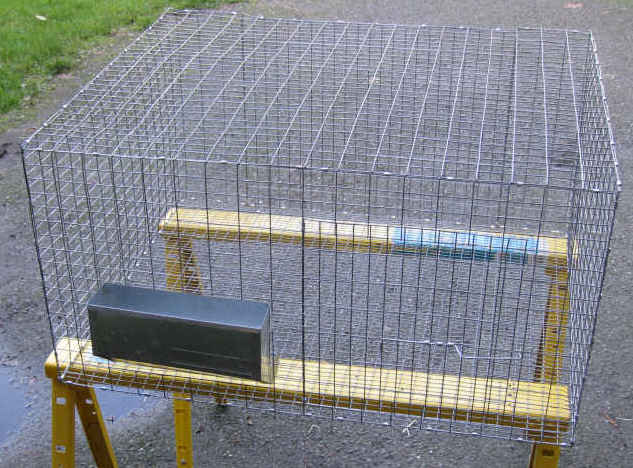
This cage plan is included in each of the Raising-Rabbits cage-building e-books. Consider purchasing one of them if...
- You need a little more help building this all-wire cage, like the advantage of more photos and additional detail
- You know you'll want to change the dimensions of the cage
- You'd also like the plans for our PVC or angle iron hutch frames and rabbit runs...
- You want a full gamut of options for building rabbit cages and/or pens, at a very reasonable price.
See below!
Two Separate E-Books OR Both E-Books in One
Do you own one or a few pet rabbits?

Pet Rabbit Living Spaces
Pet Rabbit Living Spaces is our collection of exclusive and creative DIY plans for building your own luxurious rabbit cages, hutches, runs, and pens. Included are never-before published plans and designs for cages, including some that allow nearly face-to-face interactions between bunnies and their people. These plans will please you and your pet rabbits.
Pet Rabbit Living Spaces is
available as an instant-download PDF e-book. It is a hands-on, do-it-yourself manual of plans and instructions for creating a variety of rabbit homes and exercise spaces for your pet rabbits, both indoors and outside. It's a big PDF file, full of pictures and illustrations. Click the photo or go to Build Your Own Rabbit Cage to learn more!
Are you a meat rabbit breeder or a breeder of show rabbits?
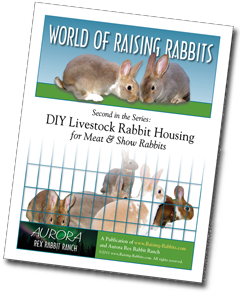
DIY Livestock Rabbit Housing
The DIY Livestock Rabbit Housing PDF e-book offers a large choice of plans for cages, hutch frames, rabbit tractors, runs, and pens, all specifically designed for homesteaders or those who are raising more than just a few rabbits for show or livestock.
Who says you can't build rabbit cages? With the right tools and materials, cage building is not complicated at all. Build it yourself and save a ton of money! These are QUALITY cages you'll be building: much much nicer and safer for your rabbits than cages cobbled together with cheap hardware cloth stapled to wooden boards.
Click the pic or this link for more information, or visit our store to purchase DIY Livestock Rabbit Housing!
Would You Like ALL our Cage and Hutch Frame Plans?
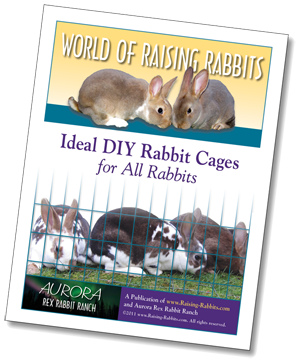
Ideal DIY Rabbit Cages
BOTH of the above e-book plans are included and available in one comprehensive PDF e-book containing ALL plans: Ideal DIY Rabbit Cages - Click the pic or this link for more info or...
Visit our store to purchase Ideal DIY Rabbit Cages!

Free Rabbit Cage Plans
(If you cannot find the cage wire, tools, and
j-clips that you'll need in your area, here and below are links to excellent tools and wire
which should work well for you.)
Tools and Supplies for Building Wire Rabbit Cages
Wire, J-Clips, J-Clip Pliers, Door Latches, More
Cage Wire for Cage Top and Sides, and for Cage Floors
These are the materials I use to build wire rabbit cages. If you can't find them in your area, use these Amazon links to have them shipped to you:
- 1"x2"x36" 14 gauge galvanized wire (100 feet), YardGard brand - for sides and top of wire cages (ad).
- 1/2"x1"x24" 16 gauge galvanized wire (25 feet), YardGard brand - for cage bottom (ad). When you assemble the cage, ensure that the 1/2" spaced wire is on top - the part rabbits will stand on.
Flush Cut Wire Cutters Cut Squarely, without Jagged Ends
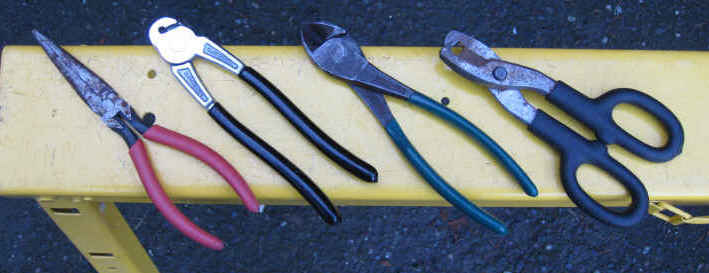
I love flush cut wire cutters. They cut the wire flat to the other wires, eliminating those spear-shaped ends that invariably lacerate your skin at a moment's distracted notice.
Cage Door Latches
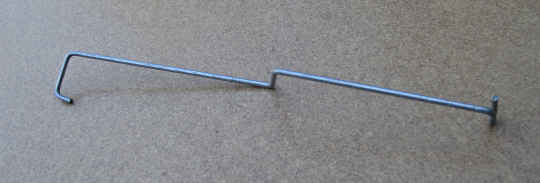
Several kinds of cage door latches can be found - those with latches that swing down, and those with spring-loaded latches.
My favorite latch is no longer available (pictured), but the stainless steel wire cage latches (right below) are nearly identical, at least in function....
- Finger Spring Latch Hook - 10 Pack: Pictured below left. (ad) Also available in more or less quantities. This latch style can be used for doors that hang down, or that open from the left or the right.
- Wire Door Cage Latches - 10 Pack: Stainless Steel (ad) Pictured below center. Available in right-side and left-side, but honestly, either "side" can be flipped over for use on the other side of the cage. For that matter, I have also used these to latch doors that open from top or bottom.
- Wire Door Cage Latches - 25 Pack: Stainless Steel (ad) Pictured below center. These are advertised as right-handed, but if needed, flip them over and use on the left.
- Economy Style Swivel Cage Door Latches (3): (ad) Pictured below right. Crimp the metal ends around the cage wire; the door, which hangs from the top, swings either inward or outward. The swivel prevents the door from opening, and it can also be used to suspend the door in an open position, making cleaning, feeding, or inspection chores easier.
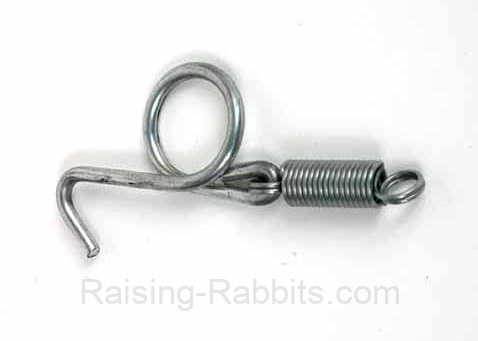
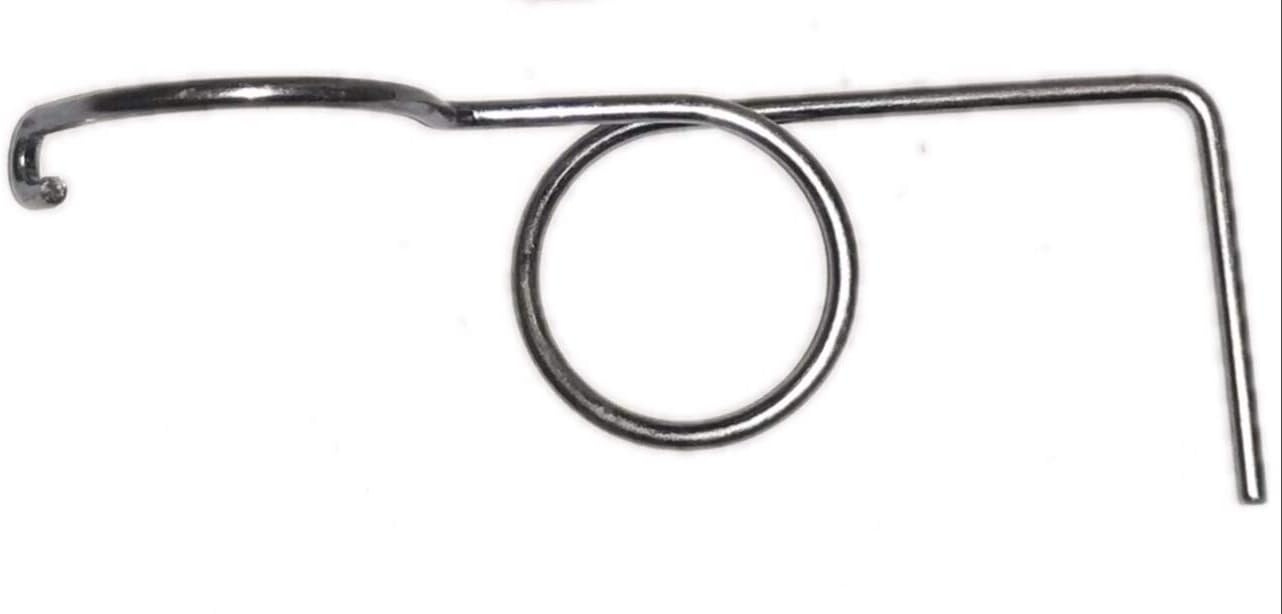
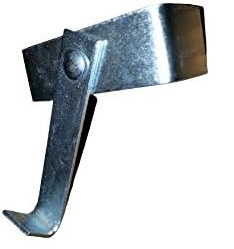
J-Clip Pliers; J-Clip Removers
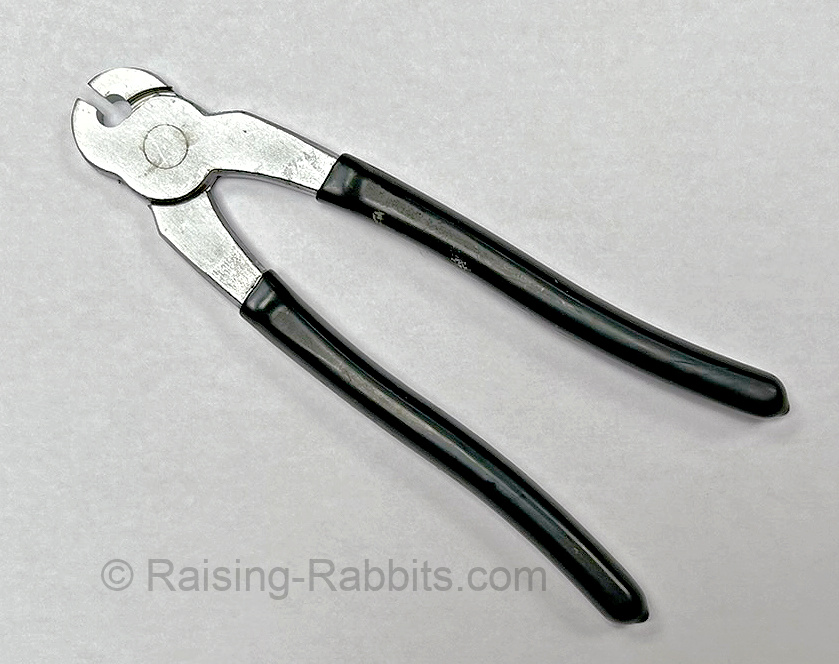
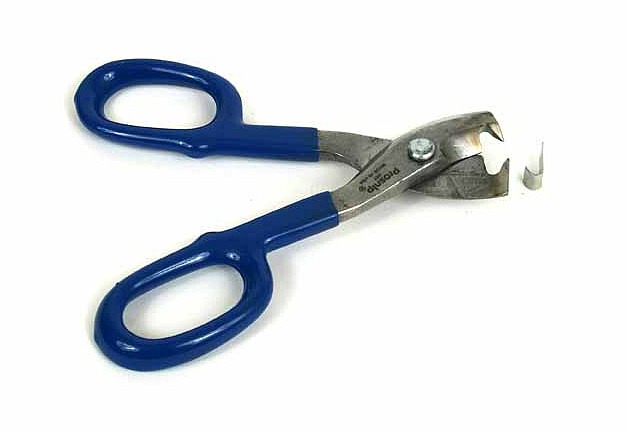
Both j-clip pliers and j-clip removers are essential tools for building all-wire cages.
- J-Clip Pliers: (ad) I'm still using my pliers 40 years later....
- J-Clip Removers: (ad) Guaranteed to reduce your frustration when you accidentally crimp a J-clip around only one wire, or you goof up and fasten the wrong wires, or you want to repurpose used wire mesh from old, retired cages.
J-Clip Fasteners
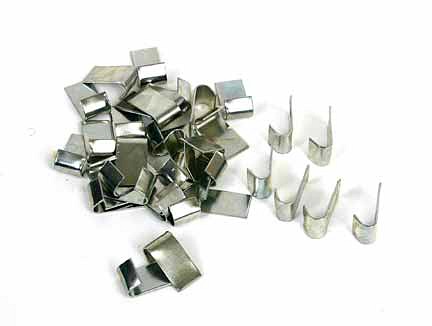
J-Clips - easy to apply, inexpensive, will last forever, or at least as long as a lifespan.
- One Pound J-Clips: (ad) Easy to apply with j-clip pliers
- Two Pounds J-Clips: (ad)
Few Tools Required:
- Needlenose pliers
- Flush cut wire cutters
- J-clip pliers
- J-clip removers
- A couple sawhorses, for ease of working (or workbench or...)
Materials:
- 1 inch by 2 inch by 3 feet wire - 14 gauge: 10 feet.
- 1/2 inch by 1 inch by 3 feet wire - 16 gauge: 2 1/2 feet.
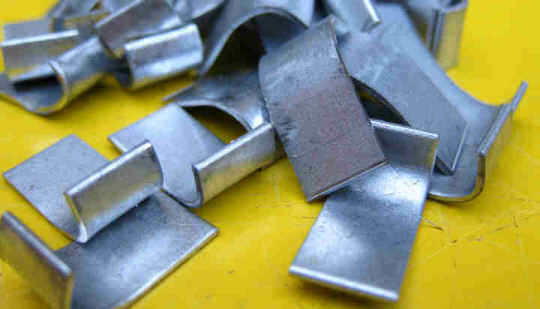
(14 gauge is better if you can find it...I use 16 gauge) - J clips (pictured): 1 pound (less than a pound actually needed)
- 1 Door latch (pictured)
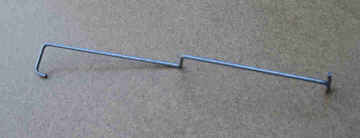
- 12" J-Feeder. See picture of finished cage. You can also use a crock for food.
- Water crock. Or better, an automatic watering system. Edstrom makes a great system.
Rabbit Cage Plans
1) If
you purchased 2 1/2 feet of 3 foot cage floor wire, this piece is ready
as is. If you purchased enough for several cages, then cut a 30 inch x
36 inch piece. Use a flush cut pliers so that there will be no sharp angled ends to the cut wire.
2) Cut the 1" x 2" inch wire to size:
- 1 piece: 36" x 18" for the cage front
- 1 piece: 30" x 36" for the cage top
- 2 pieces: 36" x 18" for the cage sides
- 1 piece: 24" x 18" for the cage back
- 1 piece: 13" x 14" for a door
First Note:
If you cut a 24 inch x 36 inch piece of wire for the back (since the roll is 36 inches tall) and then trim it to the indicated 24" x 18," you'll have a remnant left over that is big enough to use for the door, with very little waste.
Second Note:
6 inches of cage side wire will wrap to the back on both sides, reducing the amount of wire needed for the back panel to just 24 inches.
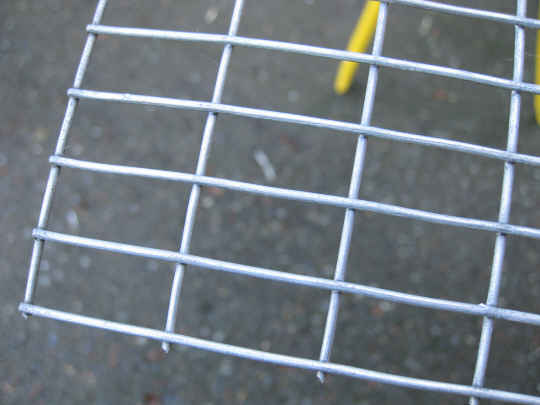
3) Set
the 30 x 36 piece of rabbit cage floor wire on your sawhorses or work
space. An important caution: you need the 1/2" spaced wires to be on top where
the rabbits will stand, as shown on the right. This gives improved support to the rabbit's feet.
4) Bend 6" of the side panels around a 2x4 or sawhorse, so that the final lengthwise measurement of the piece is 30" x 18". The extra, still-attached 6" length will wrap around and become part of the back of the cage. We wanted rabbit cage plans that save time by not having to cut wire, and that will eliminate wire waste.
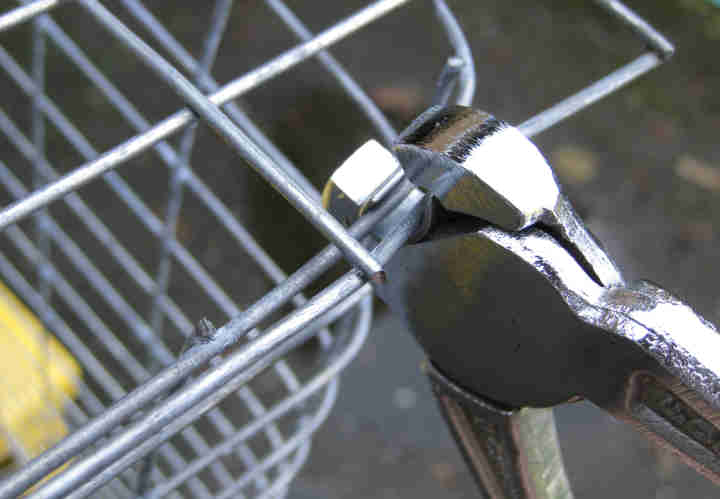
5) Attach the side panels to the floor with J-clips, as shown. You can also use hog rings if you have them, and hog ring plyers. I've always used J-clips. I attach them roughly every 2 or 3 inches.
6) Attach the back panel using J-clips. Because you've wrapped wire from the sides, the back panel is only 24 inches wide. There, you've saved money!
7) Attach the front panel using J-clips.
8) Attach the top panel using J-clips. You could substitute hog rings for the J-clips in the rabbit cage plans. In that case, you'd also need hog ring pliers.
9) Locate where you'll place the door, and cut a 12" x 12" hole in the front panel. Allow 2" of cage wire at the bottom and 4" at the top. If you're right handed, you might find it easier to reach into the cage if the door opening is placed towards the right of the cage. (Left side if left-handed.) Leave about 6", however, to the right of the door, so you can attach a water valve or a hay feeder.
10) Position the door over the opening so the 14" length is top-to-bottom and the 13" length is side-to-side. Overlap the top and bottom by 1" each. You won't need any overlap on the side you attach to, leaving 1" overlap on the side that opens. Be sure you allow at least a 12" - 14" length of cage-front intact, in case you decide to use a J-feeder. (They'll cut down on your rabbit care time, because you won't have to open the door of every rabbit cage to feed, but they're definitely not essential--crocks work just fine, or other container that won't easily tip over.)
11) Attach the rabbit cage door with J-clips: Two at the very top bumping each other (to help keep the door positioned without sagging), a couple in the middle, and one or two clips at the bottom.
12) Attach the latch to the door with J-Clips. There are a number of great latching systems, each designed a bit differently, but getting the job done well.
13) If you decide to use
J-feeders, now is the time to cut a 12" x 2" hole in the front of the
cage, 2 inches off the floor. The feeder will hang on the outside of
the cage, and deliver the feed to the rabbit (and bunnies) on the
inside.
Congratulations. In an hour or less, you followed these rabbit cage plans and made your own predator-safe, high-quality, homemade rabbit cage.
Not everyone feels like building their own rabbit cages.
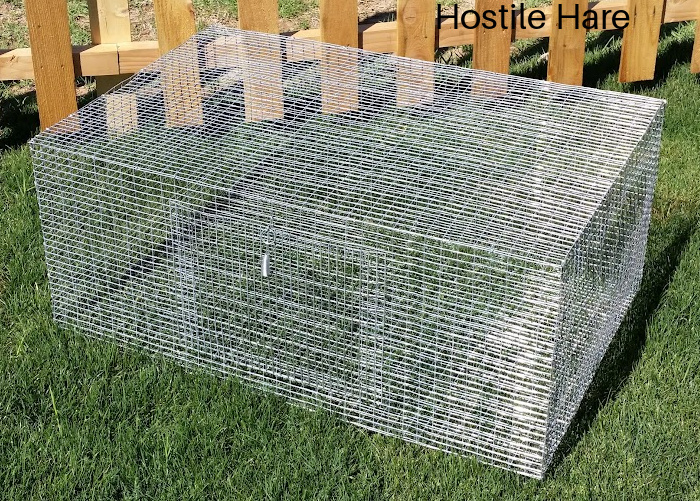
While we think the most value for our money comes from building our own cages, we understand that some folks may prefer to save time and effort by purchasing their cages ready-made.
You'll find some top-quality ones in the Raising-Rabbits Store.
Click here for full information about Hostile Hare, our cage manufacturer.
Top Quality Rabbit Cages Easy on Rabbit Feet from
Hostile Hare!

Hostile Hare cages exceed our rigorous rabbit housing standards; they will serve you well for years.
Explore the choices, and purchase, by clicking the logo or this link!
Raising rabbits? Consider a membership to the American Rabbit Breeders Association
Double-Value Guarantee
Our policy is to always OVER-deliver
on value,
which is why your purchase is fully covered by our
Double-Value
Guarantee.
Go ahead - take any of our e-books for a test drive. Peruse our detailed informational and educational e-books. Examine our plans for building rabbit cages, runs, or metal or PVC hutch frames. Check out the Rabbit Husbandry info e-books.
If you aren't completely satisfied that your e-book purchase is worth at least double, triple or even quadruple the price you paid, just drop us a note within 45 days, and we'll refund you the entire cost. That's our Double-Value Guarantee.
Note: When you purchase your
e-books, they will be in PDF format, so you can download them to any device that
supports PDF format. We advise making a back-up copy to a drive or cloud
account. If the books are lost, you can also purchase another copy from Raising-Rabbits.
* Affiliate Links*
As an affiliate of several companies, including Amazon.com, we earn from qualifying purchases. Your purchases from these affiliates come at no extra cost to you.
Bunny Bazaar!
Online Shopping Mall by Raising-Rabbits!
One-Stop Shop for Rabbit Swag for both Rabbits and Humans
Bunny Branola:
Immune-Boosting Rabbit Nutritional Supplement and Treat!

SIX delicious flavors - Sample packs available.
Yes! I want more info!
Yes, Buy Bunny Branola Now!
Raising Rabbits Sweatshirts, T-shirts, and Hoodies!
 |
 |
 |
Now offering classy, unisex Raising Rabbits sweatshirts and hoodies.
Available in a large assortment of colors! (We have unisex T-shirts too.)
Find these gorgeous garments in the Bunny Bazaar!
Order your own today - They make great gifts too!!
National Rabbit Associations

American Rabbit Breeders Association (ARBA) is the national club for breeders of both rabbits and cavies (guinea pigs) in the United States. Anyone can join for a modest fee, and get wonderful support for their rabbit raising efforts.

The British Rabbit Council - Official Website of the British Rabbit Council, whose mission is to support the interests of all British rabbit breeders, including exhibition, breeding, and welfare.

Rabbit Council of NZ (Inc.) - The New Zealand Rabbit Council provides a comprehensive website about Rabbit related issues and events within New Zealand and overseas.

Australian National Rabbit Council Inc. - "An Australian Rabbit Club for Australian Rabbit Owners." It was established in order to "coordinate and promote Rabbit Clubs and interest groups throughout Australia."
Featured Rabbitries:
Click the Rabbitry Name Links:
Canada, Quebec
MapleRidge Stables Rabbitry
Himalayan Rabbits
Arizona
Hostile Hare
Cages, Consultations, Quail
Illinois
Open Doors Rabbitry
Lionheads, New Zealands
Minnesota
Lops of Love Rabbitry
Closed for Christmas vacation
North Carolina
Breadbox Rabbitry
Netherland Dwarfs
Pennsylvania
Happily Ever After
Mini Plush Lops, Holland Lops,
Netherland Dwarf, Lionhead,
Mini Plush Lop, & Mini Rex
South Carolina
Jubilee Farms
Holland Lops
Subscribe to Rabbit Rhythms,
our e-newsletter !
Get rabbit news, husbandry and health tips mostly every month. It's easy - we only need your email address, then hit the 'subscribe' button. Enjoy!
Recent Articles


-
Rabbit Diseases: Recognize Rabbit Sicknesses in Time to Help
Sep 13, 26 11:33 PM
 Rabbit Diseases: Major symptoms of common diseases affecting rabbits, including respiratory and diarrhea, plus helping your rabbit while waiting for the vet.
 -
Christmas Rabbit Pictures
Jun 04, 26 03:19 PM
 This is a fun and festive collection of Christmas Rabbit Pictures to brighten holiday spirits.
 -
Pet Rabbits: Confident Care, Feeding, and Enjoyment
Feb 14, 26 05:46 PM
 Pet rabbits: Care and feeding, including a critical-needs list of requirements. Confidently care for your bunnies with this list of rabbit care tips




Raising-Rabbits: Home of
The Rabbit Raising Problem Solver

$22.62 - includes
- 10% off your autographed copy of Rabbit Raising Problem Solver
- All packaging, handling, and Media Mail postage costs (WA residents are subject to sales tax)
- Applies to US addresses - (sadly, Media Mail is not offered for international shipping, not even for really awesome books)
- (International shipping is available, of course, but it's out of our control how much they charge for shipping. Send us your country, city, and area code to obtain a shipping quote.)
* Affiliate Links*
As an affiliate of several companies, including Amazon.com, we earn from qualifying purchases. Your purchases from these affiliates come at no extra cost to you.