Breeding Rabbits
Breeding Rabbits. Breeding domestic rabbits, from mating the buck and doe, to
weaning the bunnies. Here are links to all the reproductive and maternal stages
of rabbit breeding.
We have several web pages that cover different aspects of breeding, including care of does and kits.
Sponsored Links
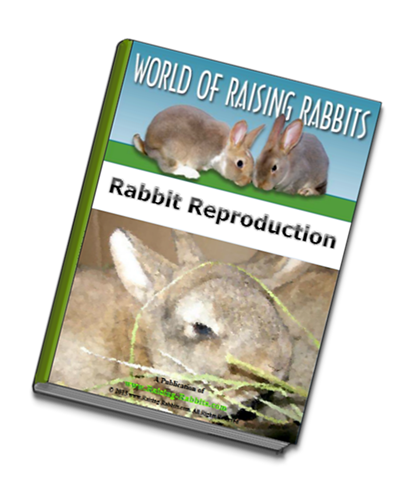
RABBIT REPRODUCTION
Rabbit Reproduction is everything you need to know about how big bunnies make little bunnies, who grow up to make more little bunnies. We have put all of knowledge into this great eBook, so it's comprehensive about the entire reproductive process. You can have everything available on your computer in one spot, AND you can also print yourself a copy to take out to the rabbit hutch when you are checking on your fluffy bundles of joy. Here are just a few of the many subjects covered:
- Is my rabbit pregnant?
- When can my rabbit get pregnant? (And how often can she get pregnant.)
- How will I know if she is pregnant?
- What does she need?
- What does she do?
- What can I do if there are complications?
- What should I look for?
- What do the babies need?
The only thing this book doesn't cover is throwing a baby shower for your rabbits.
Click here to learn more about this e-book
Summer sale! All of our ebooks are on sale 30% off!
If you would like to know what titles we have available check out our BOOKSTORE.
If you already know that Rabbit Reproduction is exactly what you need, click BUY NOW!
Only 12.99 $8.99
Your purchase is 100% Risk Free. See our Double-Value Guarantee below.
We filled the web pages with as much detail as was reasonably possible.
And then, from mating to weaning, we completed all the information, doubled the number of photos and details, and put it all into our 108-page e-book titled Rabbit Reproduction. This e-book provides much more than our webpages can contain.
This e-book is in PDF form, easily readable and printable through any free PDF reading software such as Adobe Reader. Your purchase provides you with an immediate download link so you can receive your copy of Rabbit Reproduction without delay. It will ALL be conveniently at your fingertips when you need it.
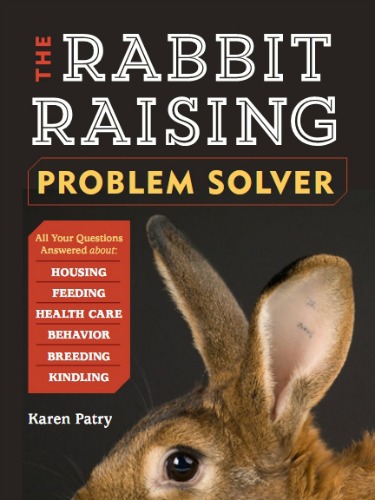
Our book, the Rabbit Raising Problem Solver is a great paperback with questions and answers for everything you need to know about bunny, from health to housing. What does it cover?
- Diseases and how to treat them
- Injuries and how to treat them
- Behavior
- Diet
- Breeding
- Care of babies and mamas
- Housing
- And lots more!
******Testimonial: the index in back is a life saver. It has everything! Any time I need to know something, I flip to the index in back and it takes me straight there. This is so much better than trying to get through an online search engine that gives you a ton of results that are just selling unrelated junk. This book is also written for real people, and not filled with a bunch of technical jargon that you don't know if you aren't a vet. I love this thing! Gina, Washington state, July 2020.******
If you would like an autographed book for only $22.42, CLICK HERE TO BUY NOW.
Here are our web pages
on the topics of breeding rabbits and the
stages of rabbit reproduction
But first: Are your rabbits in good condition and capable of reproducing? Obese rabbits have difficulty reproducing. Obese rabbit bucks are less fertile, and if the obese rabbit doe does manage to conceive, she will be at additional risk for complications. Check the Obese Rabbit page for more information.
- Rabbit Mating: To mate rabbits, take the doe to the buck. Important: if you take the buck to the doe, the fur will fly, as does are very territorial. If she's not 'in the mood,' she'll wreak havoc on the buck.
- After the rabbit breeding, the gestation period for a female rabbit (doe) is 31 days. The doe can kindle (give birth) between day 28 and day 35, however 99% of the time she’ll be punctual - between day 31 and day 32.
- Pregnant Rabbit: Is the doe really pregnant? Here are some signs to watch for in a pregnant rabbit.
- Rabbit Pregnancy: More info on rabbit pregnancies - get practice interpreting confusing rabbit pregnancy signs in one breeder's three Californian does.
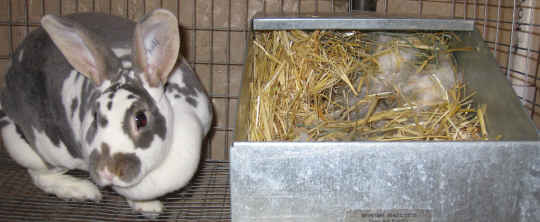
- Rabbit Nest Box: How to prepare the rabbit nesting box and when to place it in the doe's cage. Nest boxes are essential for breeding rabbits. We prefer metal nest boxes, but, some wood nesting boxes will serve very well.
- Fetus Images: Just so you know, a rabbit pregnancy occasionally doesn't go exactly as planned. (Advisory: these are photos of actual fetuses. Some may find these images disturbing. These images are provided to help educate rabbit care takers. All rabbits in the images were treated with dignity, respect, and gentleness.)
- Pregnant Rabbit Behavior: Click
here for a true story about a pregnant rabbit that nearly fooled us...
Nesting Box Materials: Pine Shavings, Hay, Straw
- Rabbits Giving Birth: The glorious moment usually occurs in the middle of the night, though this is not a hard-and-fast rule.
- Warming Chilled Kits: We hope you never discover a kit on the cage wire with the body temperature of a popcicle. But there might still be hope, unless the kit is frozen solid...
- Taking Care of Baby Rabbits immediately after kindling, and especially if the doe needs a helping hand during or shortly after kindling. Keep an eye out for little kits dropped accidentally outside the nest box.
- Care of Baby Rabbits - during the first two weeks of life or so.
- Raising Baby Rabbits - from about 2 weeks of age to weaning.
- Weaning Rabbits - When and how to wean bunnies safely
- Weaning Worries - all kinds of fears and misguided ideas exist on the web about bunny weaning! Allay your fears by learning the biological realities of weaning young rabbits, so you can safely wean your rabbits, or purchase a safely weaned bunny.
- Sexing Rabbits - how to determine the gender of the baby bunnies as early as 2-3 weeks of age.
- Rabbit Pedigree Charts - what a pedigree is, and how to create pedigrees for your new rabbits
- Info on Rabbits and Bunnies: Rabbit information, including frequently asked questions and answers (FAQ) about pregnant rabbits, rabbits giving birth, and taking care
of bunnies
Excellent Natural Doe Conditioners and Lactation Aids
Your doe has a big job, making and nursing healthy babies. Good nutrition is key.
Bunny Branola
The Ultimate Rabbit Conditioning Supplement
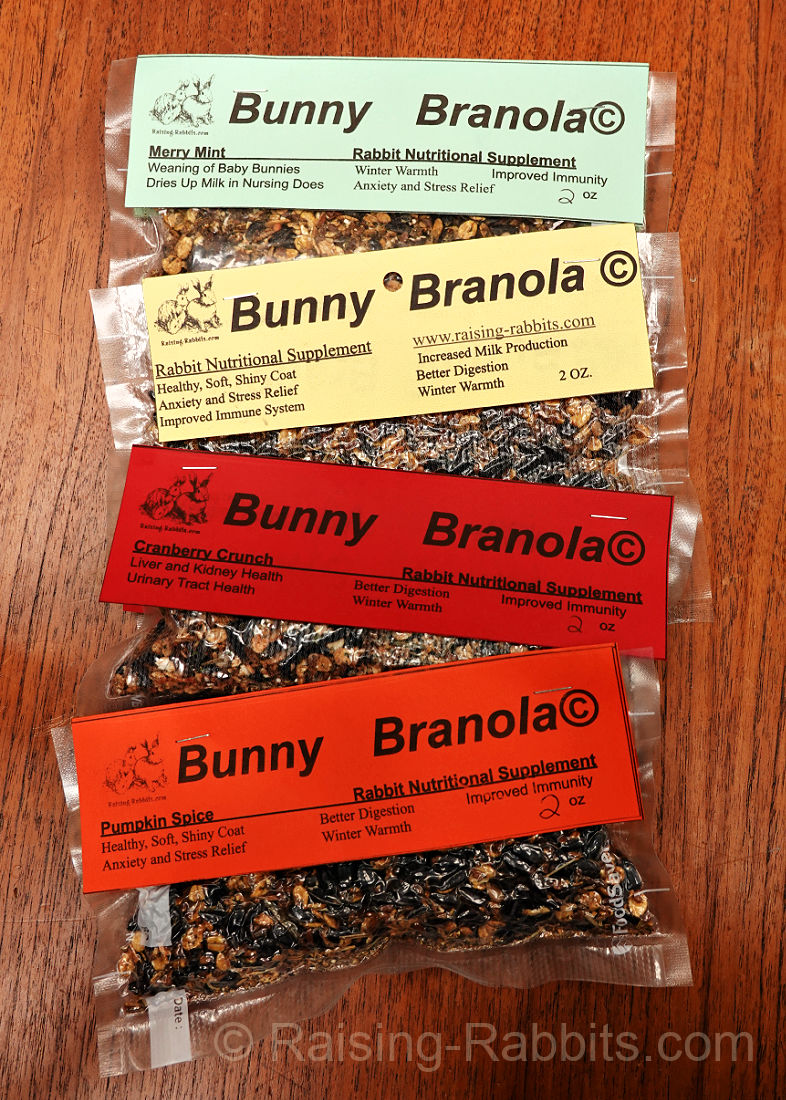 |
Bunny Branola is the ultimate rabbit conditioning supplement. Our specially formulated treat is all natural ingredients from Washington state. No dyes, preservitives, empty fillers, or other chemicals, just pure goodness. Bunny Branola is available in 4 delicious flavors year round: Original Classic (General Health) If you want to find out more about Bunny Branola, including the list of all natural ingredients click HERE. If you are ready to buy now, we have several sizes, just click the one you want. All prices include shipping. Sample: 2 oz - $7 |
When to re-breed a doe depends on a number of different factors. Some breeders simply breed every three months. This gives the doe plenty of time to rebuild her condition. Others let the doe's condition dictate the rebreeding schedule.
Breeding rabbits can provide unforgettable experiences when done wisely, and is especially valuable for teaching kindness, empathy, and animal husbandry to children.
"The righteous man regards the life of his
animal"
(Proverbs 12:10)
RABBIT REPRODUCTION
Rabbit Reproduction is everything you need to know about how big bunnies make little bunnies, who grow up to make more little bunnies. We have put all of knowledge into this great eBook, so it's comprehensive about the entire reproductive process. You can have everything available on your computer in one spot, AND you can also print yourself a copy to take out to the rabbit hutch when you are checking on your fluffy bundles of joy. Here are just a few of the many subjects covered:
- Is my rabbit pregnant?
- When can my rabbit get pregnant? (And how often can she get pregnant.)
- How will I know if she is pregnant?
- What does she need?
- What does she do?
- What can I do if there are complications?
- What should I look for?
- What do the babies need?
The only thing this book doesn't cover is throwing a baby shower for your rabbits.
Click here to learn more about this e-book
Summer sale! All of our ebooks are on sale 30% off!
If you would like to know what titles we have available check out our BOOKSTORE.
If you already know that Rabbit Reproduction is exactly what you need, click BUY NOW!
Only 12.99 $8.99
Your purchase is 100% Risk Free. See our Double-Value Guarantee below.
Double-Value Guarantee
Our policy is to always OVER-deliver
on value,
which is why your purchase is fully covered by our
Double-Value
Guarantee.
Go ahead - take any of our e-books for a test drive. Peruse our detailed informational and educational e-books. Examine our plans for building rabbit cages, runs, or metal or PVC hutch frames. Check out the Rabbit Husbandry info e-books.
If you aren't completely satisfied that your e-book purchase is worth at least double, triple or even quadruple the price you paid, just drop us a note within 45 days, and we'll refund you the entire cost. That's our Double-Value Guarantee.
Note: When you purchase your
e-books, they will be in PDF format, so you can download them to any device that
supports PDF format. We advise making a back-up copy to a drive or cloud
account. If the books are lost, you can also purchase another copy from Raising-Rabbits.
Double-Value Guarantee
Our policy is to always OVER-deliver
on value,
which is why your purchase is fully covered by our
Double-Value
Guarantee.
Go ahead - take any of our e-books for a test drive. Peruse our detailed informational and educational e-books. Examine our plans for building rabbit cages, runs, or metal or PVC hutch frames. Check out the Rabbit Husbandry info e-books.
If you aren't completely satisfied that your e-book purchase is worth at least double, triple or even quadruple the price you paid, just drop us a note within 45 days, and we'll refund you the entire cost. That's our Double-Value Guarantee.
Note: When you purchase your
e-books, they will be in PDF format, so you can download them to any device that
supports PDF format. We advise making a back-up copy to a drive or cloud
account. If the books are lost, you can also purchase another copy from Raising-Rabbits.
* Affiliate Links*
As an affiliate of several companies, including Amazon.com, we earn from qualifying purchases. Your purchases from these affiliates come at no extra cost to you.
Bunny Bazaar!
Online Shopping Mall by Raising-Rabbits!
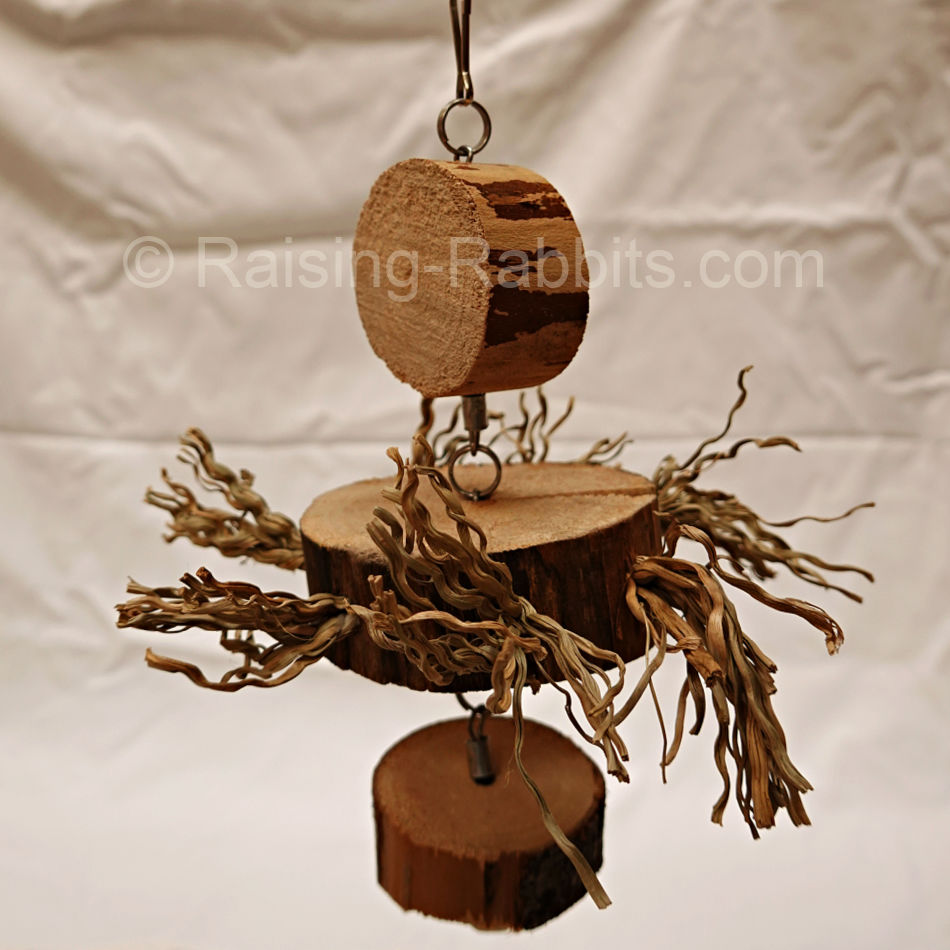
One-Stop Shop for Rabbit Swag for both Buns and Humans
Bunny Branola!
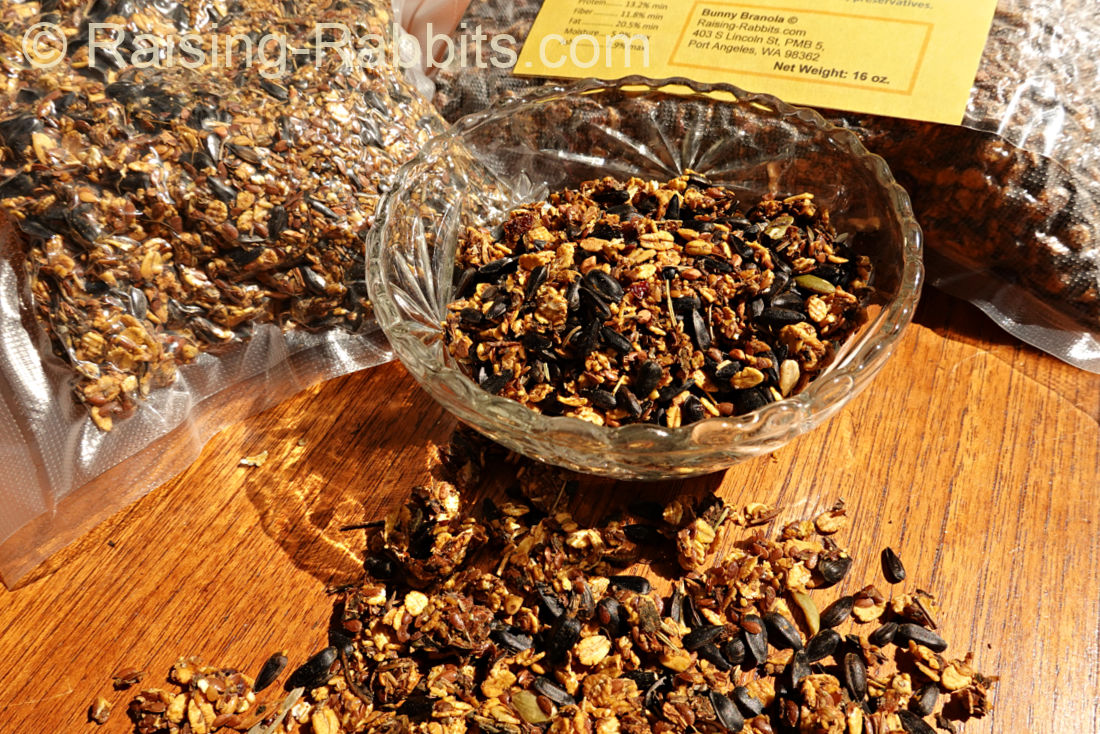
The Ultimate
Rabbit Nutritional Supplement and Treat!
4 delicious flavors! Sample packs available!
Yes! I want more info!
Yes, Buy Bunny Branola Now!
Look What's NEW!!
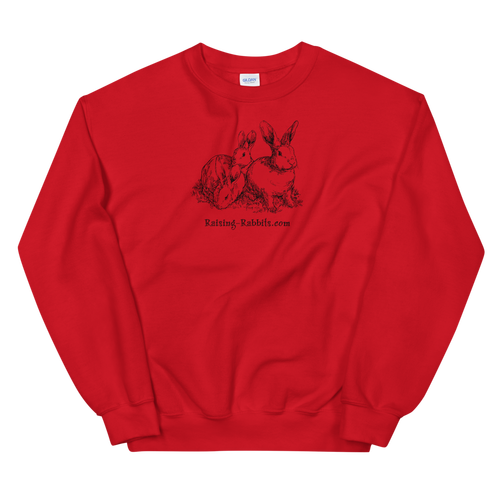
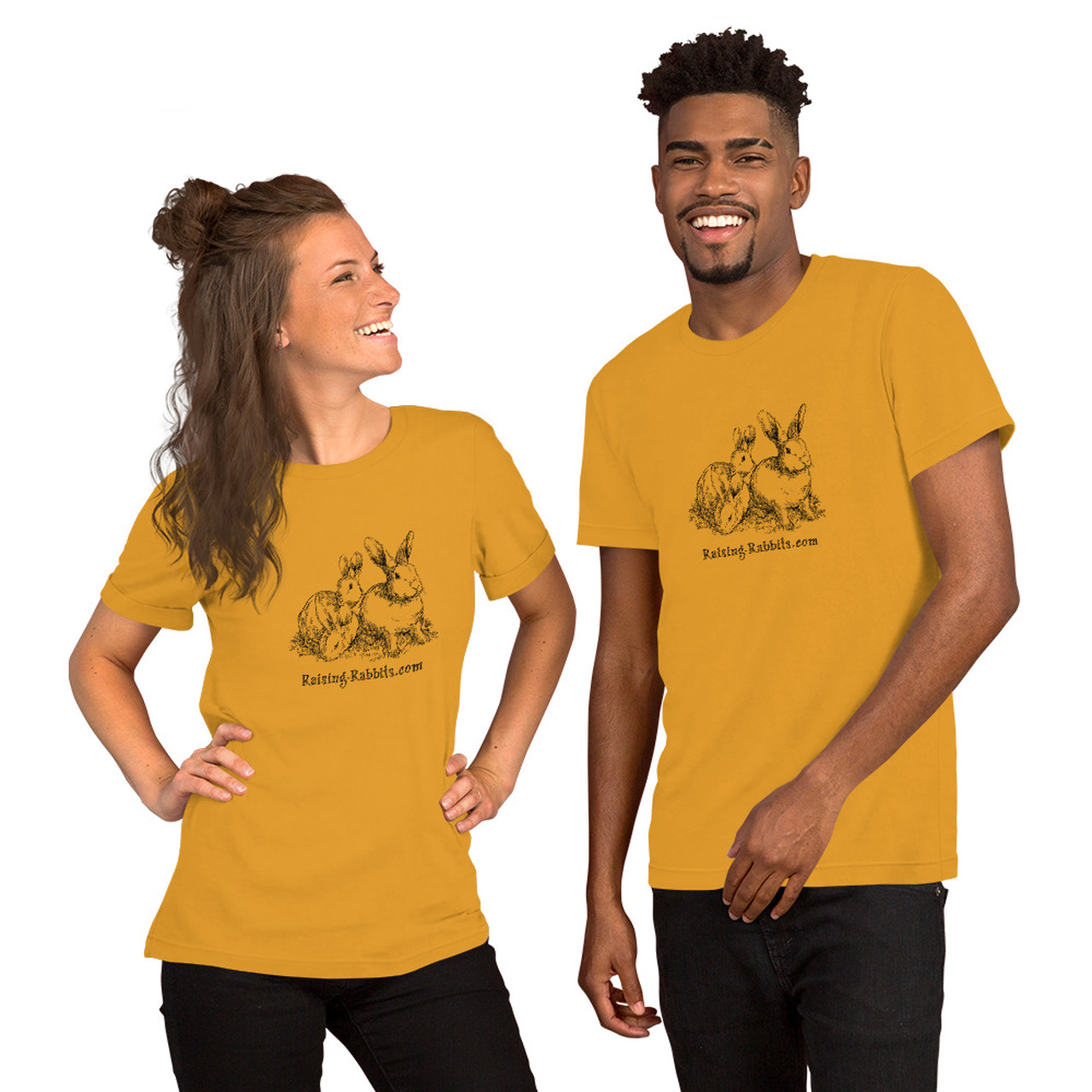
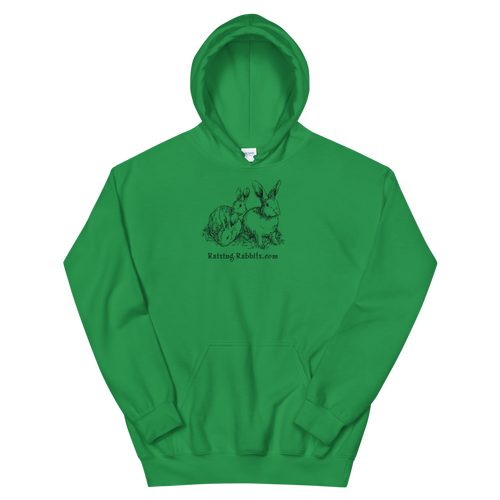
Our very own classy
Raising Rabbits Sweatshirts, T-shirts, and Hoodies!
 |
 |
 |
.
We're now offering classy, unisex
Raising Rabbits
sweatshirts and hoodies,
Available in a great assortment of colors!
(We have unisex T-shirts too.)
Check out the Bunny Bazaar for our gorgeous
garments!
Order your own today!
They make great gifts too!!
Featured Rabbitries:
Click the Rabbitry Name Links:
Canada, Quebec
MapleRidge Stables Rabbitry
Himalayan Rabbits
Arizona
Hostile Hare
Chinchillas, Cages
Illinois
Open Doors Rabbitry
Lionheads, New Zealands
Kentucky
Goshen Bunnies
Holland Lop and Mini Plush Lop
New Jersey
Go Bunny Treats
All Natural Rabbit Treats
Mini Plush Lop Bunnies
All Natural Rabbit Treats
Belle's Bunny Boutique
Holland Lops & Mini Lion Lops
North Carolina
What The Fluffle Rabbitry
New Zealands, Champagnes
Breadbox Rabbitry
Netherland Dwarfs
The Farm at Fort Mill
Holland Lops
(Right across the South Carolina
border at Charlotte)
Pennsylvania
Happily Ever After
Mini Plush Lops, Holland Lops,
Netherland Dwarf, Lionhead,
Mini Plush Lop, & Mini Rex
Bunnies by Emma and Ellie
Holland Lop, Mini Lop,
Mini Plush Lop,
Mini Rex/Holland Lop Mix
Rhode Island
Shepherds Purse Rabbitry
Holland Lops
South Carolina
Jubilee Farms
Holland Lops
Washington
Cotton Candie Tails
Lionheads, Vienna-Marked
Subscribe to Rabbit Rhythms,
our e-newsletter !
Get rabbit news, husbandry and health tips mostly every month. It's easy - we only need your email address, then hit the 'subscribe' button. Enjoy!
Recent Articles


-
Mama Rabbit Preparing Her Babies Crib
Apr 25, 24 02:55 PM
 I caught my doe busy in her crib making occupation one day. She didn't care for my camera, and certainly seemed to feel uneasy in her mind that I should
 -
Raw Rabbit: Order raw frozen rabbit for pets
Mar 25, 24 07:45 PM
 Raw rabbit. Convenient online ordering of raw frozen rabbit as whole prey, partially processed, or ground, for feeding pets species-appropriate meals
 -
Farm at Fort Mill
Mar 01, 24 03:22 PM
 Farm at Fort Mill has moved. It is now Jubilee Farms Holland Lops, part of Edgemoor Equestrian, in Edgemoor SC. They offer riding lessons and host events.

Raising-Rabbits: Home of
The Rabbit Raising Problem Solver
$22.62 - includes
- 10% off your autographed copy of Rabbit Raising Problem Solver
- All packaging, handling, and Media Mail postage costs (WA residents are subject to sales tax)
- Applies to US addresses - (sadly, Media Mail is not offered for international shipping, not even for really awesome books)
- (International shipping is available, of course, but it's out of our control how much they charge for shipping. Send us your country, city, and area code to obtain a shipping quote.)
* Affiliate Links*
As an affiliate of several companies, including Amazon.com, we earn from qualifying purchases. Your purchases from these affiliates come at no extra cost to you.

New! Comments
Have your say about what you just read! Leave me a comment in the box below.