Pasteurellosis
Eliminating Snuffles Through Careful Breeding and Culling
Pasteurellosis is a rabbit disease that happens when the rabbit's immune system is overcome by pasteurella bacteria.
Snuffles is a common term used when the symptoms occur in the respiratory system, and aptly describes the sneezing jags these sick rabbits experience.
With up to 100% of ALL DOMESTIC RABBITS being exposed to, or carrying the bacteria P. multocida, it is very important for breeders to become aggressive with their breeding and culling.
Outwitting pasteurellosis happens through
consistent culling of all sick rabbits. The animals that remain will be the ones with
HEALTH fixed in their genetic code and immune systems.
IF you’re willing to cull any rabbit that gets sick, whether you have a trio of meat rabbits in the backyard, or a show herd of a hundred or more, you can still have all healthy animals within two or three years by following these simple guidelines. And even if each litter contains just 1 healthy bunny in a litter of 8 to start out with, it IS possible to arrive at a healthy herd within several years.
See our Pasteurella multocida page for other manifestations of the disease. (Respiratory symptoms are only part of the picture.)
Go to Pasteurella Bacteria for help with determining whether or not your rabbit has Pasteurellosis, or something far less ominous, such as a new batch of dusty feed.
Go to Bordetella in Rabbits for help determining whether your rabbits actually have Bordetellosis rather than Pasteurellosis. Bordetellosis might be a suspect when youngsters get sick but all the mature rabbits remain fine. Always get a vet's help with the diagnosis if necessary.
How to Defeat Pasteurellosis:
(These instructions assume that you are reasonably confident that Pasteurella multocida is the cause of disease in your barn.)
- Maintain a reasonable "no-mercy" rule in
your barn. A rabbit that sneezes once
goes on our ‘watch-list.’ If it sneezes again, it goes to the top of the list.
At the third sneeze, the rabbit goes out of the barn into our Sick Bay, until
butchering day.
- But be fair and reasonable - cull for disease, not
for dust in the feed or nose in the water crock.
- Resist the temptation to kid yourself - there are no *cold* germs that affect rabbits. If an adult rabbit is sneezing repetitively, it's not a cold, it's pasteurellosis.

- Bleach is your friend. Disinfect cages
every time you move a rabbit. Our PVC
rabbit hutch frames make it easy to pull cages out onto the
lawn and completely disinfect.
- Disinfect feeders and crocks on a regular schedule
as well, and certainly every time you change out the cage.
- Propane torches are great for burning hairs off
cages. Note that using torches may shorten the life
of the cage, as it tends to weaken the galvanizing and allow rust to build up
more quickly.
- Use metal nest boxes and disinfect with bleach
before every use.
- Did your metal nest box come with a wood floor? Leave
the wood floor with the kits as a standing board, and make another floor for
the next use. (Or disinfect impeccably, as below.)
- Wooden nest boxes: Do impeccable cleaning and
thorough bleaching.
- At least one rabbit expert, Dr. Hutchinson at
Fresno State in California, believes using wooden nest boxes is fine, and that
removing the organic material from wooden nest boxes and bleaching would be
sufficient to disinfect the wood. The RN-training in me has trouble with this
opinion, but he's the one with the PhD, not me. I’m tellin’ ya, though, if I
had a problem in my herd, I'd switch to metal in a heartbeat. (For the
record, we do use metal
rabbit nest boxes exclusively, just in case.)
- At weaning, move the doe to a clean cage and leave
the kits where they are. This reduces the stress in the kits, and may help keep
their immune systems from taking a temporary nosedive.
- Give the kits a few days to adjust to life without
the doe, and then disinfect the cage floor. We made it easier on ourselves by
building a couple extra breeding cages.
Now we can do a quick switcheroo. The kits go first into disinfected
carrying cages, and then back into a brand-spanking-clean 36"x30" cage. Takes us
all of 5 minutes to get the new cage hung on the PVC rabbit hutch frame. The
used cage gets scrubbed down, bleached, and allowed to sit out in the UV rays
for a few days.
- What if several babies in a litter come down with
pasteurellosis? Cull the sick babies AND THE DOE. In this case, the doe may be an
asymptomatic carrier of pasteurellosis.
If you keep using her, her kits will keep getting sick because she keeps
showering the babies with germs.
If we were still growing our herd, we might use the doe to get several more litters, and when the first healthy female offspring were old enough, we’d cull the carrier doe, and place one of her healthy offspring into her (well-bleached) breeding cage. This way, instead of, say, 8 bunnies, we’d have perhaps 16 or 24 to choose from, knowing that a large percentage of these will end up in the crockpot.
Important Note! This bullet point assumes you know the problem is Pasteurellosis. If the doe appears healthy yet her offspring begin sneezing, the illness could also be Bordetellosis. A proper vet diagnosis will help you with some of your decisions. - Although you cull the doe, keep her healthy
offspring for use in your breeding program. These are the animals with the very
strong immune systems that you want locked into your herd.
- Cull, cull, cull.
By following these guidelines, you’ll sharply reduce your losses to pasteurellosis, and might pull up an unprofitable enterprise into the black. Your customers are likely to return to you again and again, knowing they’ll get healthy animals or healthy meat.
Pasteurellosis in one foundation buck at Aurora Rex Rabbit
Ranch
Years ago, we decided to start raising rabbits afresh after
a short hiatus. This time we planned to
start right, by obtaining breeding stock from the winningest
breeders we could find in our area. So
we drove twelve hours to a renowned breeder so we could see their operation and
bring home some fine breeding stock in our chosen breed, rex rabbits.
My first clue to trouble was the wall of odor that hit me when they opened the rabbitry doors. Sharp ammonia odors burn rabbits' lungs and predispose them to pasteurellosis.
It was hot outside, and they had a swamp-cooler going. I don’t know what the rate of air-exchange was in that building, but the limited space with three tiers of rabbits...I don’t know, it was pretty rank. But okay, this was a renowned, winning breeder.
My second clue to trouble was a shelf that was nearly buckling under the weight of dozens of bottles of antibiotics. I can’t believe I ignored this very alarming observation. Maybe it was because I was so anxious to believe the best about this breeder. After all, surely a winning breeder should have excellent foundation breeding stock.
The third strike should have catapulted me the heck outta there, 12 hour drive or no 12 hour drive. Down on the bottom tier, a ways down the row from the swamp cooler, was a mother doe with her very young litter. She was snuffling and snorting repeatedly, and blowing rings of white snot. Every sneeze flung white droplets everywhere, including all over the little kits.
Yikes. The breeder made some excuse about the rabbit being from someone else’s barn. Since the swamp cooler was blowing the air away from the rabbit I was considering for purchase, I didn’t leave.
Dear reader: if you EVER encounter a situation like this one, please learn from my experience and just walk away WITHOUT rabbits. Our All Rabbit Breeds page provides national club information where you can find plenty of reputable breeders. But be sure to ask them the hard questions!
The castor rex buck the breeder showed me looked really nice. He had been shown once already and won Best Opposite Sex of Breed. Meaning, a rex doe had won best of breed and he had been deemed the best Rex buck on that day. His fur was lush and dense, with an amazing rufus red ring.
I paid a LOT of money for this animal, loaded him into the truck, and headed home. By the time we pulled into the driveway 12 hours later, HE was blowing the white snot rings of pasteurellosis.
I was NOT HAPPY. My delusions of kindness wore thin - it seemed obvious that the rabbit had been medicated with antibiotics to mask his symptoms, which flared the minute he missed a dose and underwent the stress of a long drive to another rabbitry.
Dear reader: By following the clear guidelines at Raising-Rabbits.com on breeding for health, you won’t ever need to feel tempted to lower your ethical standards on account of the failed health of your rabbits.
For various reasons - the money paid, the excellent type, fur and density, and not to mention he was our only rex buck at the time, I decided I had to keep this animal and use him (briefly) in my breeding program.
- I housed him in an isolation cage.
- The does that were bred to him remained in his
cage a minimum amount of time, and then each exposed doe went into an isolation cage.
- I culled his offspring mercilessly. About 50% of his offspring went quickly into the stew pot, and more got sick later. These were also culled.
- Yes, some of the does also came down with pasteurellosis. We let them finish raising their litters, and then we culled them too.
- We kept the bunnies, but as described, the bunnies needed to remain totally free of the snots, or out they went.
Does this plan sound harsh?
Step back and picture the two
scenarios:
- Rabbitry A, where the herd practically
lives on antibiotics. The manager has to
spend hours every day giving injections to many rabbits, especially just before
the many rabbit shows they attend. The
rabbits rarely reach peak conditioning because their immune systems are always
weak. The rabbitry spends a small
fortune on drugs every month. Rabbits
sold from this rabbitry promptly exhibit symptoms of pasteurellosis, if they go
to a new home where antibiotic shots are not usual. The reputation of this rabbitry is in this
fashion severely damaged. Me, I finally
conceded I’d better not purchase any more rabbits from that outfit.
(Parenthetically, I purchased 2 more animals from this same breeder a few months after the first purchase, because I wanted to believe that my buck’s illness was a fluke. Animal #1 was wheezing with pneumonia within 2 weeks and in full wry neck (head tilt). I named him Adios and culled him. Animal #2, a young doe, began sneezing within 12 hours and slowly got sicker and sicker. She never made weight, failed to conceive twice, and I finally decided she was too obviously sick to function. This time I did a necropsy of sorts. She had stuff in her insides I had never seen before, and we decided she was not fit even for our animals. Now you know a bit more about me - I can be fairly naïve, and there are 3 reasons, not just 1, for my advice to the readers of this website.) - Rabbitry B, where the herd is healthy as a matter of course. These rabbits are brimming with joie de vivre. Their coats and conditioning are top-notch. The managers take their rabbits to shows without worrying (too much) about what germs they might pick up. Chores in this rabbitry are accomplished easily, happily and efficiently, and they’ve made one vet trip in 4 years, to check on a case of mushy droppings. (The symptom passed uneventfully, FYI.)
In the big scheme of things, it is far more unkind to nurse along many sick rabbits, than to dispatch the sick ones and develop a consistently healthy and happy herd of robust rabbits.
The world is not a better place for preserving the lives of animals that will never ever get well, no matter what remedies you use to combat pasteurellosis.
That’s our opinion, yes, but look also at the results of our strict culling:
Our sick castor buck was with us for a year. After he had distributed his genetics among the various does, we humanely culled this animal.
A year later, the distinct improvement in rabbit health within the herd was noticeable.
After 3 years, we could practically rub their noses in it.
The animals remained healthy. This is
because we’ve only kept animals whose immune systems are strong and who have
natural immunity to this dreaded rabbit illness. We have refused to use rabbits with weak
immune systems, and we don’t medicate.
Courageous breeders who cull animals that need culling will enjoy the same excellent results.
And I think that when the majority of breeders will find that courage, the losses of rabbits from snuffles will drop to nearly nothing within two or three years, while the percentage of HEALTHY rabbits, both among show and pet rabbits, will soar.
(Note: Vaccination is NOT needed for this plan to succeed. And in fact, vaccinating in a show herd is a ticket to failure.)
More info at the Merck Vet Manual on Pasteurellosis
Add your Comments or
Share your Experiences!
Your comments or experiences can help others who read them. So, comment away, and if you have pictures, you can post up to four of them. Pictures are always helpful.
(Have questions? Perhaps your question was already asked, and answered, below. If not, Karen has answered hundreds of your questions in her book: Rabbit Raising Problem Solver, covering every aspect of pet rabbit and livestock rabbit care as well as rabbit health and disease. We recommend it!)
Comments from Other Visitors...
Click below to see additional posts that other visitors have made to this page...
Snuffles or not? 
I got a doe around 3 months ago (5 months old at the time).
I noticed she was sneezing lots, eyes were clear and nose was only slightly damp at times, …
Netherland Dwarf Rabbit 7-8 years old Sick
It's the second time my rabbit has gotten sick.
I'm getting really worried - he is a family rabbit and we love him loads.
He's not just a rabbit …
Pasteurellosis or not?
I had a rabbit culled over a week ago that looked very sick. He started out sneezing and eventually his eye got it and we took him to the vets to get shots. …
Sneezing rabbit, what should I do?
Hello, I purchased 3 rabbits from one breeder all from different parents, one of them sneezes, no white or yellow mucus. I had kept them quarantined for …
Bordetella
Hi, my herd was exposed to Bordetella while being temporarily housed at another rabbitry. (Some rabbits became snotty and all tests came back positive …
3 Rabbits with snuffles quarantined and then culled, but does it now mean my whole herd are carriers????
I am very recently dealing with "snuffles", I had 3 bunnies come down with it (one was my stunning prize winning buck :(:(), I quarantined them from the …
Rabbits with snuffles ok to eat?
Is it ok to butcher and eat rabbits with symptoms of snuffles? (no antibiotics)
** **
Yes, ok. Rinse and cook the meat well, and discard the …
BEST article I have EVER read on Pasteurella!!
I do everything pretty much exactly as you described and have done so for over 10 years but I was missing a crucial step! I was culling the doe and her …
Sudden death in doe and 5 kits
I don't know if you can help but thought I'd ask... I recently purchased a doe and have since had her and 5 kits die. They simply went limp and then died …
Doe with snuffles has 3-week-old kits
My doe is sneezing more and more. At first I thought it was when she ate or drank but now. Her nose is damp and the inside of her front paws are damp. …
What to do if a rabbit's nose is only a little damp?
I'm not sure what to do about one of my rabbits. I was working with her to prepare for a show, and noticed she had matting on her left paw on Friday. …
What if my rabbits get better from snuffles?
Wanted to thank you for your information on snuffles and pasteurella, especially about saving the babies of sick animals. It's nice not getting a completely …
Matting on rabbit's inner paws but never any other symptoms Not rated yet
Hello. I know that matting inside the inner paws is a general indication of pasteurella. However, I have noted a handful of my rabbits that have had matted …
Would this work for Guinea Pigs too? Not rated yet
I’m just curious if breeding for resistance would be effective for guinea pigs too, or rats? Would you have to do things slightly differently with theses …
Hope for a Rabbitry Amidst Snuffles Not rated yet
Thank you so much for writing this. I just got a trio of Champagnes and a trio of Harlequins all in the same month. I was naive and didn’t quarantine anyone... …
Expanding breeding program Not rated yet
I apologize that this is a bit long, but I'm having a tough time finding answers for the many questions running around my head.
I have 3 breeding rabbits: …
White snot occasionally, nothing else Not rated yet
I recently purchased a doe from a reputable breeder/show person. The doe was fine until the day after a change in weather, one cold night. My rabbits are …
Rabbit Breeder Not rated yet
After going through nearly the exact same issue as you...I fully agree with your plan. I decided to start raising show Flemish and purchased some very …
Excellent articles, I agree 100% Not rated yet
Hi there, I read your articles and have given the link to dozens of beginning breeders over the past year. I had a very similar experience and your info …
Great article - Thank you Not rated yet
Thanks for the great article. I have learned so much about rabbit diseases these past few months! I have been treating with antibiotics for one thing after …
Thank you Not rated yet
I recently walked out into my barn and a rabbit that I have had since she was 12 weeks old without health issues was sneezing. She has a litter of 10 day …
Is this really true? Not rated yet
Is this really true? Because if you go on this site called Welcome to Ask a Biologist, someone asked a Biologist if you can breed for resistance to disease …
Why disinfect if almost 100% of rabbits are believed to have the disease anyway? Not rated yet
Hi I am just wondering about the protocols for disinfection. If all rabbits have Pasteurella anyway, why is it necessary to disinfect? As you are trying …
Can a 10 wk old male mate with a 6 mth old doe? Not rated yet
I have them both in the same cage and was wondering if they need to be separated.
* *
No, 10 wks is a bit young. But you'd best find it a new …
Should I cull my doe? Not rated yet
Hi there,
I got a Californian buck a little while ago. A few days ago I bred him to a very nice Californian doe. On the same day (during the breeding) …
Raising-Rabbits website is very helpful Not rated yet
Wow, this was so helpful. The entire website is helpful. I am just starting out and actually picking up a rabbit pair tomorrow that I will use for meat …
Double-Value Guarantee
Our policy is to always OVER-deliver
on value,
which is why your purchase is fully covered by our
Double-Value
Guarantee.
Go ahead - take any of our e-books for a test drive. Peruse our detailed informational and educational e-books. Examine our plans for building rabbit cages, runs, or metal or PVC hutch frames. Check out the Rabbit Husbandry info e-books.
If you aren't completely satisfied that your e-book purchase is worth at least double, triple or even quadruple the price you paid, just drop us a note within 45 days, and we'll refund you the entire cost. That's our Double-Value Guarantee.
Note: When you purchase your
e-books, they will be in PDF format, so you can download them to any device that
supports PDF format. We advise making a back-up copy to a drive or cloud
account. If the books are lost, you can also purchase another copy from Raising-Rabbits.
* Affiliate Links*
As an affiliate of several companies, including Amazon.com, we earn from qualifying purchases. Your purchases from these affiliates come at no extra cost to you.
Bunny Bazaar!
Online Shopping Mall by Raising-Rabbits!
One-Stop Shop for Rabbit Swag for both Buns and Humans
Bunny Branola!
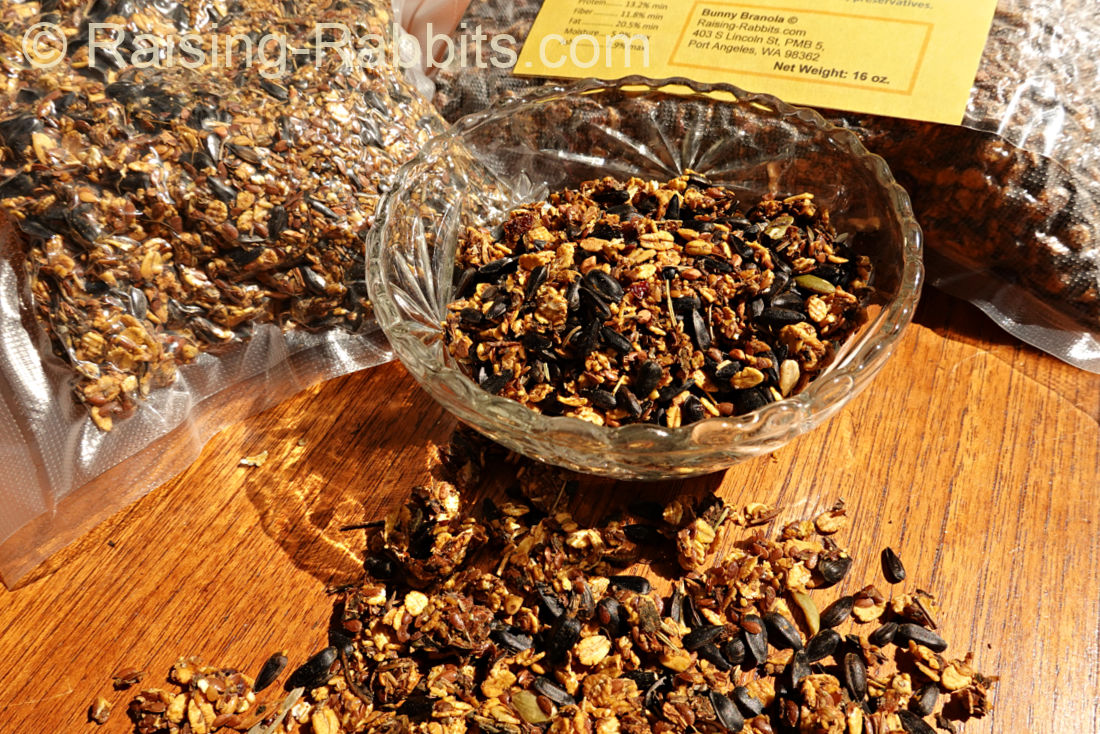
The Ultimate
Rabbit Nutritional Supplement and Treat!
4 delicious flavors! Sample packs available!
Yes! I want more info!
Yes, Buy Bunny Branola Now!
Look What's NEW!!
Our very own classy
Raising Rabbits Sweatshirts, T-shirts, and Hoodies!
 |
 |
 |
.
We're now offering classy, unisex
Raising Rabbits
sweatshirts and hoodies,
Available in a great assortment of colors!
(We have unisex T-shirts too.)
Check out the Bunny Bazaar for our gorgeous
garments!
Order your own today!
They make great gifts too!!
Featured Rabbitries:
Click the Rabbitry Name Links:
Canada, Quebec
MapleRidge Stables Rabbitry
Himalayan Rabbits
Arizona
Hostile Hare
Chinchillas, Cages
Illinois
Open Doors Rabbitry
Lionheads, New Zealands
Kentucky
Goshen Bunnies
Holland Lop and Mini Plush Lop
New Jersey
Go Bunny Treats
All Natural Rabbit Treats
Mini Plush Lop Bunnies
All Natural Rabbit Treats
Belle's Bunny Boutique
Holland Lops & Mini Lion Lops
North Carolina
What The Fluffle Rabbitry
New Zealands, Champagnes
Breadbox Rabbitry
Netherland Dwarfs
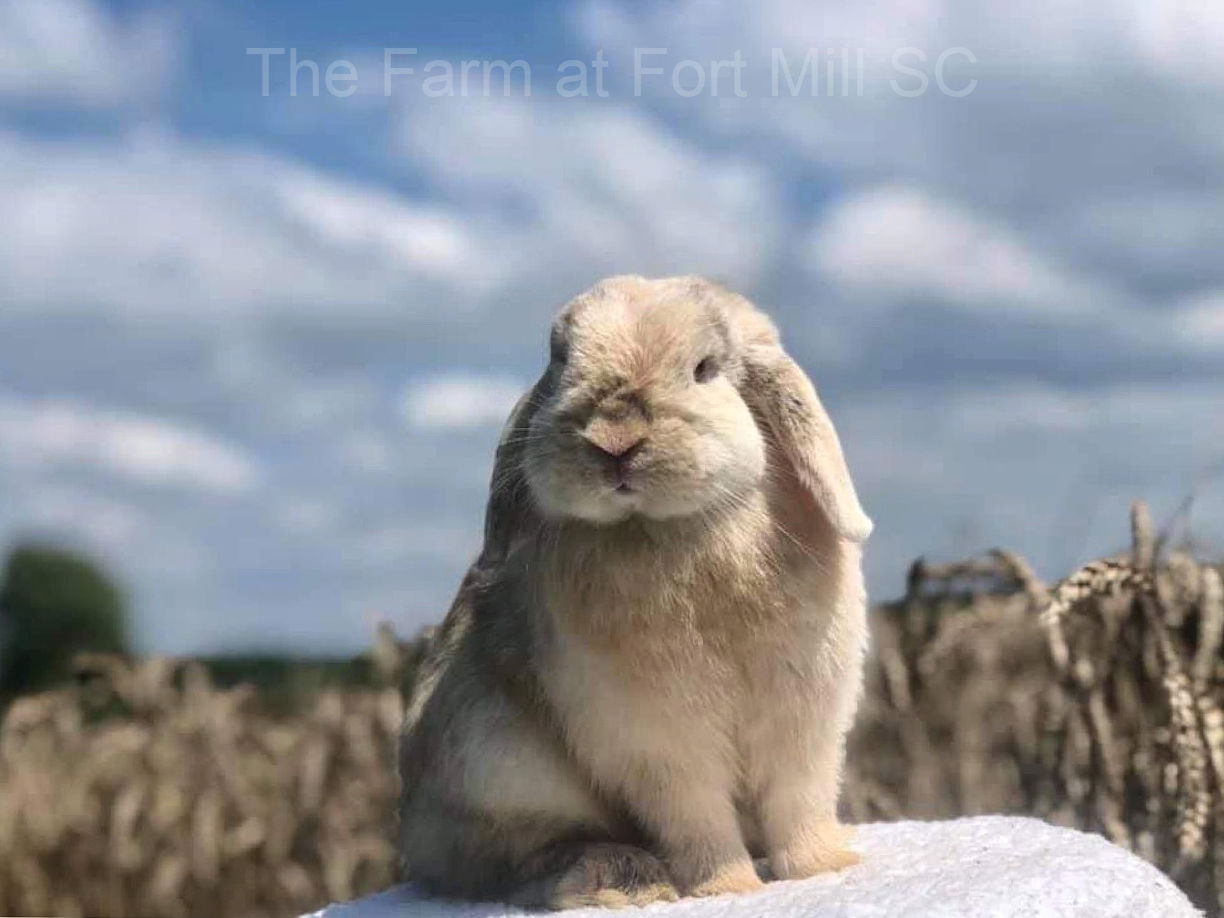
The Farm at Fort Mill
Holland Lops
(Right across the South Carolina
border at Charlotte)
Pennsylvania
Happily Ever After
Mini Plush Lops, Holland Lops,
Netherland Dwarf, Lionhead,
Mini Plush Lop, & Mini Rex
Bunnies by Emma and Ellie
Holland Lop, Mini Lop,
Mini Plush Lop,
Mini Rex/Holland Lop Mix
Rhode Island
Shepherds Purse Rabbitry
Holland Lops
South Carolina
Jubilee Farms
Holland Lops
Washington
Cotton Candie Tails
Lionheads, Vienna-Marked
Subscribe to Rabbit Rhythms,
our e-newsletter !
Get rabbit news, husbandry and health tips mostly every month. It's easy - we only need your email address, then hit the 'subscribe' button. Enjoy!
Recent Articles


-
Mama Rabbit Preparing Her Babies Crib
Apr 25, 24 02:55 PM
 I caught my doe busy in her crib making occupation one day. She didn't care for my camera, and certainly seemed to feel uneasy in her mind that I should
 -
Raw Rabbit: Order raw frozen rabbit for pets
Mar 25, 24 07:45 PM
 Raw rabbit. Convenient online ordering of raw frozen rabbit as whole prey, partially processed, or ground, for feeding pets species-appropriate meals
 -
Farm at Fort Mill
Mar 01, 24 03:22 PM
 Farm at Fort Mill has moved. It is now Jubilee Farms Holland Lops, part of Edgemoor Equestrian, in Edgemoor SC. They offer riding lessons and host events.


Raising-Rabbits: Home of
The Rabbit Raising Problem Solver
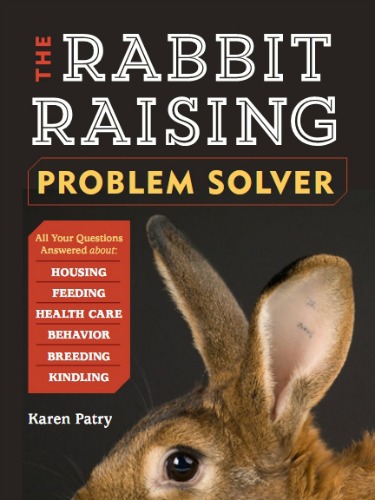
$22.62 - includes
- 10% off your autographed copy of Rabbit Raising Problem Solver
- All packaging, handling, and Media Mail postage costs (WA residents are subject to sales tax)
- Applies to US addresses - (sadly, Media Mail is not offered for international shipping, not even for really awesome books)
- (International shipping is available, of course, but it's out of our control how much they charge for shipping. Send us your country, city, and area code to obtain a shipping quote.)
* Affiliate Links*
As an affiliate of several companies, including Amazon.com, we earn from qualifying purchases. Your purchases from these affiliates come at no extra cost to you.

New! Comments
Have your say about what you just read! Leave me a comment in the box below.