New Zealand Rabbits
Perhaps surprisingly, New Zealand Rabbits are the very first truly American breed of rabbits. Their genesis is tied much more to Belgian Hares than it is to rabbits from New Zealand.
The very first New Zealands were Reds. We’ve chronicled the early history of New Zealand Red Rabbits here. It is also the history of New Zealand Whites, as they are nothing more than albino sports of the early New Zealand Reds.
Since New Zealands are as American as sliced bread, why are they called ‘New Zealand Rabbits?’
A printed article about New Zealand Red Rabbits circulated
in 1918 about rabbits imported from New Zealand to California. The article
connected them to the newly developing breed of rabbits known as New Zealands.
While the alleged imports may or may not have contributed to the breed that would bear their name, the establishment of the New Zealand Rabbit is now understood to be a completely American story, since the breed arose in multiple locations concurrently across the USA, with or without any New Zealand imports.
New Zealand Whites first showed up in the nestbox of a New Zealand Red doe in 1917. Four albino bunnies showed up in the same litter of seven kits.
The fact that one was a buck and three were does must have looked to the breeder, Mr. William Preshaw, like a gold-embossed invitation for the development of a new variety - White New Zealands.
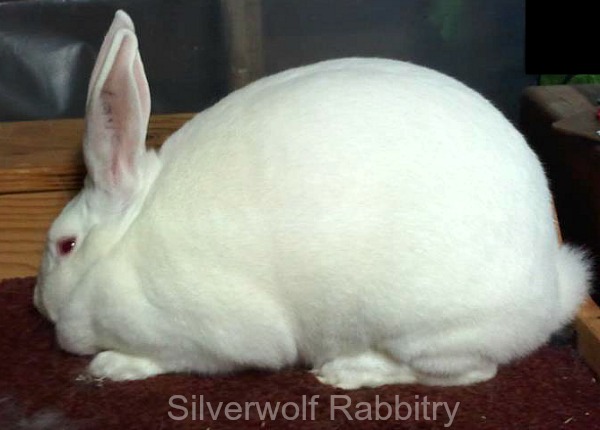 Excellent NZW show rabbit
Two years later, in 1919, Mr. Preshaw showed his "White
New Zealands" at the Stockton, California Fair. They were met with huge interest. By 1920,
Mr. Preshaw was advertising "Pure White New Zealand Rabbits" for sale.
The rabbits bore only slight resemblance to the New Zealand White Rabbits of the Twenty-First Century. In 1920, New Zealand Whites were stocky and white, but they tended to pose in a modified arch much like their progenitors, the Belgian hares.
Black New Zealands first occurred around 1924. However, today’s New Zealand Blacks were bred by Dr. Alfred DeCastro with Black New Zealand sports from California breeders. The variety was accepted by the ARBA in 1958.
Broken New Zealands are the newest recognized variety of New Zealands in the USA. As of February, 2010, New Zealand varieties are:
- Red (Bred to a separate and different standard in the UK)
- White
- Black
- Broken
It is our understanding that Blue New Zealands are being developed through a Certificate of Development from the ARBA.
Nesting Box Materials: Pine Shavings, Hay, Straw
Excellent New Zealand Rabbits
Today, New Zealand Rabbits have been bred nearly to
perfection. They give other breeds very stiff competition for the coveted Best
In Show award.
- The majority of New Zealands in the USA are in very close conformity to the breed standard of perfection. Judges have to get picky in order to rank the entries.
- There is no resemblance in today’s New Zealands to the Belgian Hare breed.
- New Zealands are now the epitome of a meat producing breed - firm, meaty, full depth and breadth of hindquarters and slightly less so in the shoulders. They are posed flat to the table rather than arched.
- New Zealand senior bucks weigh 9-11 pounds; senior does weigh 10-12 pounds
- New Zealand Whites are the breed of choice for most commercial rabbit operations. Until recently, white fur was preferred as stray hairs would be less noticed against the pale meat. Additionally, white fur can be dyed to a color of choice, if desired.
- Fryers gain weight rapidly, reaching 5 pounds by 8
weeks or close to it.
- National NZ Rabbit Club in USA
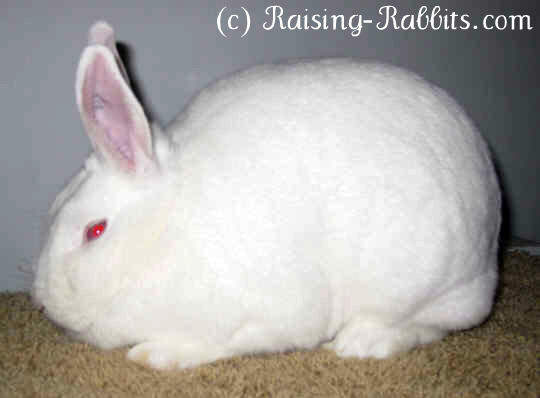
New Zealands have enjoyed rising popularity since the mid 1920’s. That’s a lot of years of breeding, line-breeding and at times, in-breeding.
As a result, traits like...
- mothering
- siring
- numbers of kits per litter
- milking
- fryer vigor
- feed to gain ratio
have been carefully maximized and built in to many commercial herds. Some commercial operations look for the addition of hybrid vigor by crossing their NZW’s with a second breed, or even a third, utilizing Californians, or Altex, a new breed designed to be a terminal cross within a commercial herd. (Altex are not recognized by the ARBA.)
Over the years, some recessive disorders have arisen in New Zealands. See Autosomal Recessive Disorders to learn more.
On the other hand, the same frequency of breeding can lend itself to test-breeding and eliminating the same recessive disorders that may have been uncovered. Nevertheless, if you’re thinking of raising meat rabbits or starting a commercial rabbit herd, you may wish to ask questions about any recessive disorders in the rabbits you’re considering for purchase.
Other than ensuring genetically excellent
foundation stock, you can hardly go wrong in choosing New Zealand Rabbits as a
meat rabbit or as a show breed.
Interested in other rabbit breeds?
Are you trying to decide which breed is best for you?
Do you see a bunny available, but haven't heard of that kind before?
Are you curious about the different types of rabbits?
Check out our ebook, Domestic Rabbit Breeds. We also have lots of other great books with everything you need to know about rabbits, from housing to healthcare. Check out our BOOKSTORE.
As the autumn leaves fall, so do our prices!
All of our ebooks are ON SALE, 30% off!
Is This Your Rabbit Breed?
Do you have a great story or experience with this breed of rabbits? Feel free to share it!
And while you're at it, you can include up to four photos.
What Other Visitors Have Said
Click below to see contributions from other visitors to this page...
New Zealand Fawns 
We started raising New Zealand Reds this year. The breeders we got our beginning stock from recently had a litter with fawns in the mix.
We now have …
Why I raise New Zealand Rabbits
I have focused on raising New Zealand rabbits for several reasons. First was the does' disposition - they are easily tamed and are excellent mothers, …
Oscar, our New Zealand Red
Two years ago, I bought a New Zealand Red baby from a local 4H girl. I had heard that rabbit manure was great for vegetable gardens, so I starting looking …
Bunny shows?
I have a mini rex named Appolo. He is about six months old. I went to the Arba and know all the info. I was wondering about the tattoo thing. Is there …
Had a NZ White male when I was 3 years old!!
When I was about 3 or 4 years old, now I am almost 60, I had a New Zealand White male as a pet. I named him "Billy" but of course, at that stage in my …
NEW ZEALAND RABBITS IN HAWAII 
I have been raising N.Z. for 12 years with lots of success.
Rabbitry Raising New Zealand Rabbits Not rated yet
Nestled away in the Cascade Mountains of Beautiful Central Oregon. Raising pedigree New Zealand rabbits. Visit our website for information, pictures, rabbits …
Hugo, My Best Rabbit Friend Not rated yet
Well I've always wanted a pet rabbit, I've always always loved rabbits. I went to a local feed shop as they usually around spring and summer have local …
New Zealand Whites for 4H Not rated yet
My son joined 4H 3 years ago and has been showing rabbits all three years. Two years ago I took him to a Rabbit breeder who raised Californians and New …
Red Rabbit travel easy Not rated yet
This morning I bought two red rabbits at the coast and took them 400 km to the great Karoo. I cooled them down with a water fan and they enjoyed the trip …
Now I know such kinds of rabbits exist... Not rated yet
A couple of years ago, before my 34th anniversary, I got a little white New Zealand rabbit as a present. It was love at first sight for me. However, back …
Black, White and Broken New Zealands Not rated yet
Raising rabbits is a very rewarding hobby, and raising New Zealand rabbits has been a dream come true for most of my life. New Zealands are truly a rabbit …
They are so lovely! Not rated yet
I have had my New Zealand Red for nearly ten years now, I bought her just thinking she was the cutest of the bunch in the pet shop - I was only young at …
Double-Value Guarantee
Our policy is to always OVER-deliver
on value,
which is why your purchase is fully covered by our
Double-Value
Guarantee.
Go ahead - take any of our e-books for a test drive. Peruse our detailed informational and educational e-books. Examine our plans for building rabbit cages, runs, or metal or PVC hutch frames. Check out the Rabbit Husbandry info e-books.
If you aren't completely satisfied that your e-book purchase is worth at least double, triple or even quadruple the price you paid, just drop us a note within 45 days, and we'll refund you the entire cost. That's our Double-Value Guarantee.
Note: When you purchase your
e-books, they will be in PDF format, so you can download them to any device that
supports PDF format. We advise making a back-up copy to a drive or cloud
account. If the books are lost, you can also purchase another copy from Raising-Rabbits.
* Affiliate Links*
As an affiliate of several companies, including Amazon.com, we earn from qualifying purchases. Your purchases from these affiliates come at no extra cost to you.
Bunny Bazaar!
Online Shopping Mall by Raising-Rabbits!
One-Stop Shop for Rabbit Swag for both Buns and Humans
Bunny Branola!
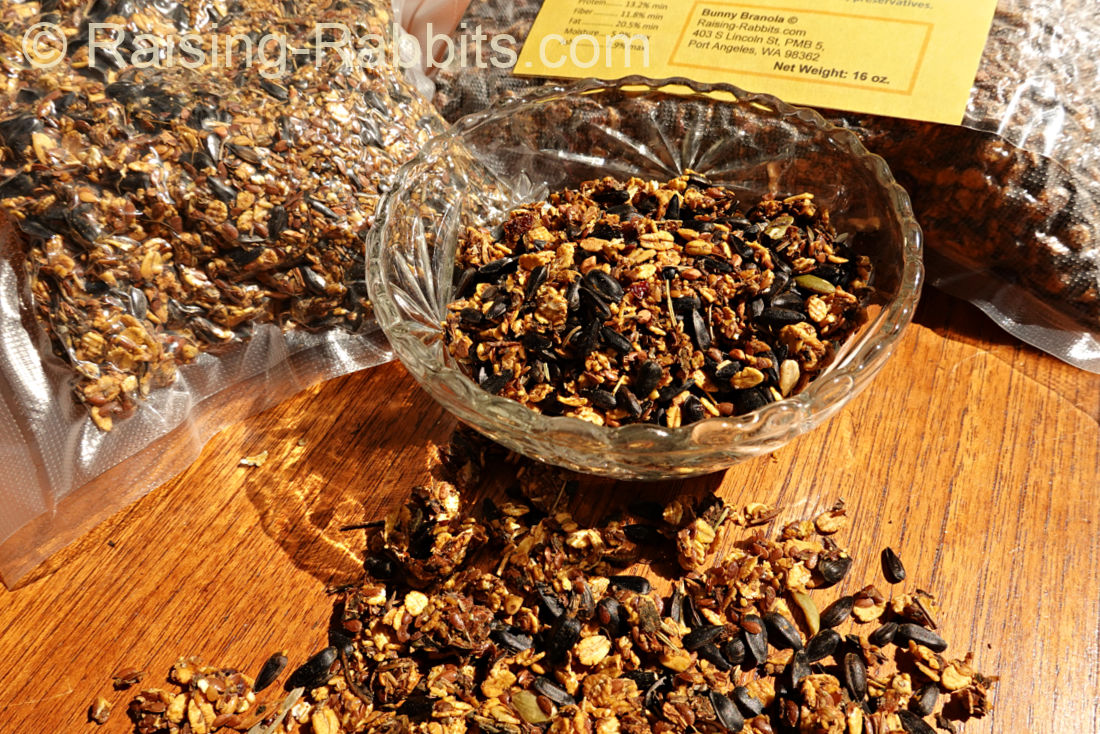
The Ultimate
Rabbit Nutritional Supplement and Treat!
4 delicious flavors! Sample packs available!
Yes! I want more info!
Yes, Buy Bunny Branola Now!
Look What's NEW!!
Our very own classy
Raising Rabbits Sweatshirts, T-shirts, and Hoodies!
 |
 |
 |
.
We're now offering classy, unisex
Raising Rabbits
sweatshirts and hoodies,
Available in a great assortment of colors!
(We have unisex T-shirts too.)
Check out the Bunny Bazaar for our gorgeous
garments!
Order your own today!
They make great gifts too!!
Featured Rabbitries:
Click the Rabbitry Name Links:
Canada, Quebec
MapleRidge Stables Rabbitry
Himalayan Rabbits
Arizona
Hostile Hare
Chinchillas, Cages
Illinois
Open Doors Rabbitry
Lionheads, New Zealands
Kentucky
Goshen Bunnies
Holland Lop and Mini Plush Lop
New Jersey
Go Bunny Treats
All Natural Rabbit Treats
Mini Plush Lop Bunnies
All Natural Rabbit Treats
Belle's Bunny Boutique
Holland Lops & Mini Lion Lops
North Carolina
What The Fluffle Rabbitry
New Zealands, Champagnes
Breadbox Rabbitry
Netherland Dwarfs
The Farm at Fort Mill
Holland Lops
(Right across the South Carolina
border at Charlotte)
Pennsylvania
Happily Ever After
Mini Plush Lops, Holland Lops,
Netherland Dwarf, Lionhead,
Mini Plush Lop, & Mini Rex
Bunnies by Emma and Ellie
Holland Lop, Mini Lop,
Mini Plush Lop,
Mini Rex/Holland Lop Mix
Rhode Island
Shepherds Purse Rabbitry
Holland Lops
South Carolina
Jubilee Farms
Holland Lops
Washington
Cotton Candie Tails
Lionheads, Vienna-Marked
Subscribe to Rabbit Rhythms,
our e-newsletter !
Get rabbit news, husbandry and health tips mostly every month. It's easy - we only need your email address, then hit the 'subscribe' button. Enjoy!
Recent Articles


-
Mama Rabbit Preparing Her Babies Crib
Apr 25, 24 02:55 PM
 I caught my doe busy in her crib making occupation one day. She didn't care for my camera, and certainly seemed to feel uneasy in her mind that I should
 -
Raw Rabbit: Order raw frozen rabbit for pets
Mar 25, 24 07:45 PM
 Raw rabbit. Convenient online ordering of raw frozen rabbit as whole prey, partially processed, or ground, for feeding pets species-appropriate meals
 -
Farm at Fort Mill
Mar 01, 24 03:22 PM
 Farm at Fort Mill has moved. It is now Jubilee Farms Holland Lops, part of Edgemoor Equestrian, in Edgemoor SC. They offer riding lessons and host events.
Raising-Rabbits: Home of
The Rabbit Raising Problem Solver
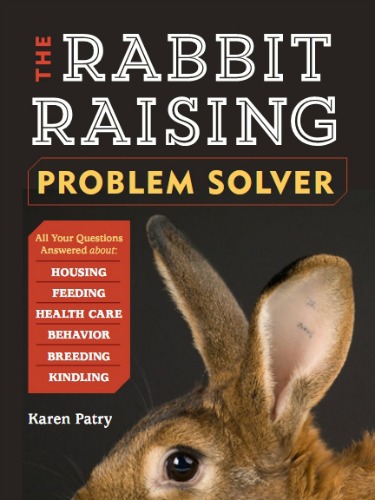
$22.62 - includes
- 10% off your autographed copy of Rabbit Raising Problem Solver
- All packaging, handling, and Media Mail postage costs (WA residents are subject to sales tax)
- Applies to US addresses - (sadly, Media Mail is not offered for international shipping, not even for really awesome books)
- (International shipping is available, of course, but it's out of our control how much they charge for shipping. Send us your country, city, and area code to obtain a shipping quote.)
* Affiliate Links*
As an affiliate of several companies, including Amazon.com, we earn from qualifying purchases. Your purchases from these affiliates come at no extra cost to you.

New! Comments
Have your say about what you just read! Leave me a comment in the box below.