Dwarf Rabbits:
Managing With the Dwarf
Gene
The smaller the dwarf rabbit, the higher the cuteness factor. But it is a lethal gene that dwarfs these little pint-sized bunnies.
If you’re a breeder of dwarf bunnies, or simply interested in knowing more about tiny rabbits, you’ll want to understand how the DWARF gene works, and how to manage your breeding program in order to maximize the numbers of true dwarf rabbits.
Let’s see how dominance versus recessive rabbit genetics principles apply to the DWARF gene.
The principles of dominant and recessive inheritance are the same for the dwarf gene as for other genes such as rabbit coat color genetics.
If you need a refresher on the basics of rabbit genetics, click here. The information will open in a new window so you can come back to this page as soon as you like.
The dwarf gene works as a simple dominant gene. This means that just one dwarfing gene will produce a dwarf rabbit. If you’re thinking ahead of me, you’ll already be formulating the following questions in your mind:
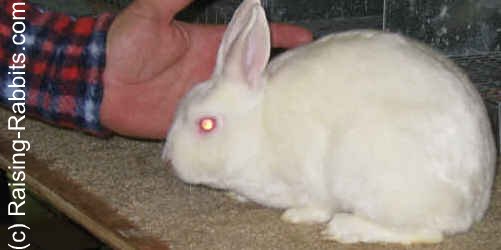
- Since rabbits always receive TWO genes for every trait, what happens if a rabbit receives TWO dwarf genes?
- What if a dwarf ends up with two normal-size genes? Is it still a dwarf?
Every rabbit has two size genes, along with the many gene duplicates for fur color, eye color, etc. Each sire and dam will pass on one of their size genes to each offspring, which will re-combine to make two per offspring.
Since the dwarf gene is dominant, just one dwarf gene will produce a dwarf rabbit. But this dwarf gene is also deadly, if paired with a second dwarf gene. Without a normal gene as a recessive back-up, a rabbit who inherits two copies of the dwarf gene always dies.
Here are the combinations of SIZE genes that any rabbit could receive:
- Dwarf and Dwarf, or...
- Dwarf and Normal, or...
- Normal and Normal
What do these combinations look like in real rabbits?
A double dose of the dwarf rabbit gene results in a "peanut."
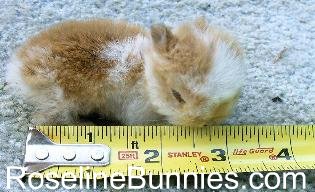
A
two-dwarf-gene combination is always fatal. The reasons for this are unclear, but it is
thought that the double dwarfs have digestive and brain insufficiencies. If not stillborn, they usually last only 1-3 days past birth, but a
few have lasted up to 3 weeks, and a tiny percentage to 4 weeks.
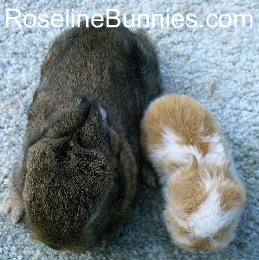
Peanuts are excessively tiny. The little guy pictured here managed to live 2 weeks, which is actually quite rare, and died the day after this picture was taken. (Pictures used by permission of Roseline Bunnies)
If you’re breeding any of the dwarf breeds, now you know why those ultra-tiny kits in your nestbox died. Breeders of the dwarf breeds deal with peanuts as a regular part of breeding.
The rabbits that get one normal gene and one dwarf gene are known as TRUE DWARFs.
These are the animals that you want in your
litters. True dwarfs are animals that
match the standard of perfection for their dwarf breeds.
If the true dwarf is a Netherland Dwarf rabbit, it is round, short, and compact. The ears are short, and the feet are correct.
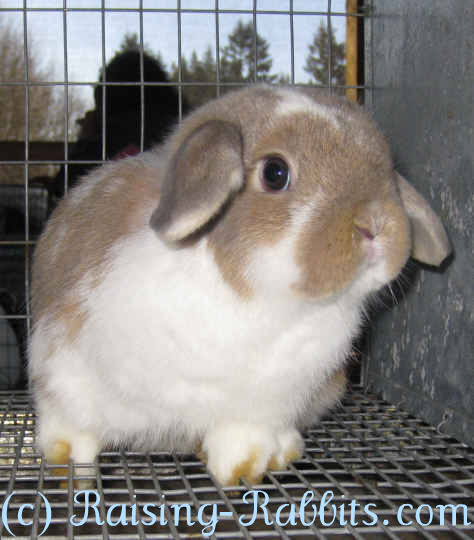
The true dwarf Holland Lop is tiny but massive, with correct proportions for its standard of perfection. The same is true for other breeds that carry the dwarf gene.
The dwarf rabbit that gets two normal genes is known as a FALSE DWARF.
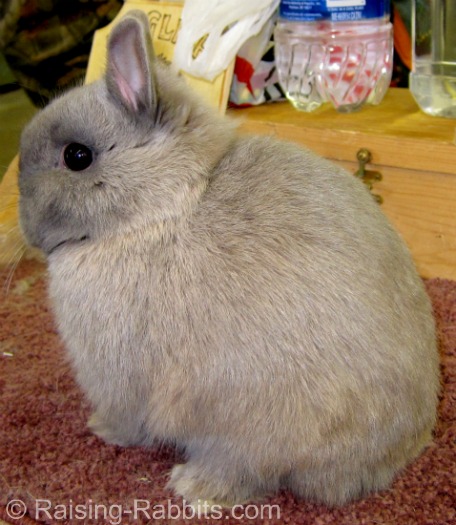 Lynx Netherland Dwarf
He does not carry a dwarf gene at all. But for most dwarfed breeds it’s not like you’ll get a twelve-pound rabbit.
Because the Netherland Dwarf rabbit is little to start with, the false dwarf is just a little bigger than normal. His ears will be a tad longer than normal, his body will be longer and gangly, and the feet will be longer. In fact, the Netherland Dwarf rabbit and Holland Lop breeders have a term for their false-dwarfs - "big uglies."
Most BUB's - big ugly bucks - are sold as pets. These false dwarfs are still very cute of course. But, if the BUB is very promising in many ways other than size, the option is open to keep the buck as part of your breeding program, for use with a true dwarf doe.
Similarly, dwarf breeders frequently consider keeping the BUD - big ugly doe - as a brood doe, if her body type is promising (not counting the extra size). Because remember, ideal dwarf rabbits have ONE dwarf gene and ONE normal gene. The BUD will contribute that normal gene to 100% of her offspring.
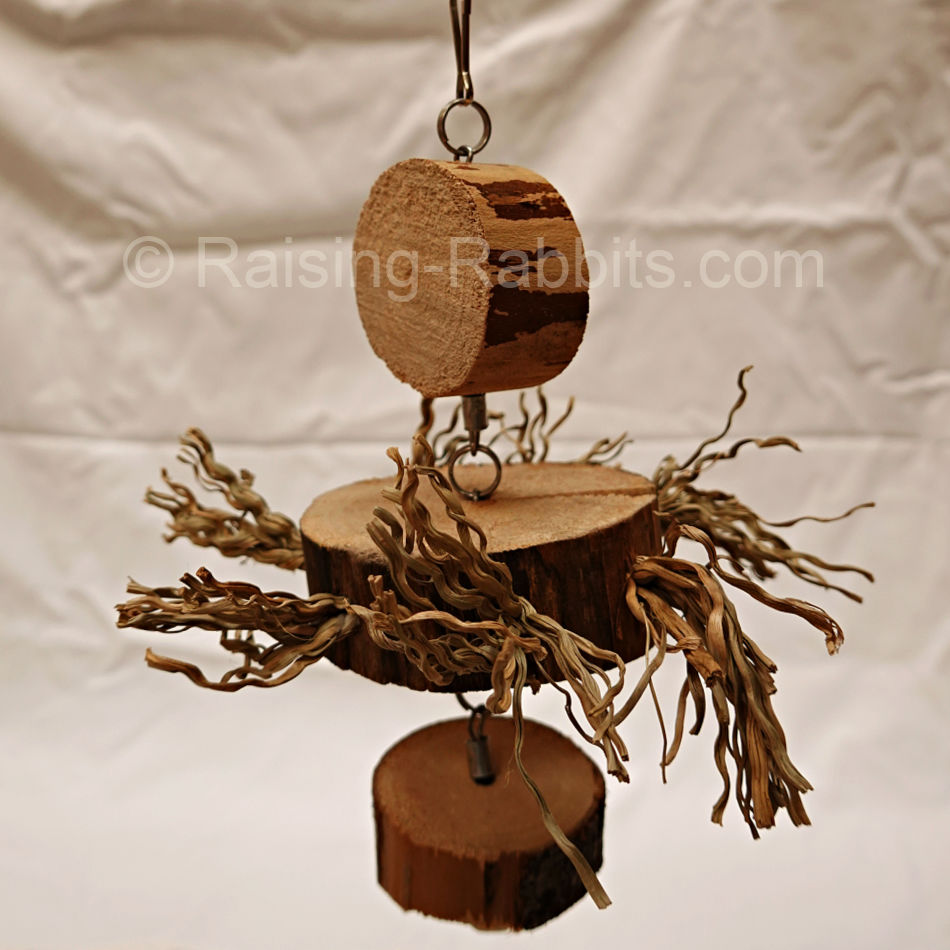
Popular Rabbit Toys with both Rabbits and Owners:
Given that dwarfs need both a normal and a dwarf gene, how can you expect dwarf rabbit genetic percentages to work out in the nestbox?
Remember that gene match-ups are totally random,
luck-of-the-draw, a coin-toss. In one
litter, there’s no telling what combinations you might get of true dwarfs,
false dwarfs and lethal peanuts in one litter.
But over many litters, the odds even out.
If you breed together two true dwarfs you’ll end up with:
- 25 percent peanuts. These will all die, of course.
- 50 percent true dwarfs. These are your keepers.
- 25 percent false dwarfs. You might consider keeping a BUD (doe) as a brood doe. The bucks most likely you’ll sell as pets.
(Below: Picture kindly supplied
by The
Nature Trail)
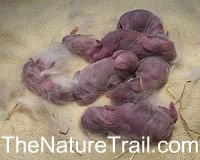 Litter of Holland Lops. The two tiny flattened kits are stillborn peanuts.
If you breed a true dwarf buck to a ‘big ugly doe’
(false dwarf), you’ll end up with:
- 50 percent true dwarfs (your keepers)
- 50 percent false dwarfs
So whether you use does that are true dwarfs or false dwarfs, if bred to a true dwarf buck, you’ll end up with 50% true dwarfs.
There could be a few advantages to using a BUD as a
dam:
- The larger doe may kindle more kits in a litter, increasing the odds for true dwarfs in a small measure.
- The larger doe may produce more milk.
- Lastly, because the BUD has only normal size genes to contribute, you won’t find any peanuts in the nest box. (Peanuts have to get a dwarf gene from each parent.)
On the other hand, you'll need a true dwarf doe in order to test whether your buck is a true dwarf or a false one (it's not always so easy to tell). Any peanuts in the litter PROVES the existence of a dwarf gene in both sire and dam, because both contributed a dwarf gene to the peanut.
In this picture of newborn Holland Lop dwarf rabbits, the
two small bunnies on the left are peanuts.
There's nothing wrong with using an outstanding true dwarf
doe for breeding purposes. Just be
prepared to find a peanut or two in your litters. Some dwarf breeders cull the peanuts when
they find them, and some wait until they expire on their own. If you choose to wait, do check the nest
every day so you can remove them once they die.
This keeps the nest clean from decay, odor and flies.
These breeds carry a DWARF gene:
- American Fuzzy Lop
- Dwarf Hotot
- Holland Lop
- Jersey Wooly
- Lionhead Rabbit
- Mini Rex
- Mini Satin
- Netherland Dwarf
I didn’t list the Polish rabbit or the Britannia Petite above, because technically, these miniature breeds are not ‘dwarfed.’
True Britannia Petites have been selectively bred for their tiny size - 2 1/2 pounds as an adult. (Max 3 1/2 pounds for Polish rabbits.) However, according to the American Britannia Petite Rabbit Society, most Britannia Petite bloodlines in the USA have been ‘corrupted’ with genes from Netherland Dwarfs in order to obtain a desired color gene. Along with the varied colors, the dwarf gene comes along for the ride unless the breeder specifically test-breeds and then eliminates the gene from the herd gene pool. Breeders of some "brit" bloodlines now find peanuts in their litters.
The same may also be true of some Polish rabbit lines.
All is not lost, however. Breeders can still test-breed, discover those individual rabbits that carry the dwarf gene, and remove them from their breeding program.
See Autosomal Recessive Disorders for tips on test-breeding.
It takes time and dedication, but the rewards are great!
Go to the Catalog of All Rabbit Breeds
Or, explore our full-information e-book on Domestic Rabbit Breeds
Are you trying to decide which breed is best for you?
Do you see a bunny available, but haven't heard of that kind before?
Are you curious about the different types of rabbits?
Check out our ebook, Domestic Rabbit Breeds. We also have lots of other great books with everything you need to know about rabbits, from housing to healthcare. Check out our BOOKSTORE.
As the leaves fall, so do our prices! All of our ebooks are ON SALE, 30% off!
BUY NOW for $12.99 $8.99!
Double-Value Guarantee
Our policy is to always OVER-deliver
on value,
which is why your purchase is fully covered by our
Double-Value
Guarantee.
Go ahead - take any of our e-books for a test drive. Peruse our detailed informational and educational e-books. Examine our plans for building rabbit cages, runs, or metal or PVC hutch frames. Check out the Rabbit Husbandry info e-books.
If you aren't completely satisfied that your e-book purchase is worth at least double, triple or even quadruple the price you paid, just drop us a note within 45 days, and we'll refund you the entire cost. That's our Double-Value Guarantee.
Note: When you purchase your
e-books, they will be in PDF format, so you can download them to any device that
supports PDF format. We advise making a back-up copy to a drive or cloud
account. If the books are lost, you can also purchase another copy from Raising-Rabbits.
Double-Value Guarantee
Our policy is to always OVER-deliver
on value,
which is why your purchase is fully covered by our
Double-Value
Guarantee.
Go ahead - take any of our e-books for a test drive. Peruse our detailed informational and educational e-books. Examine our plans for building rabbit cages, runs, or metal or PVC hutch frames. Check out the Rabbit Husbandry info e-books.
If you aren't completely satisfied that your e-book purchase is worth at least double, triple or even quadruple the price you paid, just drop us a note within 45 days, and we'll refund you the entire cost. That's our Double-Value Guarantee.
Note: When you purchase your
e-books, they will be in PDF format, so you can download them to any device that
supports PDF format. We advise making a back-up copy to a drive or cloud
account. If the books are lost, you can also purchase another copy from Raising-Rabbits.
* Affiliate Links*
As an affiliate of several companies, including Amazon.com, we earn from qualifying purchases. Your purchases from these affiliates come at no extra cost to you.
Bunny Bazaar!
Online Shopping Mall by Raising-Rabbits!
One-Stop Shop for Rabbit Swag for both Buns and Humans
Bunny Branola!
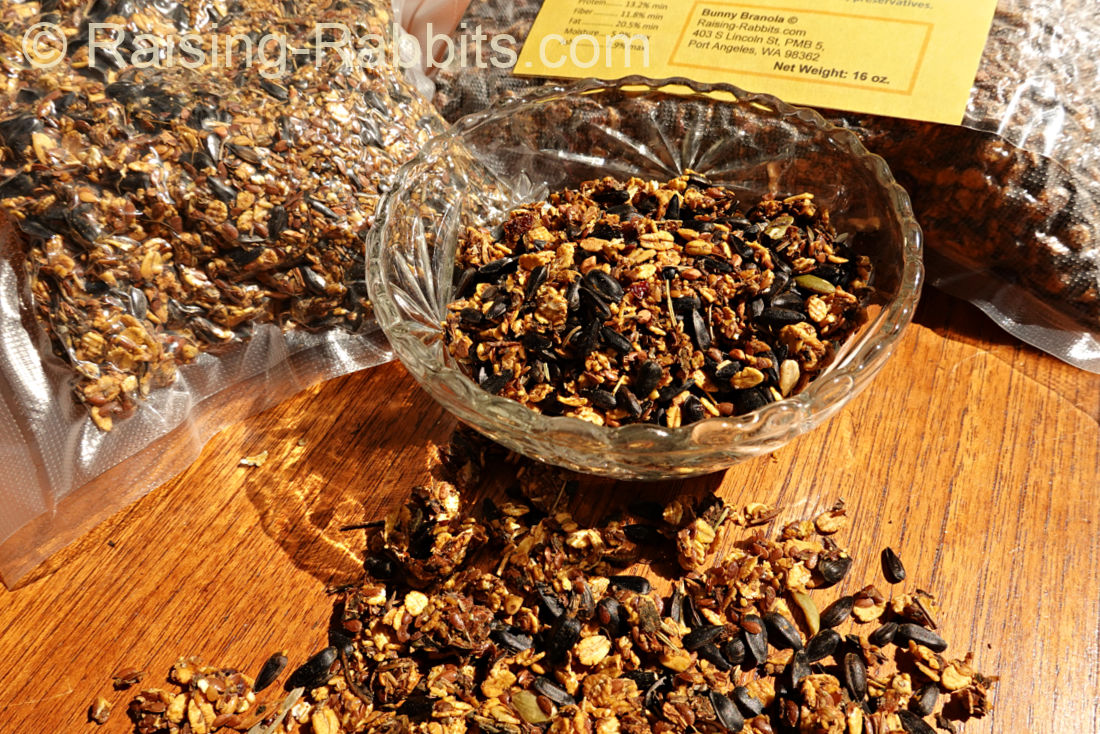
The Ultimate
Rabbit Nutritional Supplement and Treat!
4 delicious flavors! Sample packs available!
Yes! I want more info!
Yes, Buy Bunny Branola Now!
Look What's NEW!!
Our very own classy
Raising Rabbits Sweatshirts, T-shirts, and Hoodies!
 |
 |
 |
.
We're now offering classy, unisex
Raising Rabbits
sweatshirts and hoodies,
Available in a great assortment of colors!
(We have unisex T-shirts too.)
Check out the Bunny Bazaar for our gorgeous
garments!
Order your own today!
They make great gifts too!!
Featured Rabbitries:
Click the Rabbitry Name Links:
Canada, Quebec
MapleRidge Stables Rabbitry
Himalayan Rabbits
Arizona
Hostile Hare
Chinchillas, Cages
Illinois
Open Doors Rabbitry
Lionheads, New Zealands
Kentucky
Goshen Bunnies
Holland Lop and Mini Plush Lop
New Jersey
Go Bunny Treats
All Natural Rabbit Treats
Mini Plush Lop Bunnies
All Natural Rabbit Treats
Belle's Bunny Boutique
Holland Lops & Mini Lion Lops
North Carolina
What The Fluffle Rabbitry
New Zealands, Champagnes
Breadbox Rabbitry
Netherland Dwarfs
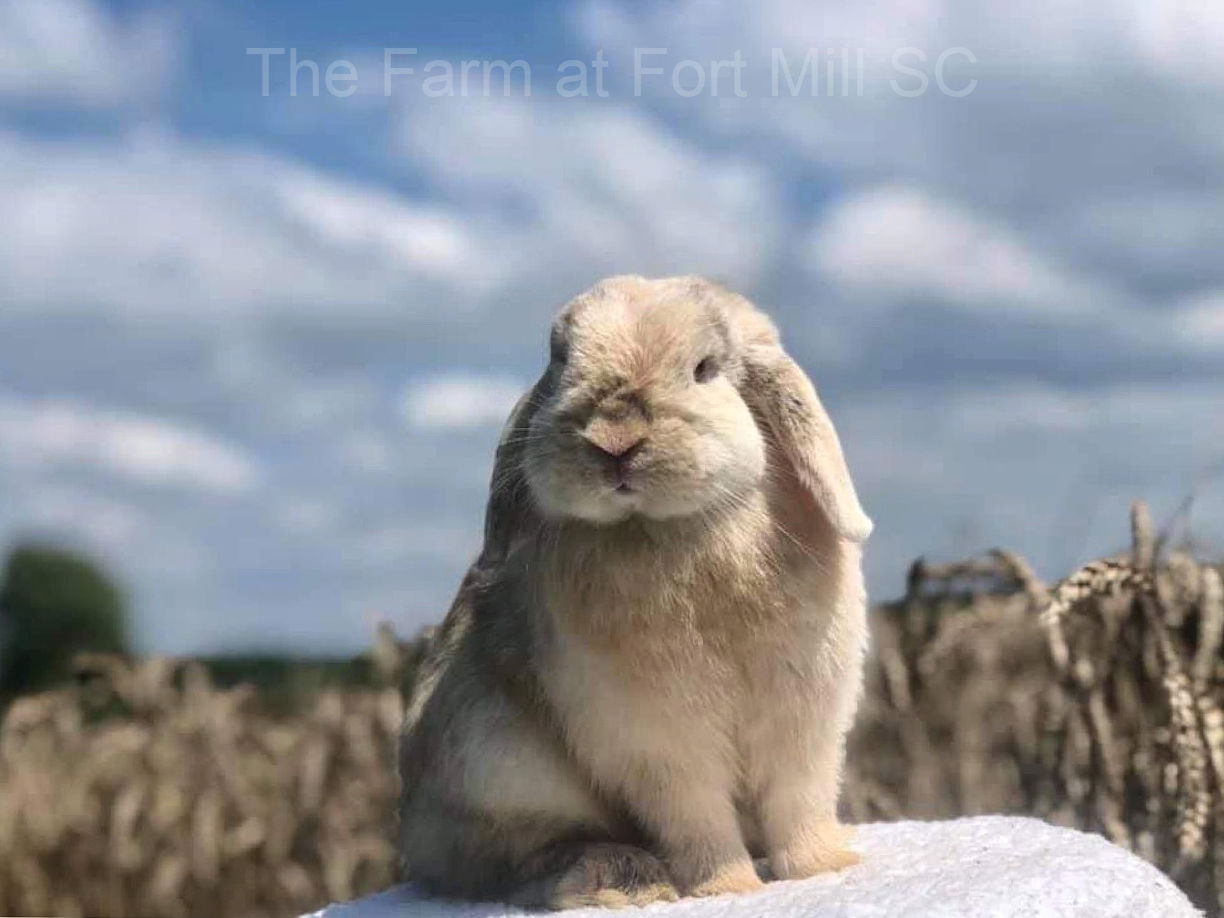
The Farm at Fort Mill
Holland Lops
(Right across the South Carolina
border at Charlotte)
Pennsylvania
Happily Ever After
Mini Plush Lops, Holland Lops,
Netherland Dwarf, Lionhead,
Mini Plush Lop, & Mini Rex
Bunnies by Emma and Ellie
Holland Lop, Mini Lop,
Mini Plush Lop,
Mini Rex/Holland Lop Mix
Rhode Island
Shepherds Purse Rabbitry
Holland Lops
South Carolina
Jubilee Farms
Holland Lops
Washington
Cotton Candie Tails
Lionheads, Vienna-Marked
Subscribe to Rabbit Rhythms,
our e-newsletter !
Get rabbit news, husbandry and health tips mostly every month. It's easy - we only need your email address, then hit the 'subscribe' button. Enjoy!
Recent Articles


-
Mama Rabbit Preparing Her Babies Crib
Apr 25, 24 02:55 PM
 I caught my doe busy in her crib making occupation one day. She didn't care for my camera, and certainly seemed to feel uneasy in her mind that I should
 -
Raw Rabbit: Order raw frozen rabbit for pets
Mar 25, 24 07:45 PM
 Raw rabbit. Convenient online ordering of raw frozen rabbit as whole prey, partially processed, or ground, for feeding pets species-appropriate meals
 -
Farm at Fort Mill
Mar 01, 24 03:22 PM
 Farm at Fort Mill has moved. It is now Jubilee Farms Holland Lops, part of Edgemoor Equestrian, in Edgemoor SC. They offer riding lessons and host events.

Raising-Rabbits: Home of
The Rabbit Raising Problem Solver
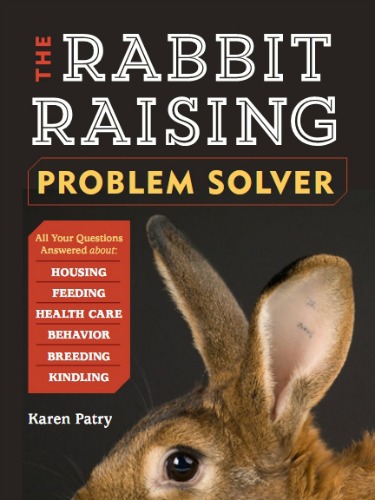
$22.62 - includes
- 10% off your autographed copy of Rabbit Raising Problem Solver
- All packaging, handling, and Media Mail postage costs (WA residents are subject to sales tax)
- Applies to US addresses - (sadly, Media Mail is not offered for international shipping, not even for really awesome books)
- (International shipping is available, of course, but it's out of our control how much they charge for shipping. Send us your country, city, and area code to obtain a shipping quote.)
* Affiliate Links*
As an affiliate of several companies, including Amazon.com, we earn from qualifying purchases. Your purchases from these affiliates come at no extra cost to you.

New! Comments
Have your say about what you just read! Leave me a comment in the box below.