Rabbit Health
Keeping your rabbit healthy is the goal of anyone taking care of rabbits.
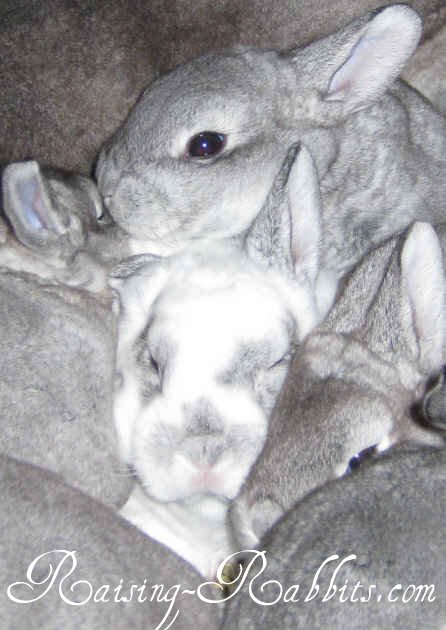
Understanding bunny health helps! This page will help provide that understanding, so you will know how best to take care of your rabbits.
Ventilation, sanitation, and observation
are three of the most important factors of disease control. Plus, add to that the quarantine of new additions to your rabbitry or home, and breeding for health by NOT using sick animals for breeding. These measures will help keep your herd healthy.
Ventilation
Ventilation helps keep the air in the rabbitry or barn clean.
Ventilation dilutes the concentration of microbes (of various types) in the air, and for this reason is extremely important factor in rabbit health.
Plus, good ventilation keeps the ammonia levels down. If you open the door to your rabbitry and get hit with a dank wall of urine odor, your rabbits' lungs are burning as well. Rabbit urine creates clouds of ammonia, which irritate the linings of the rabbits' lungs. This creates wounds that positively invite infections such as pasteurella (snuffles).
The best way to alleviate the ammonia is to remove waste materials regularly, and to ensure a minimum of about 15 air exchanges in an hour. This can be accomplished with an exhaust fan that pulls the air out of the building, and creating an inlet of fresh cool air, usually near to the ground.
Sanitation
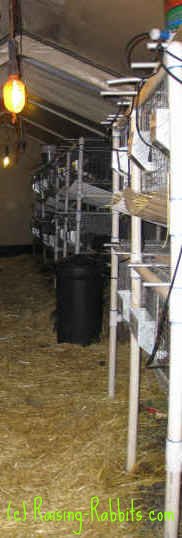
Sanitation is another method of keeping rabbit health strong.
Sanitation? Simple - just keep the cages clean. A single rabbit hair can carry thousands of bacteria or viruses. This doesn't need to frighten you...it’s the job of the animal’s immune system to keep it healthy and protected from illness. It's worked all these years.
But, wild rabbits can manage their own environment. Once you confine the rabbit to a cage, it needs you to help them keep the cage clean.
This isn't to say you must sterilize the entire barn. It just means keep the cage clean - to reduce the numbers of germs the rabbit comes in contact with.
This one factor alone can be the determining factor for whether or not the animal catches a rabbit illness.
Suppose your rabbit sniffs one of those stray hairs and gets 1,052 germs in his nose. There’s a great chance the immune system will kill the germs and the rabbit will stay healthy. But if the rabbit sticks his nose into a million germs all at once, say, a build-up of feces in a cage corner, well, his immune system might call up all the troops, and still lose the battle. Sanitation evens the playing field and gives your rabbit a chance to stay healthy.
Observation
Observation is another important key to rabbit health.
Just be paying attention every day to how your rabbit might be feeling. Even at Aurora Rex Rabbit Ranch, where we have close to 50 adult rabbits, it takes just a few minutes to say ‘hello’ to each rabbit, observe their demeanor and behavior, and maybe open the cage and pet the rabbits.
We observe that the rabbit’s water valve is working well, that its droppings are round and solid and normally formed, and that the rabbit is bright-eyed and energetic.
I know which rabbits spin around the cage three times in their eagerness to say hello. I know which are normally a little more timid.
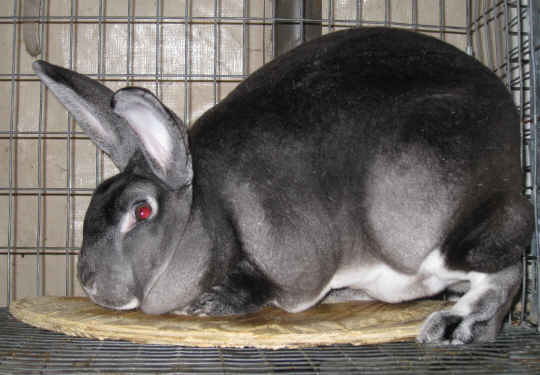
The chinchilla Rex rabbit pictured here is hunkered in the corner of her cage. But she's my best friend when I come with the food cart. Look how well-conditioned she is. No worries there.
When rabbits start feeling not-so-hot, it's not like they make a general announcement. But you can see it in other ways: They quit eating or drinking. They might sit hunched up, as though their belly or their feet were in pain. They might have a hanging head or dull eyes.
If you can catch the problem before those million germs have turned themselves into a billion and completely overwhelmed the rabbit's immune system, you might yet win the rabbit health battle. Go to our Rabbit Diseases page if you have some current rabbit health concerns.
Please note: We at Raising-Rabbits.com are NOT veterinarians, and nothing said on these pages should be taken as a substitute for professional veterinarian care, should you need it. We are speaking out of many years of experience, but we truly don't know for sure what specific problems your rabbit might be experiencing. We hope you can profit from our experience, but please don't delay to seek professional rabbit health care if necessary.
Quarantine
There’s a couple reasons why you might want to place a rabbit under quarantine:
- If you’ve just gotten a new rabbit and you’re not sure about its health
- You’ve taken some rabbits to a rabbit show where they were around hundreds of other rabbits. And especially if several rabbits in your breed were removed from the show table for having pasteurellosis (evidenced by a purulent nasal discharge - white snot).
Quarantine means to house the rabbit well apart from your other rabbits. It also means to take care of all your healthy animals first, saving the sick ones for last. Don't return to care for the well rabbits until you've changed your clothes and washed your hands well.
Quarantine shouldn't need to last more than two to four weeks. We have several cages set up outside our main ‘barn’ area. Any rabbits who have questionable health get moved to these cages. We’re happy to report that these cages are mainly empty most of the time. This is what happens when rabbit health is a focus of selective breeding, and will be true of your rabbit herd too.
Another method of quarantining that isn't as secure is to simply put barriers around a rabbit cage. You could call this a rabbit isolation cage, and we have quite a few of them at Aurora Rex Rabbits. We hang clear plastic panels on both sides of the cage. The back of the cage is quite close to the barn canopy, and the top of the cage usually has hay or a wooden panel laying over the cage. This helps stop the spread of germs through means of droplets, and has worked quite well for us.
Catch symptoms and implement quarantine measures early, and you may just save the life of your rabbit and the lives of its herd-mates.
Breed for Rabbit Health as a Long-Term Project
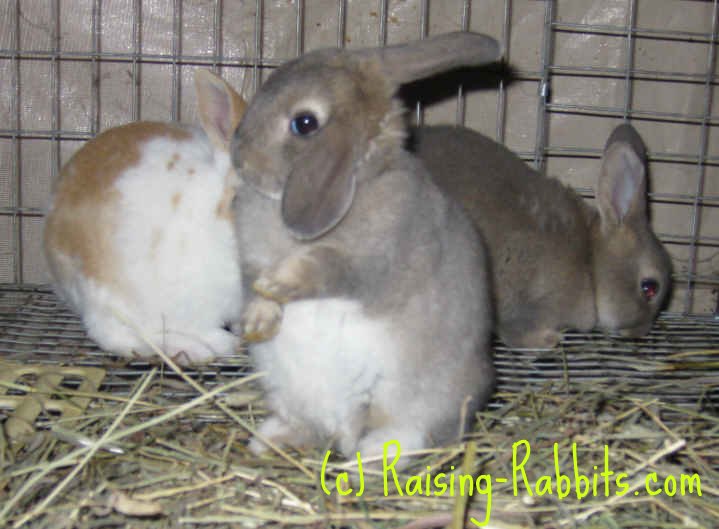
Sick animals don't help anyone. They just drain the money out of your wallet, and out of the wallets of anyone unfortunate enough to mistakenly acquire a sick rabbit.
So, don’t use ANY sick or unthrifty animals in your breeding program, no matter how attractive they may seem. By following this guideline carefully ourselves, we now have an entire herd of rabbits that are healthy all the time.
There's another big reason is this important.
There are a few rabbit illnesses that are virtually incurable.
BUT: if your rabbit's immune system is genetically strong, and with attention to ventilation, sanitation, observation, and quarantine as necessary, chances are the vast majority of your rabbits will remain healthy into old age.
Merck Veterinary Manual has some good rabbit health info
Double-Value Guarantee
Our policy is to always OVER-deliver
on value,
which is why your purchase is fully covered by our
Double-Value
Guarantee.
Go ahead - take any of our e-books for a test drive. Peruse our detailed informational and educational e-books. Examine our plans for building rabbit cages, runs, or metal or PVC hutch frames. Check out the Rabbit Husbandry info e-books.
If you aren't completely satisfied that your e-book purchase is worth at least double, triple or even quadruple the price you paid, just drop us a note within 45 days, and we'll refund you the entire cost. That's our Double-Value Guarantee.
Note: When you purchase your
e-books, they will be in PDF format, so you can download them to any device that
supports PDF format. We advise making a back-up copy to a drive or cloud
account. If the books are lost, you can also purchase another copy from Raising-Rabbits.
* Affiliate Links*
As an affiliate of several companies, including Amazon.com, we earn from qualifying purchases. Your purchases from these affiliates come at no extra cost to you.
Bunny Bazaar!
Online Shopping Mall by Raising-Rabbits!
One-Stop Shop for Rabbit Swag for both Buns and Humans
Bunny Branola!
The Ultimate
Rabbit Nutritional Supplement and Treat!
4 delicious flavors! Sample packs available!
Yes! I want more info!
Yes, Buy Bunny Branola Now!
Look What's NEW!!
Our very own classy
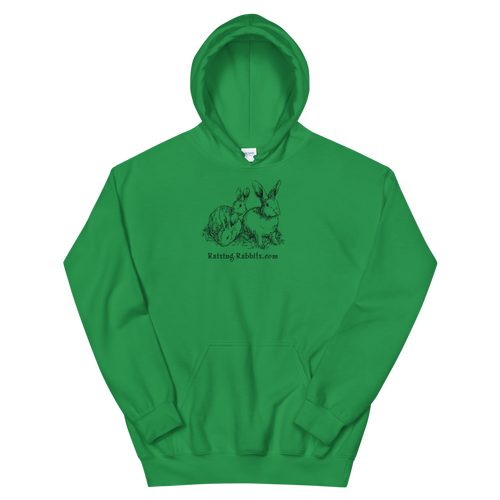
Raising Rabbits Sweatshirts, T-shirts, and Hoodies!
 |
 |
 |
.
We're now offering classy, unisex
Raising Rabbits
sweatshirts and hoodies,
Available in a great assortment of colors!
(We have unisex T-shirts too.)
Check out the Bunny Bazaar for our gorgeous
garments!
Order your own today!
They make great gifts too!!
Featured Rabbitries:
Click the Rabbitry Name Links:
Canada, Quebec
MapleRidge Stables Rabbitry
Himalayan Rabbits
Arizona
Hostile Hare
Chinchillas, Cages
Illinois
Open Doors Rabbitry
Lionheads, New Zealands
Kentucky
Goshen Bunnies
Holland Lop and Mini Plush Lop
New Jersey
Go Bunny Treats
All Natural Rabbit Treats
Mini Plush Lop Bunnies
All Natural Rabbit Treats
Belle's Bunny Boutique
Holland Lops & Mini Lion Lops
North Carolina
What The Fluffle Rabbitry
New Zealands, Champagnes
Breadbox Rabbitry
Netherland Dwarfs
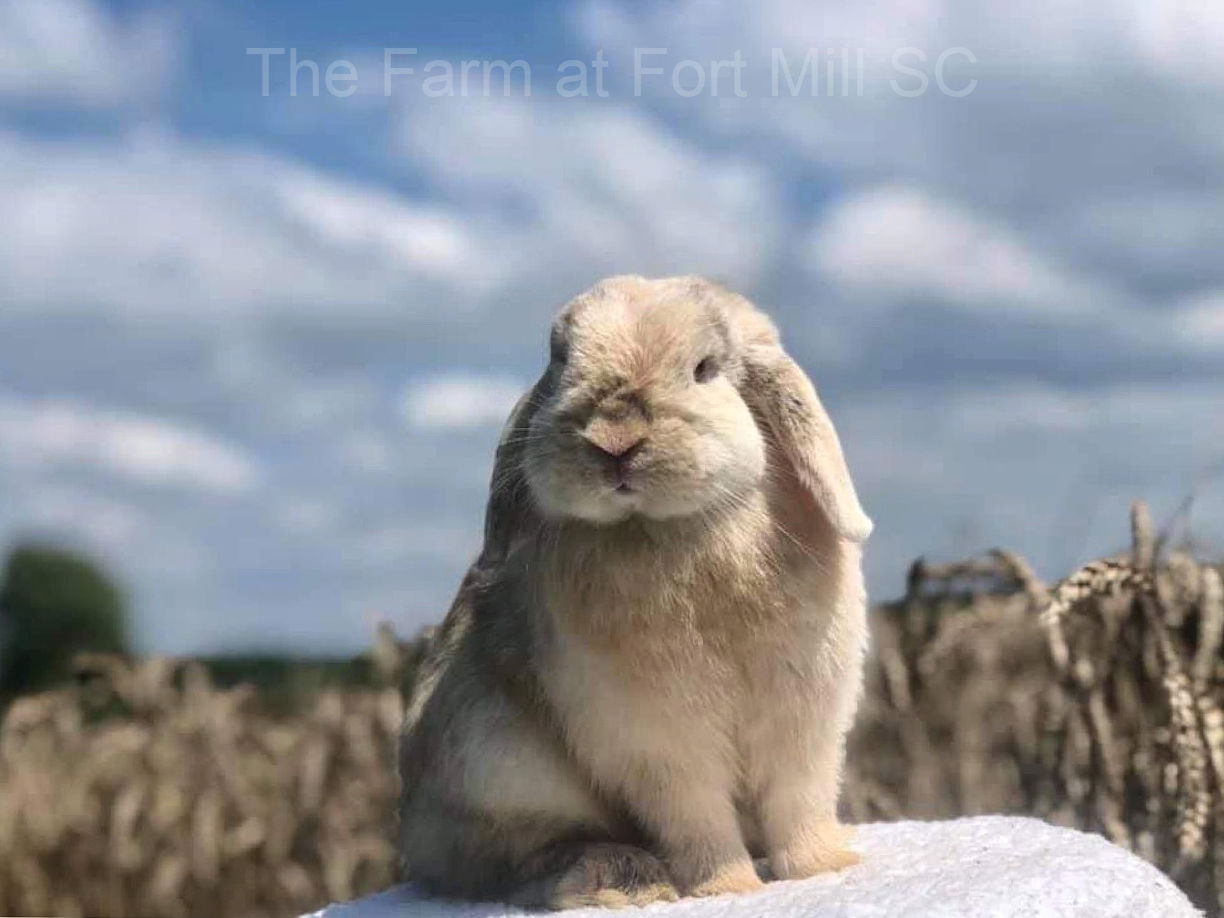
The Farm at Fort Mill
Holland Lops
(Right across the South Carolina
border at Charlotte)
Pennsylvania
Happily Ever After
Mini Plush Lops, Holland Lops,
Netherland Dwarf, Lionhead,
Mini Plush Lop, & Mini Rex
Bunnies by Emma and Ellie
Holland Lop, Mini Lop,
Mini Plush Lop,
Mini Rex/Holland Lop Mix
Rhode Island
Shepherds Purse Rabbitry
Holland Lops
South Carolina
Jubilee Farms
Holland Lops
Washington
Cotton Candie Tails
Lionheads, Vienna-Marked
Subscribe to Rabbit Rhythms,
our e-newsletter !
Get rabbit news, husbandry and health tips mostly every month. It's easy - we only need your email address, then hit the 'subscribe' button. Enjoy!
Recent Articles


-
Mama Rabbit Preparing Her Babies Crib
Apr 25, 24 02:55 PM
 I caught my doe busy in her crib making occupation one day. She didn't care for my camera, and certainly seemed to feel uneasy in her mind that I should
 -
Raw Rabbit: Order raw frozen rabbit for pets
Mar 25, 24 07:45 PM
 Raw rabbit. Convenient online ordering of raw frozen rabbit as whole prey, partially processed, or ground, for feeding pets species-appropriate meals
 -
Farm at Fort Mill
Mar 01, 24 03:22 PM
 Farm at Fort Mill has moved. It is now Jubilee Farms Holland Lops, part of Edgemoor Equestrian, in Edgemoor SC. They offer riding lessons and host events.


Raising-Rabbits: Home of
The Rabbit Raising Problem Solver
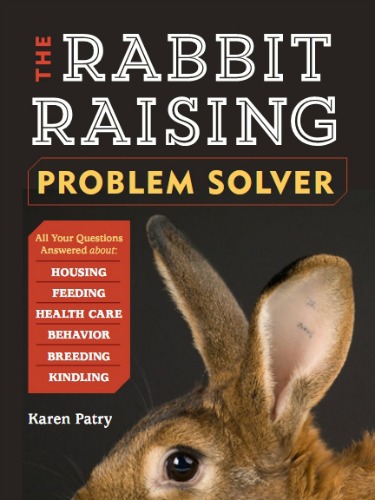
$22.62 - includes
- 10% off your autographed copy of Rabbit Raising Problem Solver
- All packaging, handling, and Media Mail postage costs (WA residents are subject to sales tax)
- Applies to US addresses - (sadly, Media Mail is not offered for international shipping, not even for really awesome books)
- (International shipping is available, of course, but it's out of our control how much they charge for shipping. Send us your country, city, and area code to obtain a shipping quote.)
* Affiliate Links*
As an affiliate of several companies, including Amazon.com, we earn from qualifying purchases. Your purchases from these affiliates come at no extra cost to you.

New! Comments
Have your say about what you just read! Leave me a comment in the box below.