Altex Rabbits
Altex rabbits are a commercial rabbit breed
intended to produce bucks for use as the sires of
"terminal cross" meat rabbits. Altex terminal cross fryers
gain weight faster and go to market sooner. In less-developed countries, they
represent better nutrition for people through enhanced rabbit production.
The Altex breed takes advantage of both hybrid vigor and
breed complementation, two factors that can significantly enhance meat rabbit
production in the backyard and in a large-scale commercial facility, both in
the United States and in less-developed countries where nutrition and daily
survival might be constant worries.
Three of the commercial traits that the Altex is specifically bred for are:
- Rapid and efficient weight gain
- High dress out percentage
- High meat-to-bone ratio
The result: Fryers that can be marketed nearly a
week sooner.
Rabbit Raising Problem Solver
by Karen Patry
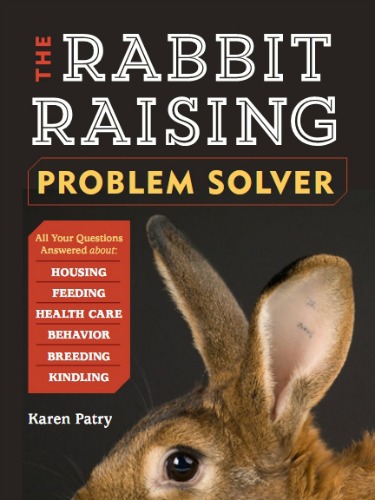
The Rabbit Raising Problem Solver, a Q&A format book available in paperback or Kindle. Questions and answers for everything you need to know about rabbits, from health to housing:
- Diseases, injuries and how to treat
- Native Behavior, Diet, Breeding
- Care of Does and Kits
- Solving the Gritty Problems
- Housing, and lots more!
What Others Say:
"I have read MANY rabbit books and this one is my favorite" (RS, Verified Purchaser, Feb 2021)
"This is the most useful book on rabbits I have ever read in 30+ years of rabbit raising. It has clear information for beginners as well as enough detail and substance to interest long-time rabbit keepers. The breadth of topics is incredible; there is very little I have encountered in rabbit keeping that is not addressed here. Its balanced approach is properly concerned with the welfare of the animals but wonderfully free of the PETA/animal rights influence evident in so many books regarding the care of animals. Cheers to Karen Patry for publishing such a useful book!" (PhDinAK, Verified Purchaser, July 2017)
"The index in back is a life saver. It has everything! Any time I need to know something, I flip to the index in back and it takes me straight there." (GC, Verified Purchaser, July 2020)
Get an autographed copy of Rabbit Raising Problem Solver from Raising-Rabbits!
Why Altex Rabbits?
For years, most commercial rabbit production in the United States has utilized either the New Zealand White (NZW) or the Californian (CAL) rabbit breeds. In many instances, farmers combine the two breeds in order to capture hybrid vigor and improve market weights and conversion ratios.
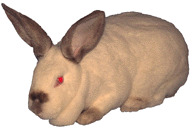
Altex Rabbit. Photo credit: TAMUK Rabbit Research website.
If the farmer then uses hybrids for breeding, the less 'hybrid'
they become, and soon the hybrid advantage disappears.
In a market niche such as meat rabbits that is so marginally profitable, being able to bring fryers to market even a few days earlier may represent a large improvement in profitability. And if the farmer never used any Altex crosses for subsequent breeding, the advantages that the Altex "terminal cross" provides will be retained indefinitely.
Even better, in third-world countries where native forages are the only source of feed, any rabbit breed that will easily gain weight despite the feed shortcomings may make the difference between health and starvation.
If the rabbit farmer could use a third breed that was specifically bred for producing heavier market fryers, and never use the offspring for breeding, then he would retain hybrid vigor and rapid marketability in his herd indefinitely.
Dr. Steven Lukefahr of Texas A&M University began creating this third, 'terminal cross' breed in 1986, eventually calling it the Altex rabbit, a blending of AL-abama and TEX-as, after the two states where he developed them.
He used the combination of Flemish Giants with Californians and Champagne d’Argents in the ratio of one-half Flemish Giant, one-fourth Californian and one-fourth Champagne d'Argent. Dr. Lukefahr describes the process used to develop the breed in this Altex Rabbit article.
Altex offspring have been produced in a variety of colors as the breed was developed. By now, however, expect to find most if not all Altex with white pelts and dark points (feet, tail, ears, nose) like the Californian.
Both does and bucks of the Altex breed
typically weigh more than 13 pounds at 6 months of age. The first mating can take place at or around
6 months.
How to Use Terminal Crossing
with an Altex Sire
For ideal results, cross the Altex SIRE with a New Zealand White or Californian DAM.
- The Altex buck confers size and growth rate (marketability)
- The NZW or CAL doe consumes less feed than would an Altex dam, produces more milk, and kindles and weans more offspring.
- "Terminal" means "end of the line." ALL the offspring should go to market, and none are saved for replacement breeders.
- Market day should arrive on average up to one week sooner than is typical for a purebred, or a CALxNZW herd
- Replace the buck when needed by acquiring another Altex sire.
Interested in other rabbit breeds?
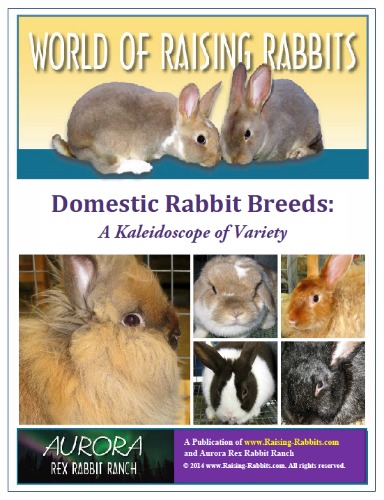
Are you trying to decide which breed is best for you?
Do you see a bunny available, but haven't heard of that kind before?
Are you curious about the different types of rabbits?
Check out our ebook, Domestic Rabbit Breeds. We also have lots of other great books with everything you need to know about rabbits, from housing to healthcare. Check out our BOOKSTORE.
New Year Special! Ring in 2025 with a resolution to learn about rabbits! (It will help you with your resolution to avoid snacking...)
All of our ebooks are ON SALE, 30% off!
Go to Rabbit Breed Descriptions
Double-Value Guarantee
Our policy is to always OVER-deliver
on value,
which is why your purchase is fully covered by our
Double-Value
Guarantee.
Go ahead - take any of our e-books for a test drive. Peruse our detailed informational and educational e-books. Examine our plans for building rabbit cages, runs, or metal or PVC hutch frames. Check out the Rabbit Husbandry info e-books.
If you aren't completely satisfied that your e-book purchase is worth at least double, triple or even quadruple the price you paid, just drop us a note within 45 days, and we'll refund you the entire cost. That's our Double-Value Guarantee.
Note: When you purchase your
e-books, they will be in PDF format, so you can download them to any device that
supports PDF format. We advise making a back-up copy to a drive or cloud
account. If the books are lost, you can also purchase another copy from Raising-Rabbits.
* Affiliate Links*
As an affiliate of several companies, including Amazon.com, we earn from qualifying purchases. Your purchases from these affiliates come at no extra cost to you.
Bunny Bazaar!
Online Shopping Mall by Raising-Rabbits!
One-Stop Shop for Rabbit Swag for both Rabbits and Humans
Bunny Branola:
Immune-Boosting Rabbit Nutritional Supplement and Treat!
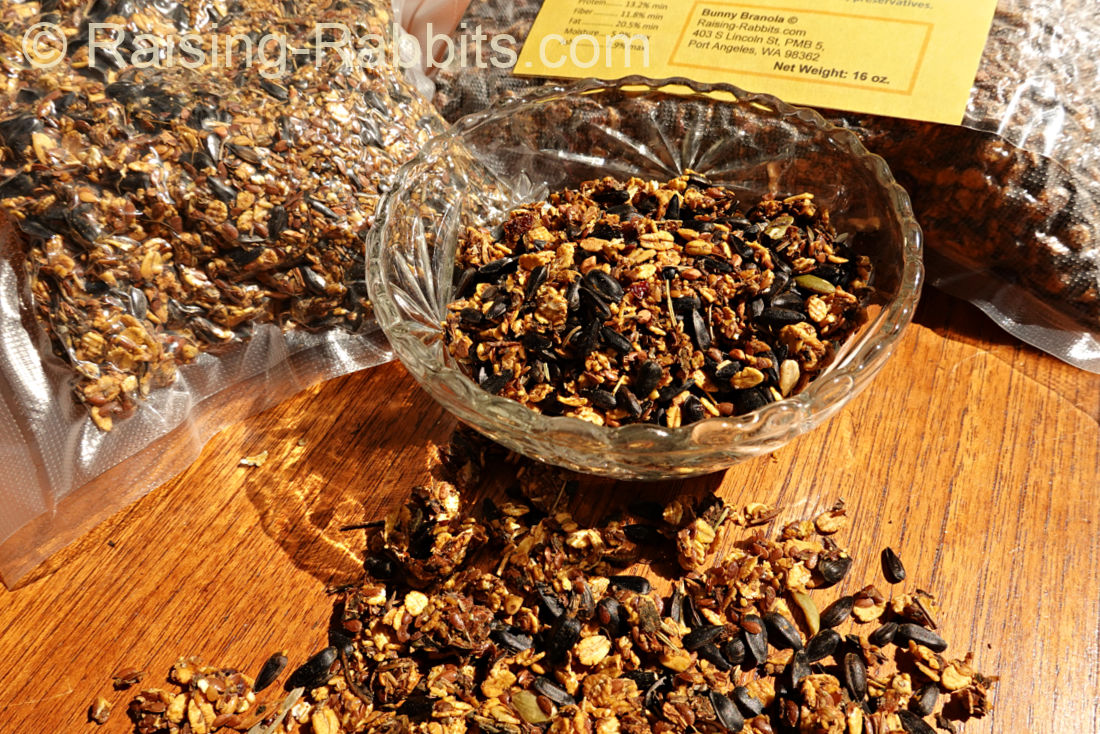
SIX delicious flavors - Sample packs available.
Yes! I want more info!
Yes, Buy Bunny Branola Now!
Raising Rabbits Sweatshirts, T-shirts, and Hoodies!
 |
 |
 |
Now offering classy, unisex Raising Rabbits sweatshirts and hoodies.
Available in a large assortment of colors! (We have unisex T-shirts too.)
Find these gorgeous garments in the Bunny Bazaar!
Order your own today - They make great gifts too!!
Featured Rabbitries:
Click the Rabbitry Name Links:
Canada, Quebec
MapleRidge Stables Rabbitry
Himalayan Rabbits
Arizona
Hostile Hare
Chinchillas, Cages
Illinois
Open Doors Rabbitry
Lionheads, New Zealands
Kentucky
Goshen Bunnies
Holland Lop and Mini Plush Lop
Minnesota
Lops of Love Rabbitry
Closed for Christmas vacation
New Jersey
Belle's Bunny Boutique
Holland Lops & Mini Lion Lops
North Carolina
What The Fluffle Rabbitry
New Zealands, Champagnes
Breadbox Rabbitry
Netherland Dwarfs
Pennsylvania
Happily Ever After
Mini Plush Lops, Holland Lops,
Netherland Dwarf, Lionhead,
Mini Plush Lop, & Mini Rex
Bunnies by Emma and Ellie
Holland Lop, Mini Lop, Mini Plush Lop,
Mini Rex/Holland Lop Mix
South Carolina
Jubilee Farms
Holland Lops
Subscribe to Rabbit Rhythms,
our e-newsletter !
Get rabbit news, husbandry and health tips mostly every month. It's easy - we only need your email address, then hit the 'subscribe' button. Enjoy!
Recent Articles


-
About Ordering Raw Rabbit: Feeding Raw Can Be Easy
Dec 10, 25 05:10 PM
 About ordering raw rabbit: All the details and your questions answered about easily purchasing frozen raw rabbit from Raising-Rabbits.com for your dogs/cats.
 -
Autumn Rabbit Pictures: Autumn-Themed Rabbit Photos
Aug 25, 25 04:14 PM
 Autumn Rabbit Pictures is a delightful collection of bunny photos in various fall themes, including story lines and cute quips..
 -
Featured Rabbit Breeder Index
Jul 27, 25 01:06 AM
 Our Featured Rabbit Breeder Index lists and links to all featured rabbitries on Raising-Rabbits. These share lots of info and photos of their rabbits for sale.



Raising-Rabbits: Home of
The Rabbit Raising Problem Solver
$22.62 - includes
- 10% off your autographed copy of Rabbit Raising Problem Solver
- All packaging, handling, and Media Mail postage costs (WA residents are subject to sales tax)
- Applies to US addresses - (sadly, Media Mail is not offered for international shipping, not even for really awesome books)
- (International shipping is available, of course, but it's out of our control how much they charge for shipping. Send us your country, city, and area code to obtain a shipping quote.)
* Affiliate Links*
As an affiliate of several companies, including Amazon.com, we earn from qualifying purchases. Your purchases from these affiliates come at no extra cost to you.

New! Comments
Have your say about what you just read! Leave me a comment in the box below.