American Rabbit
American Rabbit. History and description of
American Blue and White Rabbits. Learn about this large, gentle, productive and
endangered rabbit breed.
American Blue and White Rabbits
The very first national rabbit breeder's club, The National Pet Stock Association (forerunner of the ARBA) was just a baby - 8 years old - when the American Rabbit was recognized as a breed in 1918.
Mr. Lewis H. Salisbury was the inventor, and his secret genetic recipe died with him, though some breeders have guessed that Blue Flemish Giants, Blue Viennas (now extinct), Blue Beveren, and Blue Imperials (now extinct) went into the concoction.
When the ‘perfect specimen’ was finally obtained, Mr. Salisbury named it "Pasadena Major," and then built the standard of perfection to match all the qualities of this 'perfect' American specimen.
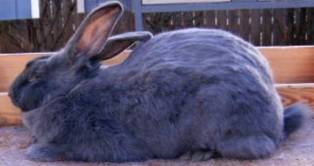
Continued breeding overcame early problems with white hairs and poor blue coloring. Furriers took notice, paying the big bucks in the early 1920’s - $2 apiece - for prime Blue American pelts.
Every once in a while, breeders found a white bunny amidst the sea of blue in the nest boxes. Seemed like a waste to just throw these away. So they began developing a White American, tossing in a bit of Red-Eyed White Flemish Giant. In 1925, White Americans were measuring up to their Blue siblings and were recognized as a second variety of American.
The advent of New Zealand Whites and Californians
nearly spelled the doom of the American.
Breeders flocked to these new, bulky breeds and lost interest in Americans. Today NZWs and Californians are the mainstay of commercial rabbit production, while Americans stand near the brink of extinction but for a few dedicated breeders. In 2006, Americans were the rarest breed in America. The American Livestock Breeds Conservancy listed them as Critically Endangered.
Then in September of 2006, providentially perhaps, a herd of 38 ‘New Zealand White Rabbits’ was advertised for sale outside of Edmonton Alberta, Canada. Turns out that a Christian community of Hutterites had been raising this herd of rabbits for meat ever since the 1920s. They looked exactly like Americans, despite the NZW label.
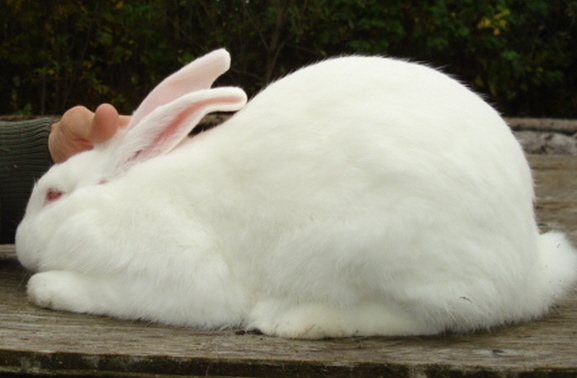
Ms. Gayle Gordon and Ms. Helga Vierich-Drever, both of Edmonton, purchased the entire colony, and are successfully showing, breeding and registering the rabbits as Americans.
In 2010, Americans, both Blue and White, were listed as critically endangered.
Since 2012, the American breed appears to be
rebounding somewhat, as breeders rediscover the breed traits that made them
popular in the early days - hardy, docile rabbits that kindle large litters and
carry strong maternal instincts and milking ability. The Livestock Conservancy still lists the breed as "threatened."
American Rabbit Standard of Perfection
Americans are a meat rabbit with a mandolin body type.
The Standard of Perfection can be obtained from the ARBA or the Breeders of the American Rabbit (BAR).
Varieties:
Red-Eyed White - White (albino) rabbits with red eyes
Blue – a rich, clear, dark uniform slate blue, as deep as possible, uniformly covering the entire body. Blues are reputed to have the darkest blue of any domestic rabbit breed.
Weights:
Senior Bucks – 9-11 lbs
Senior Does – 10-12 lbs
Interested in other rabbit breeds?
Are you trying to decide which breed is best for you?
Do you see a bunny available, but haven't heard of that kind before?
Are you curious about the different types of rabbits?
Check out our ebook, Domestic Rabbit Breeds. We also have lots of other great books with everything you need to know about rabbits, from housing to healthcare. Check out our BOOKSTORE.
New Year Special! Ring in 2025 with a resolution to learn about rabbits! (It will help you with your resolution to avoid snacking...)
All of our ebooks are ON SALE, 30% off!
Is This Your Rabbit Breed?
Do you have a great story or experience with this breed of rabbits? Feel free to share it!
And while you're at it, you can include up to four photos.
What Other Visitors Have Said
Click below to see contributions from other visitors to this page...
Red-Eyed American Rabbit Not rated yet
When we were kids a cat attacked a bunny so my Dad brought her in and we gave her medical care, took her to the vet, however the shock of the attack killed …
My American Blue Doe Not rated yet
I had actually bought my blue doe in a pet store with my boyfriend.
We were looking around in a tub of rabbits and I saw this amazing blue colored …
Double-Value Guarantee
Our policy is to always OVER-deliver
on value,
which is why your purchase is fully covered by our
Double-Value
Guarantee.
Go ahead - take any of our e-books for a test drive. Peruse our detailed informational and educational e-books. Examine our plans for building rabbit cages, runs, or metal or PVC hutch frames. Check out the Rabbit Husbandry info e-books.
If you aren't completely satisfied that your e-book purchase is worth at least double, triple or even quadruple the price you paid, just drop us a note within 45 days, and we'll refund you the entire cost. That's our Double-Value Guarantee.
Note: When you purchase your
e-books, they will be in PDF format, so you can download them to any device that
supports PDF format. We advise making a back-up copy to a drive or cloud
account. If the books are lost, you can also purchase another copy from Raising-Rabbits.
* Affiliate Links*
As an affiliate of several companies, including Amazon.com, we earn from qualifying purchases. Your purchases from these affiliates come at no extra cost to you.
Bunny Bazaar!
Online Shopping Mall by Raising-Rabbits!
One-Stop Shop for Rabbit Swag for both Rabbits and Humans
Bunny Branola:
Immune-Boosting Rabbit Nutritional Supplement and Treat!
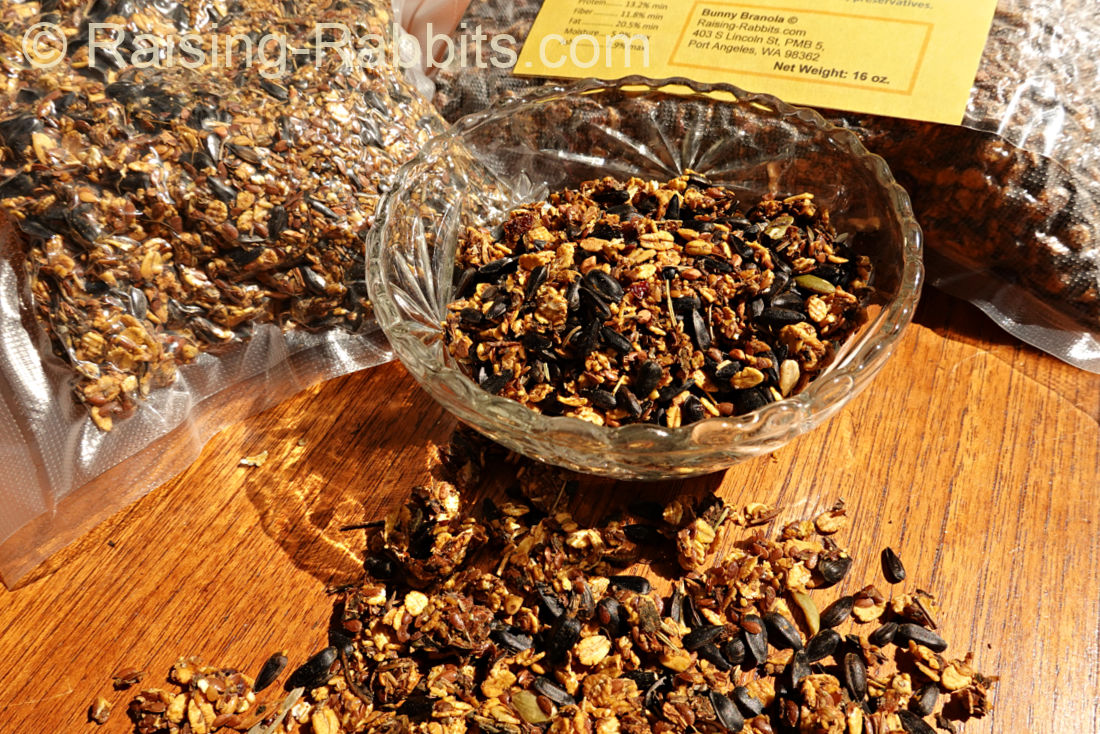
SIX delicious flavors - Sample packs available.
Yes! I want more info!
Yes, Buy Bunny Branola Now!
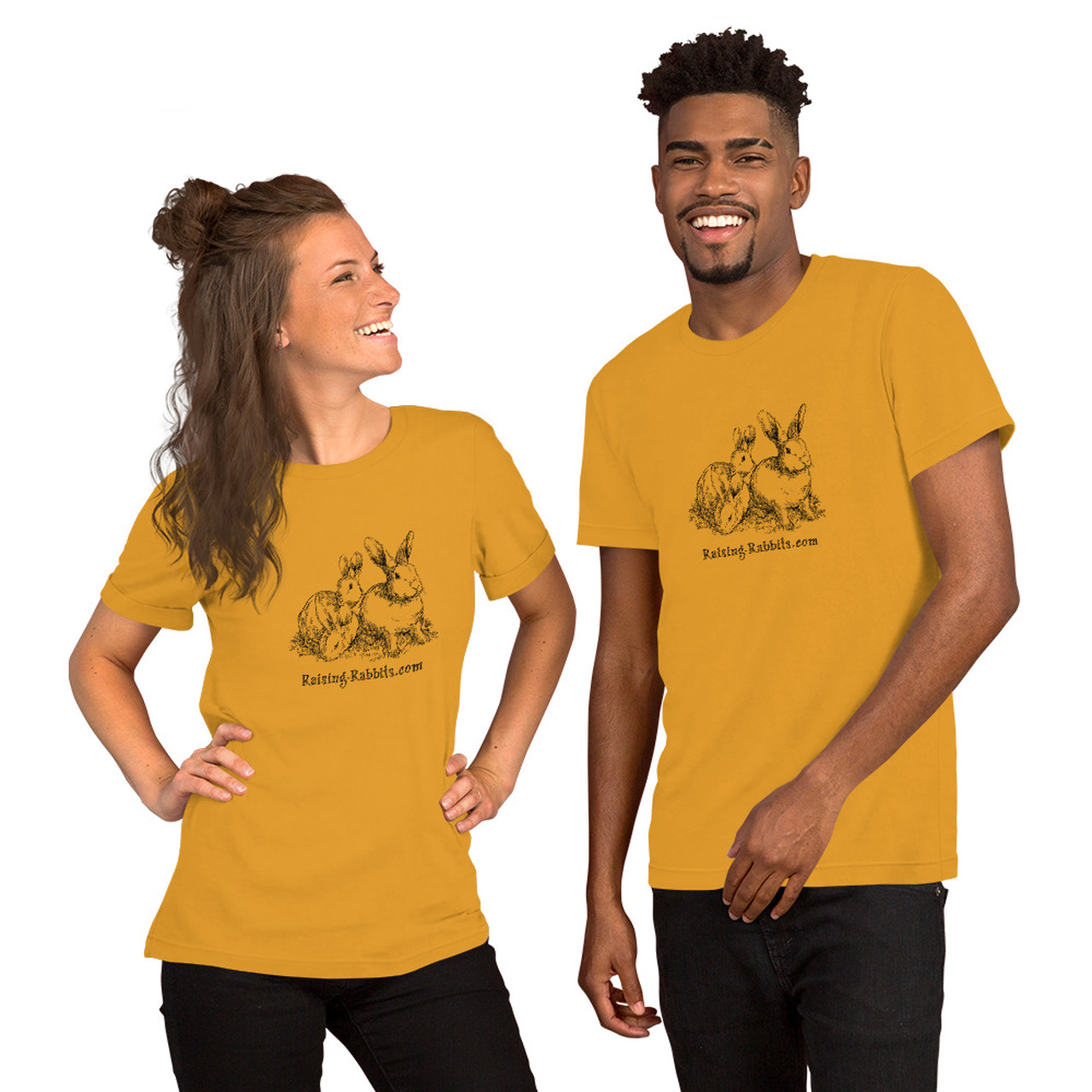
Raising Rabbits Sweatshirts, T-shirts, and Hoodies!
 |
 |
 |
Now offering classy, unisex Raising Rabbits sweatshirts and hoodies.
Available in a large assortment of colors! (We have unisex T-shirts too.)
Find these gorgeous garments in the Bunny Bazaar!
Order your own today - They make great gifts too!!
National Rabbit Associations
American Rabbit Breeders Association (ARBA) is the national club for breeders of both rabbits and cavies (guinea pigs) in the United States. Anyone can join for a modest fee, and get wonderful support for their rabbit raising efforts.

The British Rabbit Council - Official Website of the British Rabbit Council, whose mission is to support the interests of all British rabbit breeders, including exhibition, breeding, and welfare.

Rabbit Council of NZ (Inc.) - The New Zealand Rabbit Council provides a comprehensive website about Rabbit related issues and events within New Zealand and overseas.
Australian National Rabbit Council Inc. - "An Australian Rabbit Club for Australian Rabbit Owners." It was established in order to "coordinate and promote Rabbit Clubs and interest groups throughout Australia."
Featured Rabbitries:
Click the Rabbitry Name Links:
Canada, Quebec
MapleRidge Stables Rabbitry
Himalayan Rabbits
Arizona
Hostile Hare
Chinchillas, Cages
Illinois
Open Doors Rabbitry
Lionheads, New Zealands
Kentucky
Goshen Bunnies
Holland Lop and Mini Plush Lop
Minnesota
Lops of Love Rabbitry
Closed for Christmas vacation
New Jersey
Belle's Bunny Boutique
Holland Lops & Mini Lion Lops
North Carolina
What The Fluffle Rabbitry
New Zealands, Champagnes
Breadbox Rabbitry
Netherland Dwarfs
Pennsylvania
Happily Ever After
Mini Plush Lops, Holland Lops,
Netherland Dwarf, Lionhead,
Mini Plush Lop, & Mini Rex
Bunnies by Emma and Ellie
Holland Lop, Mini Lop, Mini Plush Lop,
Mini Rex/Holland Lop Mix
South Carolina
Jubilee Farms
Holland Lops
Subscribe to Rabbit Rhythms,
our e-newsletter !
Get rabbit news, husbandry and health tips mostly every month. It's easy - we only need your email address, then hit the 'subscribe' button. Enjoy!
Recent Articles


-
Pet Rabbits: Confident Care, Feeding, and Enjoyment
Feb 14, 26 05:46 PM
 Pet rabbits: Care and feeding, including a critical-needs list of requirements. Confidently care for your bunnies with this list of rabbit care tips
 -
All rabbit breeds recognized in USA by American Rabbit Breeders Assoc.
Jan 02, 26 06:49 PM
 List of all rabbit breeds recognized by ARBA, along with weights, brief descriptions and link to national rabbit breed club if available
 -
About Ordering Raw Rabbit: Feeding Raw Can Be Easy
Dec 10, 25 05:10 PM
 About ordering raw rabbit: All the details and your questions answered about easily purchasing frozen raw rabbit from Raising-Rabbits.com for your dogs/cats.
)
Raising-Rabbits: Home of
The Rabbit Raising Problem Solver
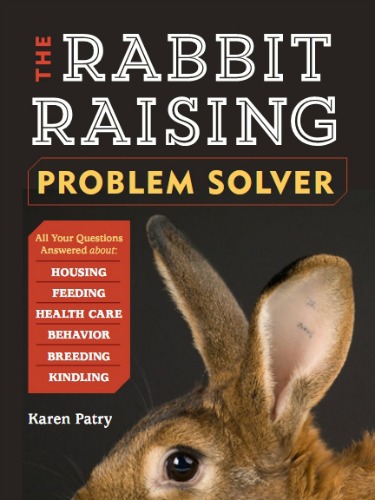
$22.62 - includes
- 10% off your autographed copy of Rabbit Raising Problem Solver
- All packaging, handling, and Media Mail postage costs (WA residents are subject to sales tax)
- Applies to US addresses - (sadly, Media Mail is not offered for international shipping, not even for really awesome books)
- (International shipping is available, of course, but it's out of our control how much they charge for shipping. Send us your country, city, and area code to obtain a shipping quote.)
* Affiliate Links*
As an affiliate of several companies, including Amazon.com, we earn from qualifying purchases. Your purchases from these affiliates come at no extra cost to you.