Rabbit Nutrition
Rabbit Nutrition: What
rabbits eat could be crucial to their health. If you know WHAT rabbit food
ingredients are essential for health, you can more easily provide healthy rabbit food.
Here are some categories of nutrition, reasons why they are important, and amounts and percentages that will result in healthy rabbits.
Not into the technical stuff?
No worries.
Skip the nutrition lesson
and go straight to What
Do Rabbits Eat for guidelines on feeding your
rabbits, especially your pet and house rabbits, so they will stay healthy and
happy. Or, check out our e-book, Feeding Your Rabbits, which covers the gamut from pelleted feeds to do-it-yourself feeds without pellets.
Fiber
We list fiber first, because it is so crucially important for rabbit nutrition and health. Rabbits need lots of fiber, both soluble and insoluble. Their guts need the fiber to keep the contents moving along. Should the intestinal transit time slow down, a couple problems could happen.
- Complex sugars could break down too completely into simple sugars, creating a bloom of bacteria in the gut. Result? Potentially fatal enterotoxemia.
- Transit slow-down can also result in an impaction. The rabbit can no longer eat or drink, and may starve to death if the blockage cannot resolve itself.
That’s why fiber -
both soluble and insoluble fiber - is crucial for rabbit nutrition:
Try these high fiber hay options:
We also recommend this Kaytee Alfalfa Free Fiber Diet feed for older rabbits.
Water
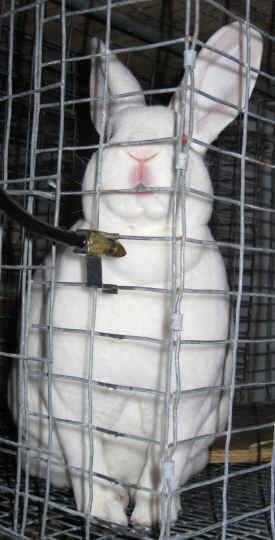
Water is another essential ingredient in rabbit nutrition. A rabbit can go many days without feed, but only 3 or so days without water.
Ideally, your rabbit will have access to an unlimited source of fresh water every day.
Winter may pose understandable challenges, due to frozen water tubing, valves, nozzles and crocks. In wintertime when our water lines are frozen, we carry fresh water to our rabbits several times a day.
We also heat the water. It will stay 'wet' longer if it starts out at a high temperature.
If winter lasts for
many long months in your area, you might consider warmers for your watering
system and tubing.
Nutrients
Actually, of more than 50 identified nutrients a rabbit needs, just a few are critical to pay attention to, because the rest are plentiful in a normal rabbit diet. If you feed commercial rabbit pellets, the feed company has taken the worry out of supplying your rabbit’s dietary needs.
- Protein:
A rock-bottom minimum protein requirement for rabbit survival is approximately 8% protein however non-producing adult rabbits should receive at least 12 to 14 percent protein. Lactating does should receive 17 to 18% of their diet in protein. Commercial pellets meet the rabbit diet protein needs with alfalfa and soybean meal, among other forages.
If you can only find pellets with 16% protein and want to provide your rabbit with less protein, simply feed a little less pellets and increase the grass hay portion of the diet. - Carbohydrates:
Readily digestible (starches and soluble fibers) in low quantities and relatively indigestible, such as cellulose, in a greater percentage than the protein levels. Carbs are for energy, and some boost immune system communication and function (beta-glucans). But carbohydrate overload can cause an explosion of bacteria in the gut, and if this includes toxin-producing bacteria, the rabbit can die quickly of enterotoxemia. Simple carbs have value, they just need to be balanced with fiber.
Rabbit Condition Enhancers: BOSS, Whole Oats (#ad)
- Fats:
Fat is easily digested in the small intestine. Fat levels as high as 25% have had no ill effects on the rabbit. Normally however, you can expect a 2-5% fat level in pelleted feeds. Show rabbit breeders may add a little oil to feed top-dressings in order to enhance rabbit coat condition.
Adding fats to a lactating doe's rations will quickly boost her milk production. Top her pellets with whole black oil sunflower seeds (BOSS), 0.75 - 2 tablespoons depending on the size of the doe. - Interestingly, rabbit nutrition supplied by commercial pellets is likely to be very low in fats. This is because fats tend to make the pellets more crumbly if careful attention is not paid to the mixing process. It takes longer to do a good job.
Your adult rabbits will probably benefit from a pinch of BOSS each day. Give more to the youngsters. - Vitamins:
Dietary vitamin requirements are quite low in rabbits. Fat-soluble vitamins A, D, and E are usually supplemented in dry pellets, as are Thiamin (B1), Riboflavin (B2) and cobalamin (B12).
Feeding rabbit vitamins doesn't seem to be a main concern. As a breeder of show rabbits, I used to feed calf manna, an extra high protein supplement spiked with vitamins and minerals, to our brood does during gestation and the first 2 weeks of lactation. But, then I discovered that supplementing their fat intake augmented their milk production, which was result I was looking for.
The need for an external source of vitamins and minerals (other than what is supplied by the rabbit's pellets) is low due to coprophagy. Eating the soft contents of the cecum directly from the anus runs their food through a second time, so they can absorb a second helping of nutrients. In tests that prevented rabbits from access to their cecotropes, the rabbits' nutritional health declined significantly.
We highly recommend this Manna Pro Rabbit Pellet Supplement for conditioning and feeding your show rabbits.
Also try this Oxbow Multi-Vitamin Small Animal Supplement if your rabbit is stressed.
- Minerals:
Rabbits absorb calcium very efficiently, and excrete the excess in the urine, leaving behind white deposits in and below their cages. Mixing legumes and alfalfa offers a balanced supply of calcium and phosphorus. Pelleted feeds also include mineral additives: Magnesium, sodium, potassium, chlorine, sulfur, iron, copper, cobalt, manganese, zinc, iodine and selenium. Deficiency diseases for most of these minerals is unknown.
A note about cobalt: Cobalt's only known role in rabbit nutrition is to make up a part of vitamin B12 (cobalamin). Additionally, no specific nutritional requirement has been identified. The practice of coprophagy in rabbits ensures that they consume a large excess of B12, supplied by the huge bacterial population in their hindgut.
Commercial pellets ensure the rabbit will receive all these minerals in correct balance. If for some reason you feed minimal to no pellets, you will need to find a way to add salt to the rabbit’s diet. We haven't used salt licks in years, however if necessary, you can hang a mineralized salt spool in the rabbit's cage.
Most mineralized salt licks guarantee the following minerals in various quantities:
- Salt
- Zinc
- Iron
- Manganese
- Copper
- Iodine
- Cobalt
Currently the best commercial rabbit food available in the USA:
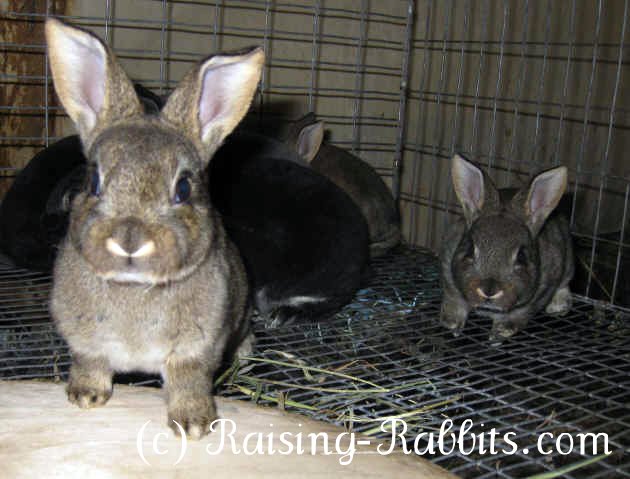
Feed Fresh
Age, moisture and light zap the vitamins in feed.
Old feed can mess
with your rabbit nutrition! After a few
months, commercial pellets lose their nutritional zing. Pellets older than 3 months old may not be able to keep your rabbits healthy for very long.
Keep feeding the old stuff, and your rabbits will lose their conditioning (overall
flesh condition and vitality) due to nutrient loss (oxidation). The animal may also go off
its feed and get diarrhea, possibly due to mold growth in old
feed.
Feeding Your Rabbits (With or Without Pellets)
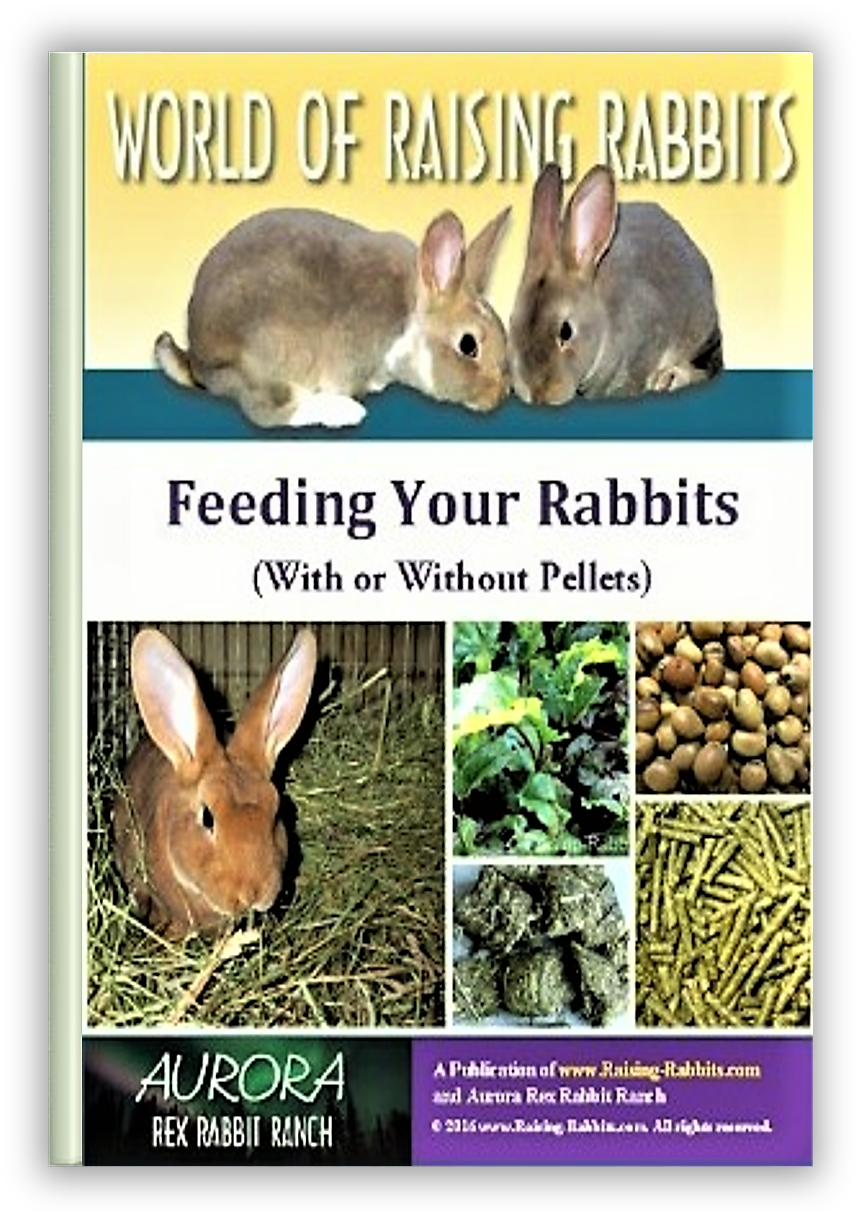
Feeding Your Rabbits is our guide on everything you need to know about a healthy rabbit diet. It includes information about store pellet feed or a home forage diet so you can choose the right fare for your hare.
Feeding Your Rabbits offers information about feeding your rabbits at all stages of life, including bottle feeding newborn babies, normal feeding of all your rabbits, extra nutrition for pregnant and nursing does, health-enhancing supplements, and much much more. It is useful whether you wish to supplement the normal commercial rabbit pellets, or you wish to completely replace those pellets.
A healthy diet really does help ensure your rabbit lives its best life.
Click here for more information, or...
Click here to purchase Feeding Your Rabbits With or Without Pellets!
Your purchase is 100% Risk Free. See our Double-Value Guarantee below.
Feed non-GMO Rabbit Nutrition
Lastly: You would be wise to absolutely minimize the amount of genetically modified (Round-Up Ready) ingredients in your rabbit's feed.
Why? First, because no adequate safety studies have been performed, and second, the scientists performing the tests have been in the payroll of those who stand to profit (Monsanto, et al). This is a HUGE conflict of interest. Additionally, Monsanto has a track record of intimidation against any unbiased scientists running studies that don't produce the desired results.
The only third-party long-term published safety study uncovered damning evidence of a health disaster with GMO forages; this study was withdrawn as the publication hired a new editor - an ex-Monsanto biologist.
See Fetus Images for our brief experience with a cheap feed containing a double whammy of GMO - both corn and soy. The story is only anecdotal, to be sure...
Corn and soy are almost certainly GMO in the USA. Unfortunately, organic feeds are usually extremely pricy. You would do well to find a feed without either ingredient, or at minimum, just one. Check the label or ask the feed mill whether your brand contains corn and/or soy.
Double-Value Guarantee
Our policy is to always OVER-deliver
on value,
which is why your purchase is fully covered by our
Double-Value
Guarantee.
Go ahead - take any of our e-books for a test drive. Peruse our detailed informational and educational e-books. Examine our plans for building rabbit cages, runs, or metal or PVC hutch frames. Check out the Rabbit Husbandry info e-books.
If you aren't completely satisfied that your e-book purchase is worth at least double, triple or even quadruple the price you paid, just drop us a note within 45 days, and we'll refund you the entire cost. That's our Double-Value Guarantee.
Note: When you purchase your
e-books, they will be in PDF format, so you can download them to any device that
supports PDF format. We advise making a back-up copy to a drive or cloud
account. If the books are lost, you can also purchase another copy from Raising-Rabbits.
Double-Value Guarantee
Our policy is to always OVER-deliver
on value,
which is why your purchase is fully covered by our
Double-Value
Guarantee.
Go ahead - take any of our e-books for a test drive. Peruse our detailed informational and educational e-books. Examine our plans for building rabbit cages, runs, or metal or PVC hutch frames. Check out the Rabbit Husbandry info e-books.
If you aren't completely satisfied that your e-book purchase is worth at least double, triple or even quadruple the price you paid, just drop us a note within 45 days, and we'll refund you the entire cost. That's our Double-Value Guarantee.
Note: When you purchase your
e-books, they will be in PDF format, so you can download them to any device that
supports PDF format. We advise making a back-up copy to a drive or cloud
account. If the books are lost, you can also purchase another copy from Raising-Rabbits.
* Affiliate Links*
As an affiliate of several companies, including Amazon.com, we earn from qualifying purchases. Your purchases from these affiliates come at no extra cost to you.
Bunny Bazaar!
Online Shopping Mall by Raising-Rabbits!
One-Stop Shop for Rabbit Swag for both Rabbits and Humans
Bunny Branola:
Immune-Boosting Rabbit Nutritional Supplement and Treat!
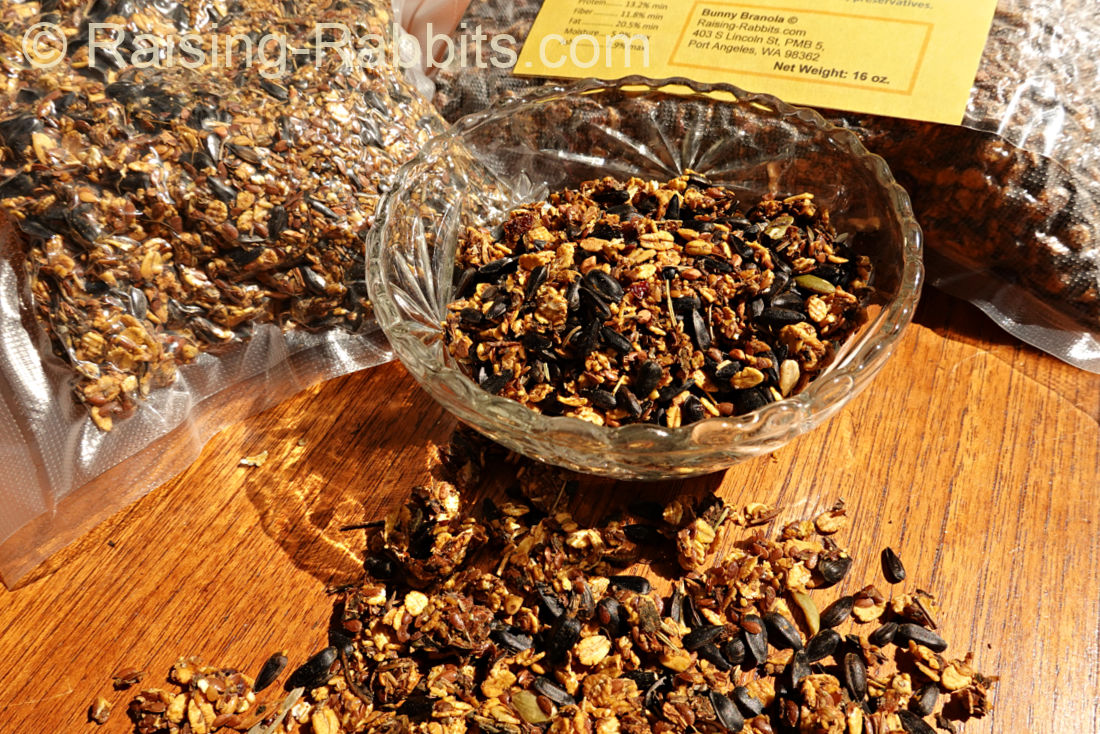
SIX delicious flavors - Sample packs available.
Yes! I want more info!
Yes, Buy Bunny Branola Now!
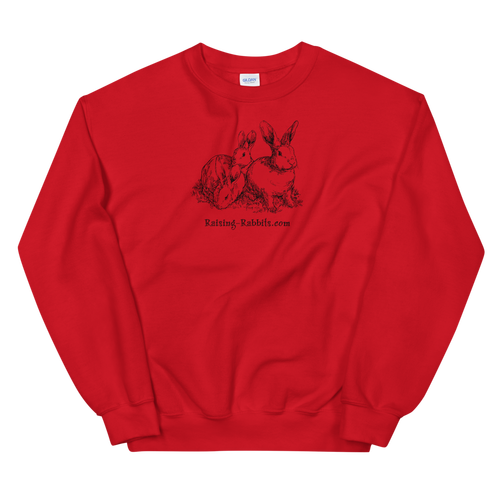
Raising Rabbits Sweatshirts, T-shirts, and Hoodies!
 |
 |
 |
Now offering classy, unisex Raising Rabbits sweatshirts and hoodies.
Available in a large assortment of colors! (We have unisex T-shirts too.)
Find these gorgeous garments in the Bunny Bazaar!
Order your own today - They make great gifts too!!
National Rabbit Associations
American Rabbit Breeders Association (ARBA) is the national club for breeders of both rabbits and cavies (guinea pigs) in the United States. Anyone can join for a modest fee, and get wonderful support for their rabbit raising efforts.
The British Rabbit Council - Official Website of the British Rabbit Council, whose mission is to support the interests of all British rabbit breeders, including exhibition, breeding, and welfare.

Rabbit Council of NZ (Inc.) - The New Zealand Rabbit Council provides a comprehensive website about Rabbit related issues and events within New Zealand and overseas.
Australian National Rabbit Council Inc. - "An Australian Rabbit Club for Australian Rabbit Owners." It was established in order to "coordinate and promote Rabbit Clubs and interest groups throughout Australia."
Featured Rabbitries:
Click the Rabbitry Name Links:
Canada, Quebec
MapleRidge Stables Rabbitry
Himalayan Rabbits
Arizona
Hostile Hare
Chinchillas, Cages
Illinois
Open Doors Rabbitry
Lionheads, New Zealands
Kentucky
Goshen Bunnies
Holland Lop and Mini Plush Lop
Minnesota
Lops of Love Rabbitry
Closed for Christmas vacation
New Jersey
Belle's Bunny Boutique
Holland Lops & Mini Lion Lops
North Carolina
What The Fluffle Rabbitry
New Zealands, Champagnes
Breadbox Rabbitry
Netherland Dwarfs
Pennsylvania
Happily Ever After
Mini Plush Lops, Holland Lops,
Netherland Dwarf, Lionhead,
Mini Plush Lop, & Mini Rex
Bunnies by Emma and Ellie
Holland Lop, Mini Lop, Mini Plush Lop,
Mini Rex/Holland Lop Mix
South Carolina
Jubilee Farms
Holland Lops
Subscribe to Rabbit Rhythms,
our e-newsletter !
Get rabbit news, husbandry and health tips mostly every month. It's easy - we only need your email address, then hit the 'subscribe' button. Enjoy!
Recent Articles


-
Pet Rabbits: Confident Care, Feeding, and Enjoyment
Feb 14, 26 05:46 PM
 Pet rabbits: Care and feeding, including a critical-needs list of requirements. Confidently care for your bunnies with this list of rabbit care tips
 -
All rabbit breeds recognized in USA by American Rabbit Breeders Assoc.
Jan 02, 26 06:49 PM
 List of all rabbit breeds recognized by ARBA, along with weights, brief descriptions and link to national rabbit breed club if available
 -
About Ordering Raw Rabbit: Feeding Raw Can Be Easy
Dec 10, 25 05:10 PM
 About ordering raw rabbit: All the details and your questions answered about easily purchasing frozen raw rabbit from Raising-Rabbits.com for your dogs/cats.


Raising-Rabbits: Home of
The Rabbit Raising Problem Solver
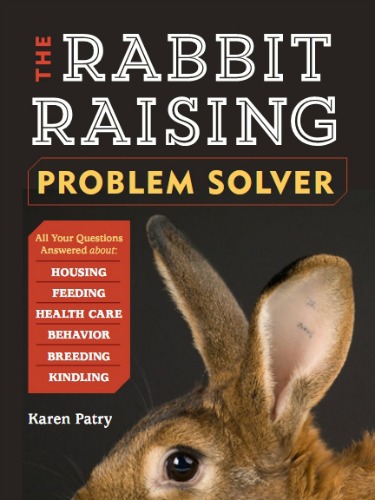
$22.62 - includes
- 10% off your autographed copy of Rabbit Raising Problem Solver
- All packaging, handling, and Media Mail postage costs (WA residents are subject to sales tax)
- Applies to US addresses - (sadly, Media Mail is not offered for international shipping, not even for really awesome books)
- (International shipping is available, of course, but it's out of our control how much they charge for shipping. Send us your country, city, and area code to obtain a shipping quote.)
* Affiliate Links*
As an affiliate of several companies, including Amazon.com, we earn from qualifying purchases. Your purchases from these affiliates come at no extra cost to you.