Taking Care of Pet Rabbits
Taking Care of Pet Rabbits. How to ensure
healthy physical surroundings for your pet rabbit, including keep your pet bunny rabbit
safe from predators and other dangers.
You’ve prepared a cage for your pet rabbit. You know just how much room you’ll allow the bunny to roam in your house. Or, your pet rabbit has a hutch outside and a rabbit run for roaming and nibbling.
Let’s examine the bigger picture, the environment as a whole, so you can ensure your rabbit stays safe and healthy.
If you came to this page
looking for guidance on feeding or other factors of pet rabbit care, please
visit our Pet
Rabbits page, where you will find links to all the info you
need.
Taking Care of Pet Rabbits:
Environment
Rabbits do COLD much better than HOT.
- Indoors:
keep its main living space (cage) far away from fire places and heating vents.
Indoor temperatures of up to 72 degrees are very comfortable for your
rabbit.
- Outdoors: Keep
your rabbits dry; watch the weather reports and thermometer for your area.
Summer is much more concerning than usual winter temperatures, even temps below
zero. Temps up to 85F are fine. From 86 - 91 is the red zone, unless your
rabbit was bred for being acclimated to heat. Over 92F, and you risk the death
of your pet. See Cooling Rabbits for ways to keep your pet rabbits cool in
summer.
DRAFTS stress a rabbit considerably.
The stress can drain the
immune system to the point of illness.
- Indoors:
Tuck cages into corners and cover the tops, if possible. Or, give your pet
rabbit a cardboard box to take shelter in.
- Outdoors is
where you’re more likely to encounter draftiness. Enclosed wooden hutches solve
the problem of drafts, but have ventilation problems. For all-wire cages,
protect the rabbit’s cage or hutch in the direction of the prevailing
winds. Drafts are also reduced by
putting cages in a barn or under a canopy.
Bunnies Day Out!
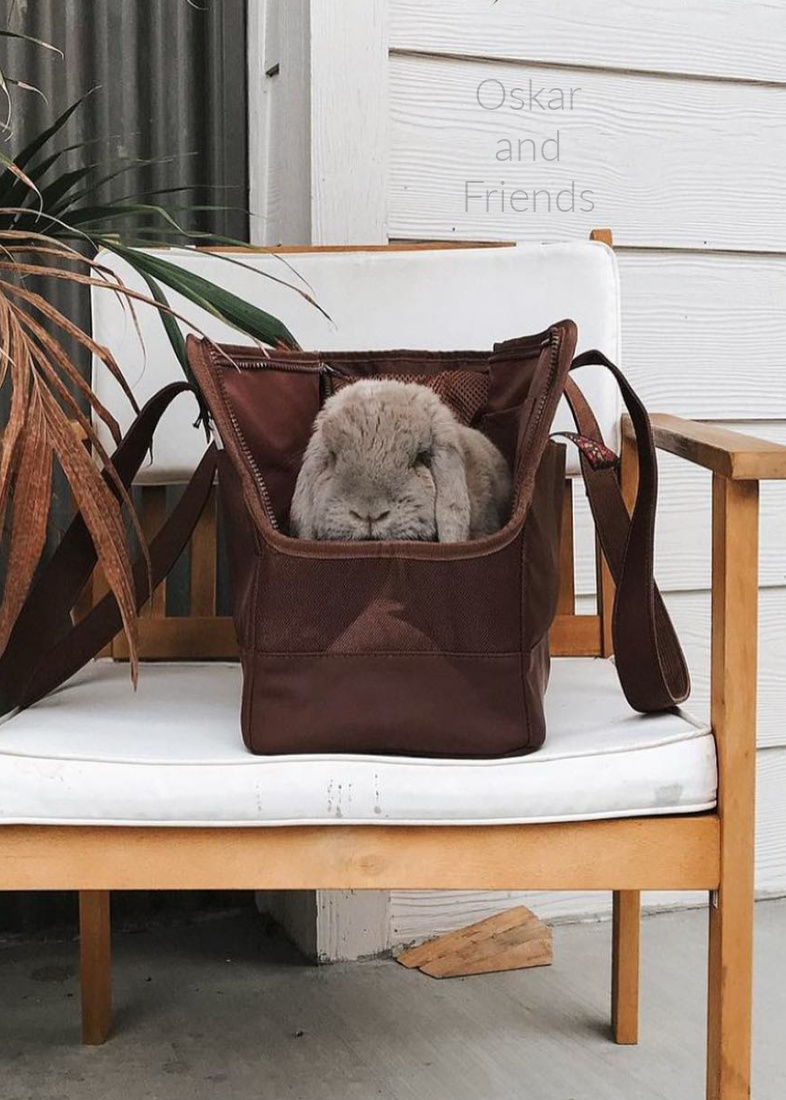
You want your fluffy friend to enjoy life with you, so now you can take them along in comfort and style in a fashionable tote from Oskar and Friends. They can accommodate up to a 15 pound rabbit. The have 3 great styles, the everyday tote (pictured), the travel carrier, and the frontpack/backpack. They also come in several colors. These quality carriers are only $65, so they also make a very reasonable gift.
- Adjustable safety tether and zip top mesh for extra security
- Easy to clean
- Vegan materials including faux leather
- Machine washable bed pad
- Multiple pockets for carrying treats
To find out more about all the great features of the pet carriers from Oskar and Friends, Click Here!
VENTILATION:
The biggest concern is the build up of
ammonia in the air from the rabbit’s urine. Poor ventilation and
infrequent cleaning is a sure-fire guarantee for respiratory problems,
including snuffles (pasteurella multocida).
- Indoors:
Don’t use plastic cages; always get cages with wire sides. Empty the dropping
pan or litter box at least once a week, and use wood-based rabbit litter and
beddings. See Rabbit Bedding for recommendations.
(Right: an excellent choice of durable cage for a small, indoor pet rabbit that also gets outside-of-the-cage time) - Outdoors: If
your rabbit is housed in an enclosed wooden hutch, his space will need close
monitoring for odors, cleanliness and temperature. If you can smell the
ammonia, so can the rabbit, which lives in its hutch most of every day. A wire
floor definitely helps, but if yours has a solid floor, the straw and droppings need
frequent removal and cleaning. They can go into the vegetable garden as mulch and soil
enrichment.
COMMOTION:
Loud
noises and frenetic activity also stress rabbits, especially house rabbits, if
they cannot run and hide. Rabbits have been known to die of fright.
- Indoors: Place your bunny's cage out of the way of the main living areas. If your rabbits also have the run of the house (or a part of the home), you can set up a second retreat to which the rabbit can run and hide (or it may select its own retreat).
- Outdoors: The outdoors are full of noises and activities, to which your bunnies will become accustomed. Don't forget you're always taking care of pet rabbits - when you mow, start at the other end of the yard. Keep your pet rabbits in mind and minimize the sudden, unusual and startling noises and activities.
Yucca Plant May Contribute to Intestinal Health:
Taking Care of Pet Rabbits:
Minimize Pesky Flies

Flies can become a pesky annoyance both to people and to rabbits, as well as a vector for some diseases.
- Inside:
Frequent emptying of your rabbit’s manure will keep odors and flies at
bay.
- Outside:
Natural healthy ways to reduce or eliminate flies include Fly Predators. There
is no down side that we can see to the tiny insects that prey on fly cocoons
but never bother people.
If you live in the country, or within the limits of various cities throughout the USA, you can also keep chickens and/or ducks, which are omnivores and will gladly snap the flies right out of the air for you - AND eat any maggots they find in the droppings under your rabbit hutches.
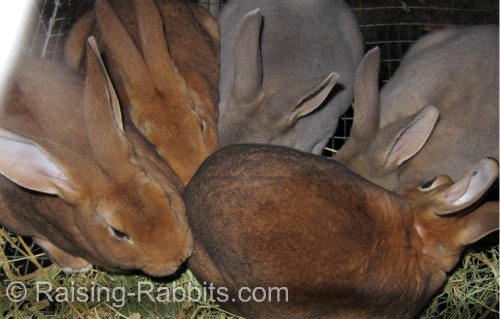
Two creative, XL-sized indoor rabbit cages. Recommended!
Taking Care of Pet Rabbits and Other Possible Safety Issues
Most safety issues stem from the status of a rabbit as a prey animal. A rabbit is certain that anything with teeth intends to eat it. In the wild, that would be close to the truth. Here’s how to keep your pet rabbit reassured:
- A
sturdy cage - our all-wire cage plans with PVC frames are just about as sturdy
and predator-safe as one can get. Our e-book, Pet Rabbit Living Spaces, offers
a variety of predator-safe housing plans and variations on those
plans.
- Your other
pets, your carnivore dogs and cats, may be alarming to your rabbits, at least
at first. Are you sure they don’t harbor malevolent intent against your pet
rabbits?
- Shop at Amazon.com for cages, hutches, rabbit supplies, as well as books and information about how to safely introduce your rabbits to your other pets.
"Stress-free"
is why rabbits thrive in cages, in a
familiar environment cared for by a kind human
with gentle hands and voice.
Consult Rabbit Raising Problem Solver for your pet rabbit questions
Double-Value Guarantee
Our policy is to always OVER-deliver
on value,
which is why your purchase is fully covered by our
Double-Value
Guarantee.
Go ahead - take any of our e-books for a test drive. Peruse our detailed informational and educational e-books. Examine our plans for building rabbit cages, runs, or metal or PVC hutch frames. Check out the Rabbit Husbandry info e-books.
If you aren't completely satisfied that your e-book purchase is worth at least double, triple or even quadruple the price you paid, just drop us a note within 45 days, and we'll refund you the entire cost. That's our Double-Value Guarantee.
Note: When you purchase your
e-books, they will be in PDF format, so you can download them to any device that
supports PDF format. We advise making a back-up copy to a drive or cloud
account. If the books are lost, you can also purchase another copy from Raising-Rabbits.
* Affiliate Links*
As an affiliate of several companies, including Amazon.com, we earn from qualifying purchases. Your purchases from these affiliates come at no extra cost to you.
Bunny Bazaar!
Online Shopping Mall by Raising-Rabbits!
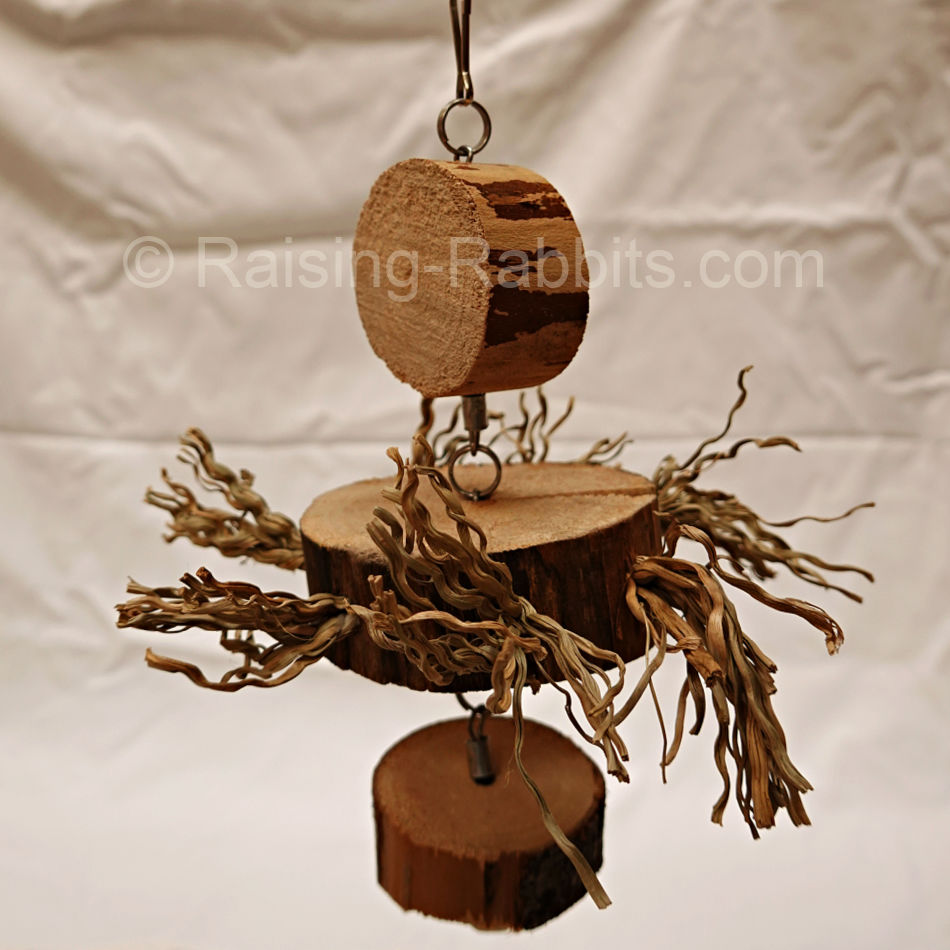
One-Stop Shop for Rabbit Swag for both Buns and Humans
Bunny Branola!
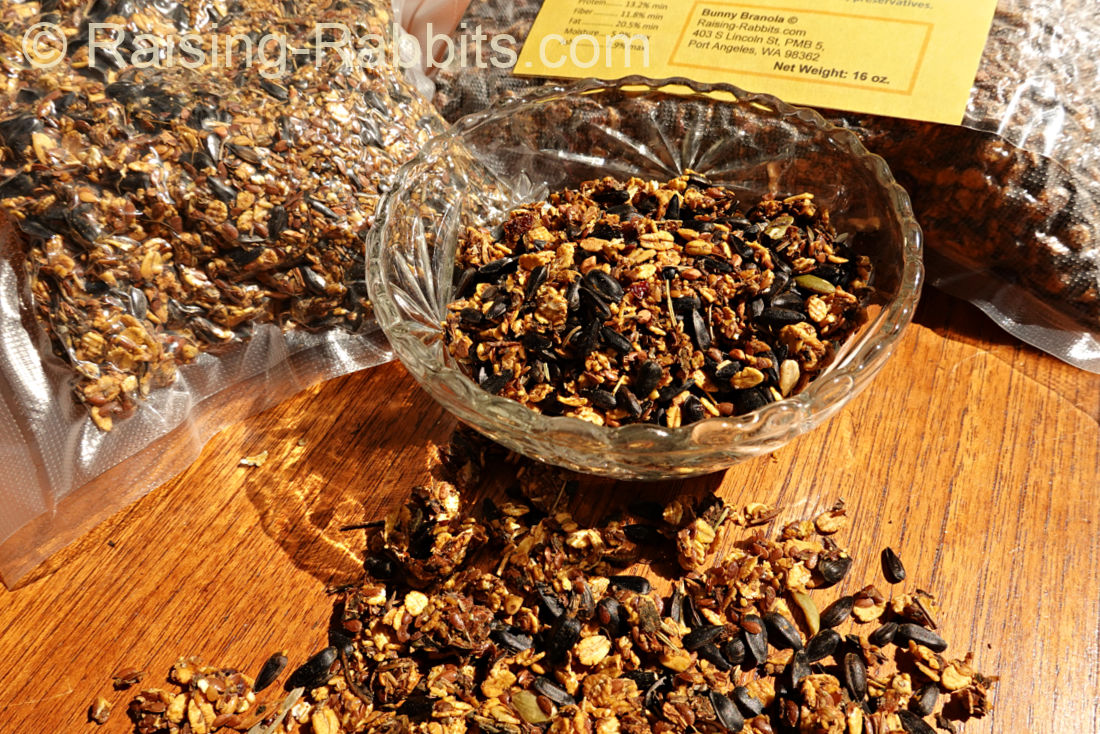
The Ultimate
Rabbit Nutritional Supplement and Treat!
4 delicious flavors! Sample packs available!
Yes! I want more info!
Yes, Buy Bunny Branola Now!
Look What's NEW!!
Our very own classy
Raising Rabbits Sweatshirts, T-shirts, and Hoodies!
 |
 |
 |
.
We're now offering classy, unisex
Raising Rabbits
sweatshirts and hoodies,
Available in a great assortment of colors!
(We have unisex T-shirts too.)
Check out the Bunny Bazaar for our gorgeous
garments!
Order your own today!
They make great gifts too!!
Featured Rabbitries:
Click the Rabbitry Name Links:
Canada, Quebec
MapleRidge Stables Rabbitry
Himalayan Rabbits
Arizona
Hostile Hare
Chinchillas, Cages
Illinois
Open Doors Rabbitry
Lionheads, New Zealands
Kentucky
Goshen Bunnies
Holland Lop and Mini Plush Lop
New Jersey
Go Bunny Treats
All Natural Rabbit Treats
Mini Plush Lop Bunnies
All Natural Rabbit Treats
Belle's Bunny Boutique
Holland Lops & Mini Lion Lops
North Carolina
What The Fluffle Rabbitry
New Zealands, Champagnes
Breadbox Rabbitry
Netherland Dwarfs
The Farm at Fort Mill
Holland Lops
(Right across the South Carolina
border at Charlotte)
Pennsylvania
Happily Ever After
Mini Plush Lops, Holland Lops,
Netherland Dwarf, Lionhead,
Mini Plush Lop, & Mini Rex
Bunnies by Emma and Ellie
Holland Lop, Mini Lop,
Mini Plush Lop,
Mini Rex/Holland Lop Mix
Rhode Island
Shepherds Purse Rabbitry
Holland Lops
South Carolina
Jubilee Farms
Holland Lops
Washington
Cotton Candie Tails
Lionheads, Vienna-Marked
Subscribe to Rabbit Rhythms,
our e-newsletter !
Get rabbit news, husbandry and health tips mostly every month. It's easy - we only need your email address, then hit the 'subscribe' button. Enjoy!
Recent Articles


-
Raw Rabbit: Order raw frozen rabbit for pets
Mar 25, 24 07:45 PM
 Raw rabbit. Convenient online ordering of raw frozen rabbit as whole prey, partially processed, or ground, for feeding pets species-appropriate meals
 -
Farm at Fort Mill
Mar 01, 24 03:22 PM
 Farm at Fort Mill has moved. It is now Jubilee Farms Holland Lops, part of Edgemoor Equestrian, in Edgemoor SC. They offer riding lessons and host events.
 -
Jubilee Farms Holland Lops - Rabbitry in Edgemoor, SC
Feb 26, 24 04:01 PM
Jubilee Farms Holland Lops includes a Rabbitry in Edgemoor, SC. Jubilee Farms also has horses and riding lessons, and hosts events and learning camps.
Raising-Rabbits: Home of
The Rabbit Raising Problem Solver
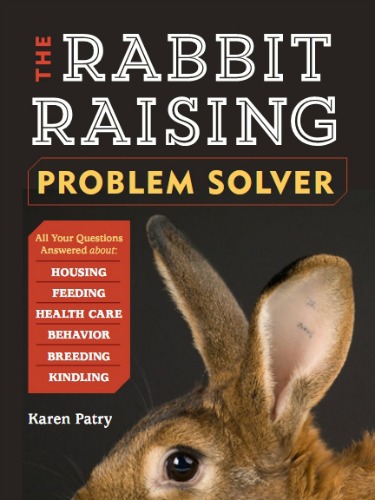
$22.62 - includes
- 10% off your autographed copy of Rabbit Raising Problem Solver
- All packaging, handling, and Media Mail postage costs (WA residents are subject to sales tax)
- Applies to US addresses - (sadly, Media Mail is not offered for international shipping, not even for really awesome books)
- (International shipping is available, of course, but it's out of our control how much they charge for shipping. Send us your country, city, and area code to obtain a shipping quote.)
* Affiliate Links*
As an affiliate of several companies, including Amazon.com, we earn from qualifying purchases. Your purchases from these affiliates come at no extra cost to you.

New! Comments
Have your say about what you just read! Leave me a comment in the box below.