Raising Baby Rabbits
While raising baby rabbits, it’s very fun to watch the tiny kits grow in the nestbox, and then turn into delightful fluffballs at three and four weeks of age.
Baby rabbits generally stay in the nestbox for the first two weeks of life.
The doe takes care of them, and you take care of the doe. See Care of Baby Rabbits for more detail about taking care of your baby rabbits when they’re first born, up to fourteen days old or so.
At about 14 days of age, the nestbox should come out of the cage. By then the kits are hopping out on their own, and leaving the nest box in the cage for too much longer can contribute to health threats such as infections and conjunctivitis.
Between 2 weeks of age and weaning - between 5 to 8 weeks - the kits sleep a lot, eat a lot, and grow like crazy.
This is the fun stage - watching the kits become more active! They're oh so cute.
Tips for Raising Baby Rabbits to Weaning
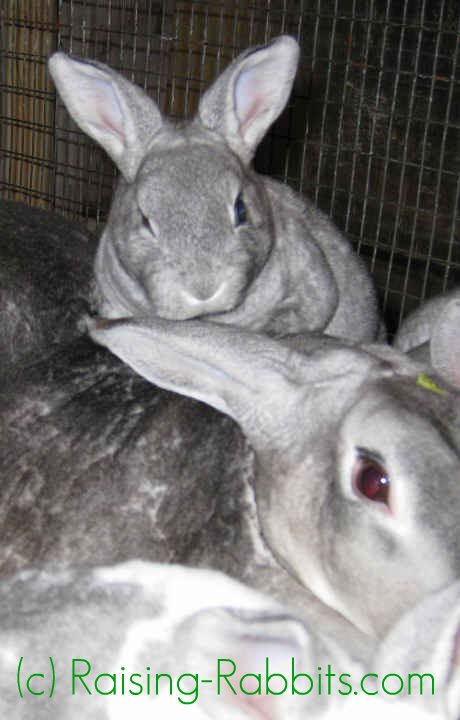 The kits in this picture are about 4 weeks old, and are positively thriving. One kit has dropped a food pellet on top of the doe's head.
- Ensure a constant supply of food and
water.
- Put clean hay in the cage every day (to help
prevent enterotoxemia. Enterotoxemia is
probably the greatest threat to your kits’ lives at this age.)
- Remove
the nest box by Day 18, if the kits haven’t yet jumped out. No one raising baby rabbits wants them to go blind due to a severe nest-box-contracted eye infection.
- Monitor
the kits’ health. Check their behinds, for example, to see that they are clean
and free of diarrhea. Some kits during
this age might go through a loose bowel stage.
Their sensitive gastrointestinal tracts have to obtain and maintain a
healthy balance of bacteria during this age.
- Keep plenty of timothy hay or orchard grass in front of the kits, which helps to short-circuit gut problems.
- In general: We try to maintain a high level of cleanliness without obsessing over sterility.
- In general: If you don't need to, it is better to not push a doe to crank out babies, although the doe might disagree with you - she has an internal drive to multiply. Ensure that your commercial does receive enough food and nutrition to meet the demands of closely spaced litters.
Lactation and Condition Enhancers: BOSS, Whole Oats
Feeding the doe one tablespoon of BOSS or whole oats on alternating days will result in a noticeable increase in milk production and enhance the doe's nutritional status.
Raising Baby Rabbits that are
Not Quite Weaned
Kits grow at different rates, even in the same litter. Having 24/7 access to hay and pellets
means that the little runt that was pushed away from the teat in the nestbox now
has a chance to catch up with the rest of the litter. By 6 weeks old or a little older, you might not be able to tell
him apart by size alone.
Raising baby rabbits is the most fun at this age. Little 3-week-old kits are incredibly cute. Little fuzzballs, they zip around the cage, and then curl up with their littermates and knock out again for yet another nap in the hay.
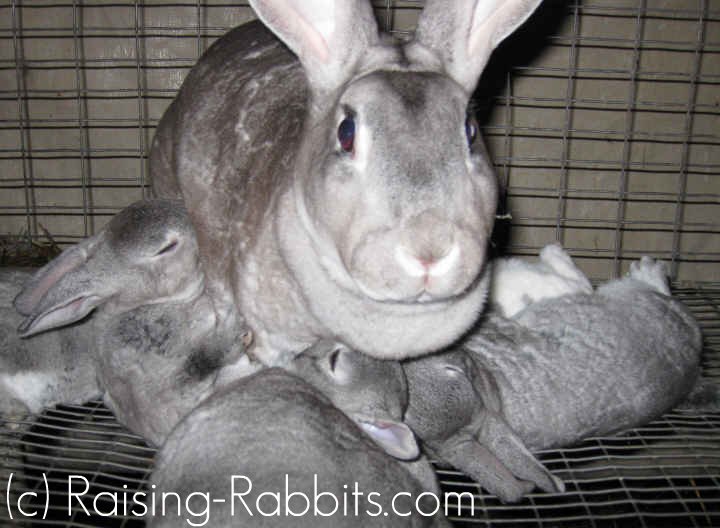 Dinnertime in the evening. These nursing kits are 4 weeks old. The 'meal' lasted 5 minutes, and the doe let me take her picture.
But raising baby rabbits finally gets old for
the doe, and she decides she’s done with the pesky kits.
If she were on her own in the wild, she would already be bred one or two days after the birth of the litter. She would HAVE to abandon the kits at 3.5 or 4 weeks of age in order to go dig a fresh burrow, in order to kindle her next litter just a few days after weaning.
More than once I've reached into a doe's cage and patted her after
discovering her new litter. The doe
immediately lifted her rump. This behavior signifies readiness to breed again, even though the litter is just hours old.
This basic drive to breed and rebreed in succession still resides in her genetic makeup, though since we don't breed our does on day 1 after kindling, the primal drive may not push her to wean her kits as hard as if she had been bred.
When the doe weans her kits, she doesn't permit them to nurse. She will continually move away from their searching faces. If she gets exasperated, she'll push them aside, or even nip them or chase them away from her.
This Bunny Food is Currently the Best I Have Found:
When is it Weaning Time for
Baby Rabbits?
The only absolute prerequisite for weaning is: the kits need to be able to reliably and completely feed themselves.
The kits can feed themselves reliably by 4 weeks of age.
But, weaning can be stressful to the kits. And if done without sufficient consideration, the stress can result in a potentially fatal enterotoxemia. This is why breeders do not typically wean as early as 4 weeks of age. An extra 1 to 2 weeks does wonders for their ability to withstand the stress of weaning without getting sick.
On the other hand, it is also a temptation to leave the bunnies too long with the doe. Allowing more than 8 weeks before weaning is not necessary.
So, when is it weaning time for baby rabbits?
- If you see the doe nipping at the kits, it's time. She can draw blood. When the doe is done raising baby rabbits, it's time to wean the buns.
- If you see the doe trying to back up to her little buckling sons as if begging for a breeding, it's time! She's obviously feeling a new set of hormones. We have seen this a few times, mainly in springtime during peak breeding season.
- Wean between 5 to 8 weeks of age (at the latest). In our barn, we wean our bunnies between 5 1/2 weeks and 6 1/2 to 7 weeks. We feel any longer than about 7 weeks does not serve either the doe or the kits, as the doe will forcibly wean her litter by approximately 7 weeks anyway. Other reputable rabbit breeders may have various weaning schedules that suit their particular rabbits.
See Weaning Rabbits for more info on the weaning process and how to minimize weaning stress.
Below: Just before snapping this photo, we permanently removed the dam from the cage, thereby physically weaning these nearly 7 week old bunnies.
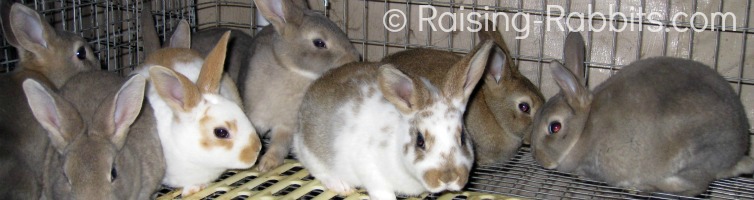
Raising Baby Rabbits age
Seven to Nine Weeks Old
7-9 weeks is an excellent age to put a permanent identifying tattoo into the kits’ left ears. In the United States, it is always the left ear. The right ear is reserved for registration. Other nations may have other practices and guidelines.
8-12 weeks of age is market age for fryer rabbits.
By 9-10 weeks old, your bunnies should be separated into their own cages so they can grow out a bit. The more they grow, the better you’ll be able to recognize the animals you wish to assign to your own breeding program.
- Bunnies from rabbits with excellent mothering instincts and ability to produce plenty of milk
- Promising youngsters that may win on the show table.
- Junior animals having the particular traits and/or body type which will contribute to the goals of your rabbitry and needs of your family.
Enjoy raising baby rabbits!
See Rabbit Reproduction for much more info on caring for rabbits from mating to weaning
Double-Value Guarantee
Our policy is to always OVER-deliver
on value,
which is why your purchase is fully covered by our
Double-Value
Guarantee.
Go ahead - take any of our e-books for a test drive. Peruse our detailed informational and educational e-books. Examine our plans for building rabbit cages, runs, or metal or PVC hutch frames. Check out the Rabbit Husbandry info e-books.
If you aren't completely satisfied that your e-book purchase is worth at least double, triple or even quadruple the price you paid, just drop us a note within 45 days, and we'll refund you the entire cost. That's our Double-Value Guarantee.
Note: When you purchase your
e-books, they will be in PDF format, so you can download them to any device that
supports PDF format. We advise making a back-up copy to a drive or cloud
account. If the books are lost, you can also purchase another copy from Raising-Rabbits.
* Affiliate Links*
As an affiliate of several companies, including Amazon.com, we earn from qualifying purchases. Your purchases from these affiliates come at no extra cost to you.
Bunny Bazaar!
Online Shopping Mall by Raising-Rabbits!
One-Stop Shop for Rabbit Swag for both Buns and Humans
Bunny Branola!
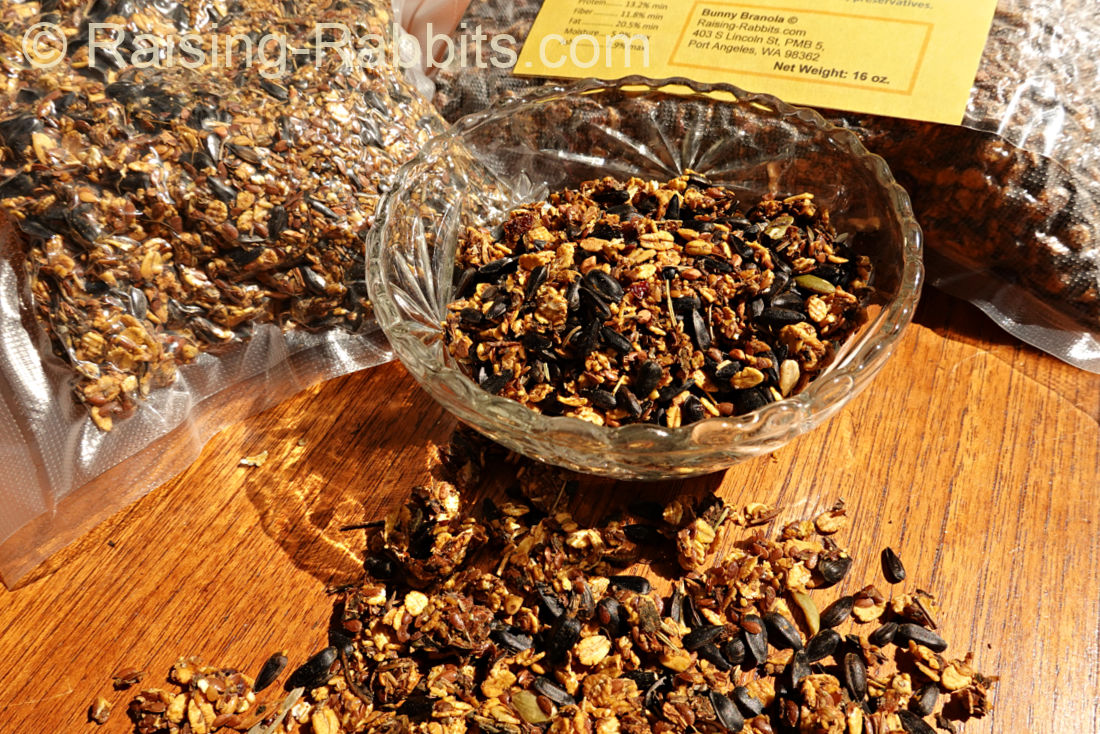
The Ultimate
Rabbit Nutritional Supplement and Treat!
4 delicious flavors! Sample packs available!
Yes! I want more info!
Yes, Buy Bunny Branola Now!
Look What's NEW!!
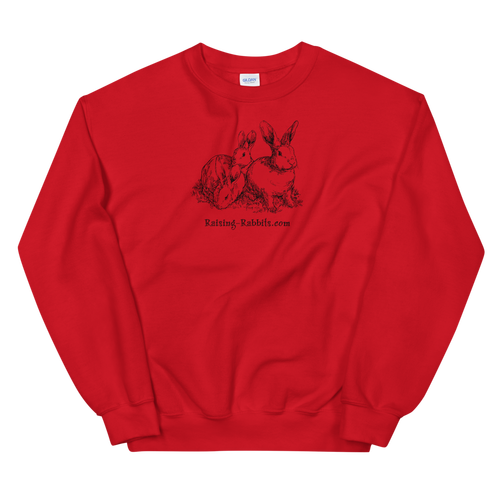
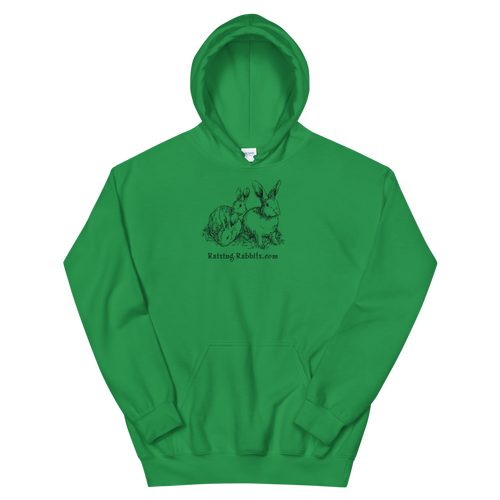
Our very own classy
Raising Rabbits Sweatshirts, T-shirts, and Hoodies!
 |
 |
 |
.
We're now offering classy, unisex
Raising Rabbits
sweatshirts and hoodies,
Available in a great assortment of colors!
(We have unisex T-shirts too.)
Check out the Bunny Bazaar for our gorgeous
garments!
Order your own today!
They make great gifts too!!
Featured Rabbitries:
Click the Rabbitry Name Links:
Canada, Quebec
MapleRidge Stables Rabbitry
Himalayan Rabbits
Arizona
Hostile Hare
Chinchillas, Cages
Illinois
Open Doors Rabbitry
Lionheads, New Zealands
Kentucky
Goshen Bunnies
Holland Lop and Mini Plush Lop
New Jersey
Go Bunny Treats
All Natural Rabbit Treats
Mini Plush Lop Bunnies
All Natural Rabbit Treats
Belle's Bunny Boutique
Holland Lops & Mini Lion Lops
North Carolina
What The Fluffle Rabbitry
New Zealands, Champagnes
Breadbox Rabbitry
Netherland Dwarfs
The Farm at Fort Mill
Holland Lops
(Right across the South Carolina
border at Charlotte)
Pennsylvania
Happily Ever After
Mini Plush Lops, Holland Lops,
Netherland Dwarf, Lionhead,
Mini Plush Lop, & Mini Rex
Bunnies by Emma and Ellie
Holland Lop, Mini Lop,
Mini Plush Lop,
Mini Rex/Holland Lop Mix
Rhode Island
Shepherds Purse Rabbitry
Holland Lops
South Carolina
Jubilee Farms
Holland Lops
Washington
Cotton Candie Tails
Lionheads, Vienna-Marked
Subscribe to Rabbit Rhythms,
our e-newsletter !
Get rabbit news, husbandry and health tips mostly every month. It's easy - we only need your email address, then hit the 'subscribe' button. Enjoy!
Recent Articles


-
Raw Rabbit: Order raw frozen rabbit for pets
Mar 25, 24 07:45 PM
 Raw rabbit. Convenient online ordering of raw frozen rabbit as whole prey, partially processed, or ground, for feeding pets species-appropriate meals
 -
Farm at Fort Mill
Mar 01, 24 03:22 PM
 Farm at Fort Mill has moved. It is now Jubilee Farms Holland Lops, part of Edgemoor Equestrian, in Edgemoor SC. They offer riding lessons and host events.
 -
Jubilee Farms Holland Lops - Rabbitry in Edgemoor, SC
Feb 26, 24 04:01 PM
Jubilee Farms Holland Lops includes a Rabbitry in Edgemoor, SC. Jubilee Farms also has horses and riding lessons, and hosts events and learning camps.
Raising-Rabbits: Home of
The Rabbit Raising Problem Solver
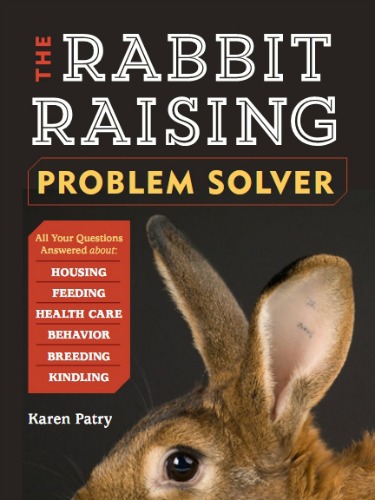
$22.62 - includes
- 10% off your autographed copy of Rabbit Raising Problem Solver
- All packaging, handling, and Media Mail postage costs (WA residents are subject to sales tax)
- Applies to US addresses - (sadly, Media Mail is not offered for international shipping, not even for really awesome books)
- (International shipping is available, of course, but it's out of our control how much they charge for shipping. Send us your country, city, and area code to obtain a shipping quote.)
* Affiliate Links*
As an affiliate of several companies, including Amazon.com, we earn from qualifying purchases. Your purchases from these affiliates come at no extra cost to you.

New! Comments
Have your say about what you just read! Leave me a comment in the box below.