Rabbit Syphilis
Rabbit Syphilis. Cause and symptoms of vent disease, making the diagnosis, how to cure. Plus diarrhea alert due to treatment with antibiotics.
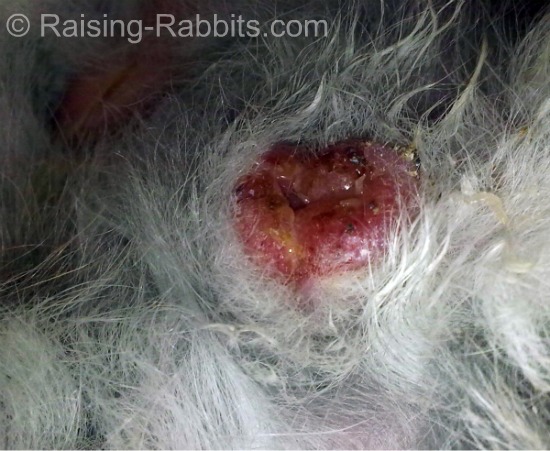
Pictured below is the vent area of a dwarf lop doe. The doe has contracted bunny syphilis from a recent breeding.
.....Ouch!
This is also known as vent disease, vent disease in rabbits,
spirochetosis, or treponematosis. The causative organism is a spirochete
bacterium named Treponema paraluis cuniculi, or sometimes simply T. cuniculi.
Symptoms:
From the time of exposure to rabbit syphilis, the disease incubates for around 3-6 weeks. At onset of symptoms, the genital area becomes inflamed and swollen with superficial, cutaneous lesions. Little blisters and/or ulcers develop over the vent area. These pop and scab over. The area may be coated with pus and yellow exudate.
Affected animals are typically unwilling to breed, and if they do, their reproductive efficiency drops.
Transmission of vent disease in the vast majority of cases is through breeding. However it is possible to contract the disease through normal contact.
Without treatment, similar scabby, inflamed lesions can develop on the nose, lips, face, and/or eye region as the rabbit infects itself through grooming or coprophagy. Facial sores develop in about 15% of affected rabbits. The rabbit pictured did not yet have any facial sores.
In a few rabbits with vent disease, the still-infectious
rabbit becomes completely asymptomatic. The outward lesions heal, yet the spirochete is
still populating the bloodstream. If you breed a rabbit and the other animal
comes down with rabbit syphilis, treat both animals.
Quarantine:
Because vent disease is so contagious, do quarantine the
affected animals, all those rabbits that have been exposed to them, AND all their
offspring which could reasonably be suspected of having been exposed to the
disease.
Diagnosis:
A veterinarian can take a scraping of the area and put it under the dark field microscope. (S)he should be able to see spirochetes (tiny corkscrew-shaped bacteria) under the slide. The vet can also measure the antibody titer. Other serologic tests are also available.
Even if a spirochete cannot be found, I would
nevertheless treat any of my rabbits that ever resembled the picture
above, plus any animals they had been bred to.
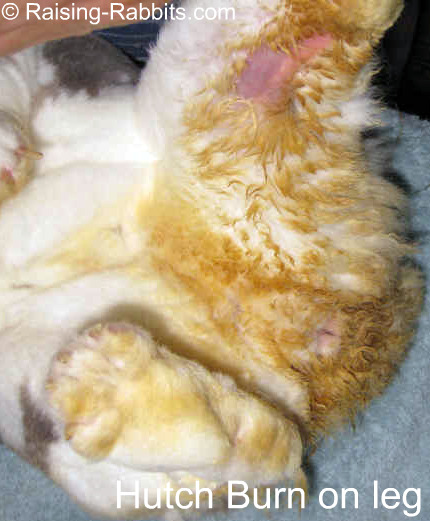
Hutch Burn or Vent Disease?
It might be possible to confuse hutch burn with vent disease. Hutch burn is a topical irritation to the skin, most frequently from sitting in moist or dirty bedding. The fur will be stained and/or missing. The vent area of this rabbit is perfectly healthy, while the surrounding fur is stained. Hutch burn can be seen on the inner leg, where the fur has fallen out and the skin is reddened but not scabbed.
Find more hutch burn info on our Rabbit Health Care page.
Treatment:
The treatment of choice is penicillin. Be very careful which penicillin is chosen, as some penicillins will wipe out the rabbit’s intestinal flora resulting in death. Antibiotics by mouth is NOT recommended.
Here are three treatment choices. Any of these should successfully yield a cure. Choose one of these options, depending on availability and sensitivity of the infection to the drug, as determined in a culture and sensitivity obtained before medicating:
- Procaine penicillin G, 40,000 IU intra-muscularly, once a day, for 3 to 5 days.
- Benzathine penicillin G, 42,000 IU/kg, subcutaneously, once a week, for 3 weeks
- A mixture of both Procaine Penicillin G and Penicillin G Benzathine. The combination goes by a variety of brand names. 'Dura Pen' is one of them, Pen BP-48 is another. Dosage is 20,000 IU per pound of body weight, subcutaneously, once a week for 3 weeks.
(Note: The above regimens were each cited in one or more of our references listed below. We are not vets! Please consult your vet, or use at your own risk.)
The actual amount of antibiotic you draw up into the syringe will depend upon both the weight of the rabbit, and the concentration of the Penicillin in the vial. Double- and triple-check everything carefully before injecting.
Give the full treatment. You need to heal the scabs AND kill
the spirochetes throughout the body. Treat ALL adults in the herd if necessary.
Recovered rabbits that have been treated can be considered cured and no longer
infectious. Expect the vent and other lesions to heal up within 10-14 days.
Adult Diarrhea Alert:
Diarrhea is a definite risk whenever administering
antibiotics to a rabbit. You should probably withhold pellets for the first
couple days after administration. Instead, free-feed grass
hay, which will reduce the rabbit's intake of calories and
carbohydrates. The reduced energy intake will help limit the proliferation of
diarrhea-causing unfriendly bacteria triggered by the partial die-off of normal gut
bacteria from the antibiotics.
Kits and Rabbit Syphilis:
Do not breed infected rabbits. Besides the danger of spreading this infection throughout the herd, the kits themselves become infected by the infected does at kindling.
It is very dangerous to treat infected bunnies with
penicillin - the bacterial balance in their intestines is still tenuous; a dose
of antibiotics could very easily trigger a fatal diarrhea. If at all possible,
it is safest to postpone treatment of youngsters until much closer to
adulthood.
Ineffective medications:
- Antibiotics: Sulfamonomethoxine, Chloramphenicol, Baytril (enrofloxacin). These have only limited effectiveness against T. cuniculi. The likely outcome is temporary suppression of symptoms, allowing the infection to roar back once the antibiotic is discontinued. Obtain a culture and sensitivity before using antibiotics, and especially if considering the use of any of these antibiotics.
- Ointments: Panalog (anti-fungal and antibiotic),
Fluoroquinolone (dangerous antibiotic ointment). Despite their broad-spectrum
effects, ointments have value because they may improve the rabbit’s comfort
level but they will not reduce the bacterial count and cannot be considered the
sole means of treatment. Except in the case of preventing a secondary
infection, consider using a non-medicated salve if necessary.
Prevention:
Find the initial source of the infection, if possible.
Rabbit syphilis is a disease that you may never see in your
herd or your pet. On the other hand, it is severe enough that you should be
aware that it exists. It is a wise breeder that checks the business end of both
breeding animals before every mating to ensure that both animals are healthy.
Disinfect Living Spaces:
Deep cleaning and disinfection of hutches, cages, and the rabbitry is important to prevent a possible re-infection of one or more animals with rabbit syphilis.
With effective treatment, rabbits can be expected to return to excellent health.
Pictures After
Treatment for Rabbit Syphilis
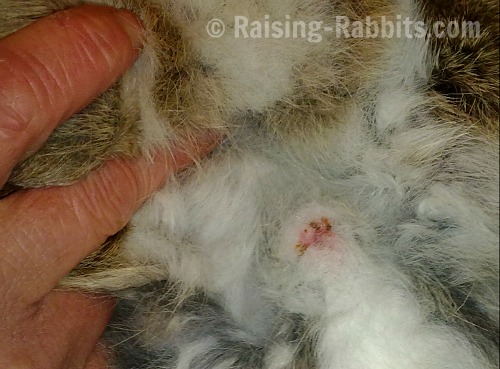 Rabbit's vent after just 7 days of treatment. It's healing nicely, with a few scabs remaining.
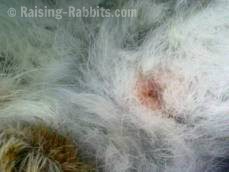 Rabbit's vent after 14 days of treatment. It looks to be fully healed.
References:
- http://www.merckvetmanual.com/mvm/index.jsp?cfile=htm/bc/171321.htm
- http://rabbitinfocenter.8m.com/vent.html
- http://www.threelittleladiesrabbitry.com/blog2/2007/12/24/vent-disease-or-rabbit-syphilis/
- http://www.radil.missouri.edu/info/dora/RABBPAGE/derm.html#XII
- http://www.helium.com/items/1390994-rabbit-syphilis-symptoms-and-treatment
- http://www.rabbitnetwork.org/articles/syphilis.shtml
Double-Value Guarantee
Our policy is to always OVER-deliver
on value,
which is why your purchase is fully covered by our
Double-Value
Guarantee.
Go ahead - take any of our e-books for a test drive. Peruse our detailed informational and educational e-books. Examine our plans for building rabbit cages, runs, or metal or PVC hutch frames. Check out the Rabbit Husbandry info e-books.
If you aren't completely satisfied that your e-book purchase is worth at least double, triple or even quadruple the price you paid, just drop us a note within 45 days, and we'll refund you the entire cost. That's our Double-Value Guarantee.
Note: When you purchase your
e-books, they will be in PDF format, so you can download them to any device that
supports PDF format. We advise making a back-up copy to a drive or cloud
account. If the books are lost, you can also purchase another copy from Raising-Rabbits.
* Affiliate Links*
As an affiliate of several companies, including Amazon.com, we earn from qualifying purchases. Your purchases from these affiliates come at no extra cost to you.
Bunny Bazaar!
Online Shopping Mall by Raising-Rabbits!
One-Stop Shop for Rabbit Swag for both Buns and Humans
Bunny Branola!
The Ultimate
Rabbit Nutritional Supplement and Treat!
4 delicious flavors! Sample packs available!
Yes! I want more info!
Yes, Buy Bunny Branola Now!
Look What's NEW!!
Our very own classy
Raising Rabbits Sweatshirts, T-shirts, and Hoodies!
 |
 |
 |
.
We're now offering classy, unisex
Raising Rabbits
sweatshirts and hoodies,
Available in a great assortment of colors!
(We have unisex T-shirts too.)
Check out the Bunny Bazaar for our gorgeous
garments!
Order your own today!
They make great gifts too!!
Featured Rabbitries:
Click the Rabbitry Name Links:
Canada, Quebec
MapleRidge Stables Rabbitry
Himalayan Rabbits
Arizona
Hostile Hare
Chinchillas, Cages
Illinois
Open Doors Rabbitry
Lionheads, New Zealands
Kentucky
Goshen Bunnies
Holland Lop and Mini Plush Lop
New Jersey
Go Bunny Treats
All Natural Rabbit Treats
Mini Plush Lop Bunnies
All Natural Rabbit Treats
Belle's Bunny Boutique
Holland Lops & Mini Lion Lops
North Carolina
What The Fluffle Rabbitry
New Zealands, Champagnes
Breadbox Rabbitry
Netherland Dwarfs
The Farm at Fort Mill
Holland Lops
(Right across the South Carolina
border at Charlotte)
Pennsylvania
Happily Ever After
Mini Plush Lops, Holland Lops,
Netherland Dwarf, Lionhead,
Mini Plush Lop, & Mini Rex
Bunnies by Emma and Ellie
Holland Lop, Mini Lop,
Mini Plush Lop,
Mini Rex/Holland Lop Mix
Rhode Island
Shepherds Purse Rabbitry
Holland Lops
South Carolina
Jubilee Farms
Holland Lops
Washington
Cotton Candie Tails
Lionheads, Vienna-Marked
Subscribe to Rabbit Rhythms,
our e-newsletter !
Get rabbit news, husbandry and health tips mostly every month. It's easy - we only need your email address, then hit the 'subscribe' button. Enjoy!
Recent Articles


-
Raw Rabbit: Order raw frozen rabbit for pets
Mar 25, 24 07:45 PM
 Raw rabbit. Convenient online ordering of raw frozen rabbit as whole prey, partially processed, or ground, for feeding pets species-appropriate meals
 -
Farm at Fort Mill
Mar 01, 24 03:22 PM
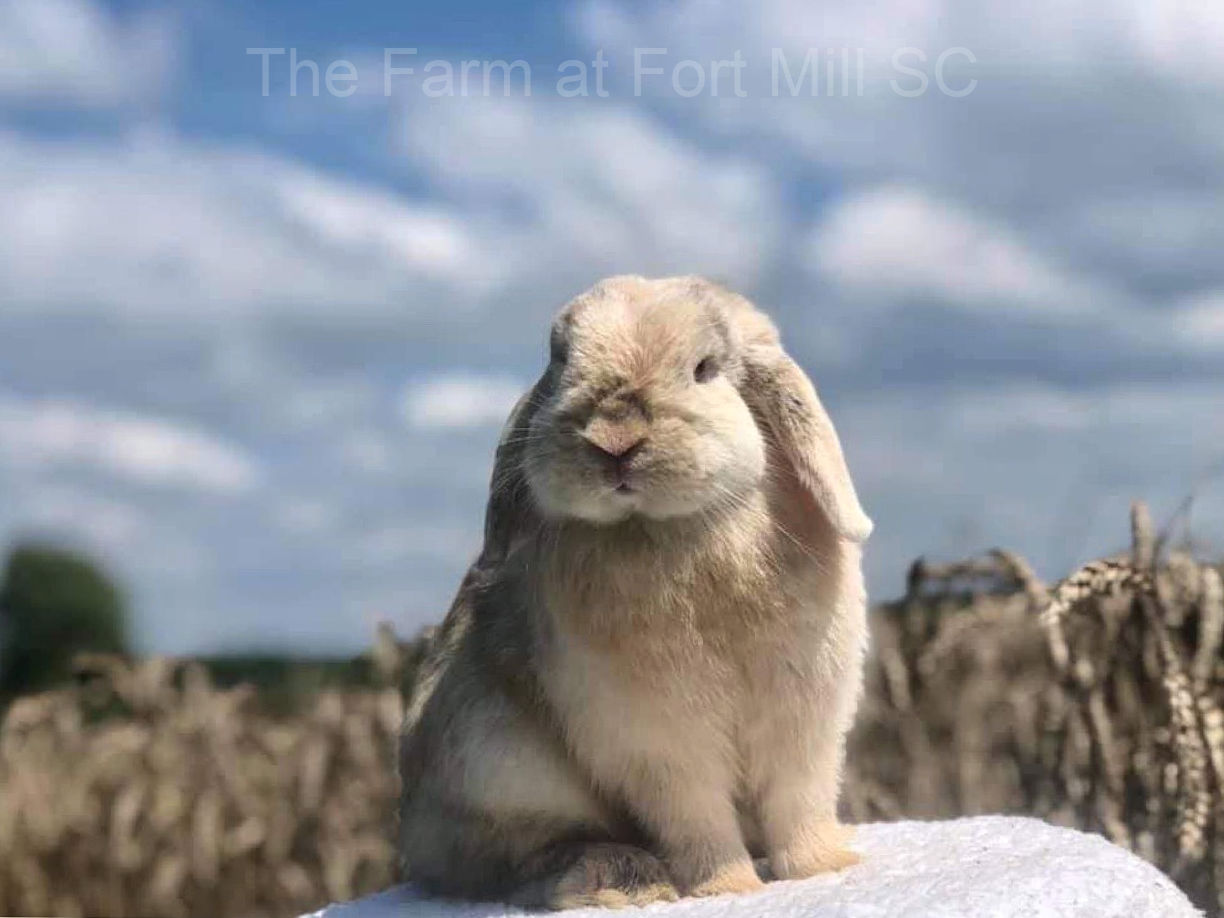 Farm at Fort Mill has moved. It is now Jubilee Farms Holland Lops, part of Edgemoor Equestrian, in Edgemoor SC. They offer riding lessons and host events.
 -
Jubilee Farms Holland Lops - Rabbitry in Edgemoor, SC
Feb 26, 24 04:01 PM
Jubilee Farms Holland Lops includes a Rabbitry in Edgemoor, SC. Jubilee Farms also has horses and riding lessons, and hosts events and learning camps.
Raising-Rabbits: Home of
The Rabbit Raising Problem Solver
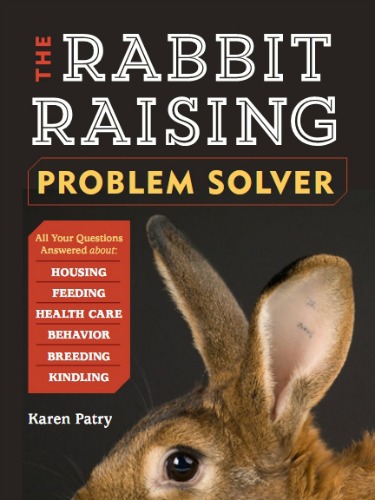
$22.62 - includes
- 10% off your autographed copy of Rabbit Raising Problem Solver
- All packaging, handling, and Media Mail postage costs (WA residents are subject to sales tax)
- Applies to US addresses - (sadly, Media Mail is not offered for international shipping, not even for really awesome books)
- (International shipping is available, of course, but it's out of our control how much they charge for shipping. Send us your country, city, and area code to obtain a shipping quote.)
* Affiliate Links*
As an affiliate of several companies, including Amazon.com, we earn from qualifying purchases. Your purchases from these affiliates come at no extra cost to you.

New! Comments
Have your say about what you just read! Leave me a comment in the box below.