English Angora Rabbit
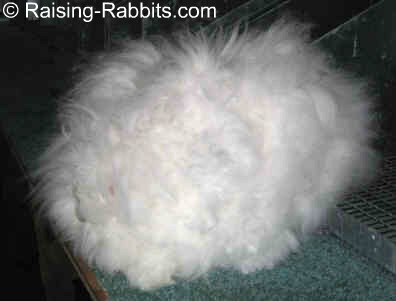
English Angora Rabbit: Description, grooming and care. Interested in raising English Angoras for their luxuriant wool? Plus, info on spinning the angora wool.
The English Angora is the smallest of the 4 angora breeds recognized by the ARBA. Acceptable weights are 5 - 7 1/2 lbs (2.3 - 3.4 kg). They come in a full rainbow of colors, including brokens - white with any acceptable color.
Get an overview of angora rabbit history and various breeds at Angora Rabbits.
Angoras are typically very gentle and easy-going. They’ve had millennia of domestication, and through the ages each animal has been handled frequently in order to be groomed, plucked, sheared, and cleaned.
Are you interested in an English Angora as a pet? Personality-wise, great. But please, also realize that they’ll require significant grooming each week. Are you good with that?
ARBA Recognition of English Angoras
For
years, English and French Angoras were lumped together and called
"Angora Woolers." But as selective breeding continued within each breed,
their differences became magnified. In 1944, the ARBA recognized these
differences by according each breed separate recognition.
Grooming the English Angora Rabbit
English Angora wool is silky and luxuriant due to a lower percentage of guard hairs. The breeder pays for this luxury with time.
This is the breed requiring the most grooming to ensure no mats.
- From 8 weeks old to 4 months, groom once a week.
- From 4 months to 5 months, groom every 4-5 days.
- From 5 months to 10 months, groom twice a week.
- If done regularly, each grooming session will require 15 minutes or less per animal in order to blow out the coat with a powerful blower and then comb through the areas such as the feet, belly and face with a steel pet comb.
- By the time the rabbit is 10 months old, it will be ready for its first shearing.
- Once the rabbit is older than 12 months, the guard hair content tends to rise and therefore may mat less and need less grooming.
These guidelines are distilled from the website of the owner and breeder of the winningest English Angora rabbit in America, Betty Chu of California. Her English Angora rabbit, Chu’s Sweet Sixteen, won 20 Best of Breeds and 12 Best in Show, one of these being the ARBA National Convention and Show in 1992. Her winning ways continue with a barn full of grand champions.
Are you Lucky Enough to Have a Non-Molting English Angora Rabbit?
Ms. Chu has been at the forefront of selective breeding efforts
that may have recently isolated a non-molting gene in English
Angoras.
What this means:
- A non-molting English Angora requires less care than a German Angora
- The fibers grow very long (7+") without molting, matting, or a rigid grooming schedule. Ms. Donna Deter of D'Lynn Wooly Bunnies has several non-molting English Angoras, and asserts the ability to go 7-8 months with "no special care at all." She does occasionally find a few minimal mats by the ears and mouth. This is despite the very soft and luxurious fiber of the English angora.
- The rabbit stays in 'prime' for longer periods of time. Coat retention for up to 14 months has been recorded.
- English angora fiber production is very strong. It doesn't exceed that of the German angora, however the English are smaller animals and eat as little as half as much as German angoras do.
- Spontaneous non-molting qualities are cropping up in other herds around the USA, and breeders are beginning to selectively fix this quality in their English angoras.
- If yours is a non-molting
English angora, you may not need to adhere as rigidly to a grooming
schedule, however all angoras require monthly 'bottom checks'
to ensure cleanliness.
Bunny Branola
The Ultimate Rabbit Wool Conditioning Supplement
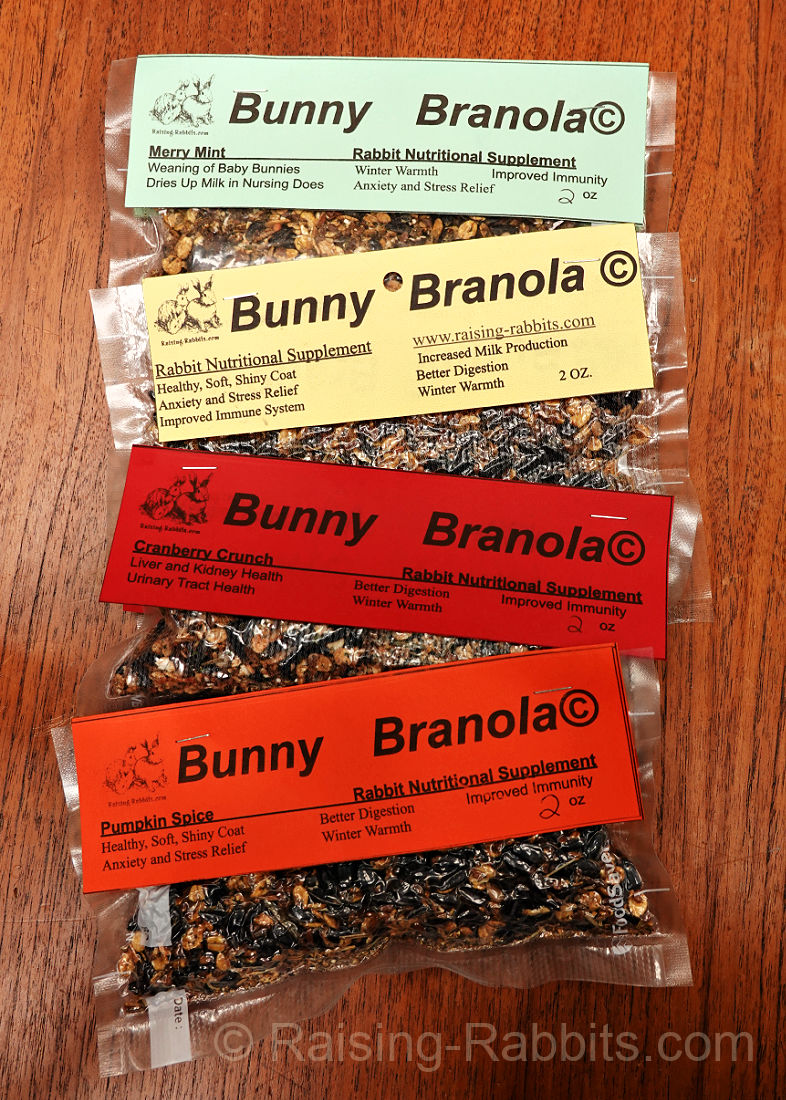 Bunny Branola is available in 4 delicious flavors year round: Original Classic (General Health) |
Bunny Branola is the ultimate rabbit wool conditioning supplement. Our specially formulated treat is all natural ingredients from Washington state. No dyes, preservitives, empty fillers, or other chemicals, just pure goodness. Order your rabbits' favorite, or get a variety pack! You pick the flavors! If you want to find out more about Bunny Branola, including the list of all natural ingredients click HERE. Helps reduce stress levels If you are ready to buy now, we have several sizes, just click the one you want. All prices include shipping. Sample: 2 oz - $7 |
Extra Care Required, plus
Spinning the Wool
The English Angora requires a few extra considerations. When in full bloom, temperatures over 75 degrees F (24 degrees C) result in added stress. When sheared and for 2 months thereafter, the English Angora rabbit is extra sensitive to temperature fluctuations.
For more information on temperature, and other special tips for English Angora care, we recommend a visit to Ms. Chu’s website: http://bettychuenglishangora.com/
Currently the best commercial rabbit food available in the USA:
Learn to Spin with a Drop Spindle:
http://eweporium.webs.com/howtospinstepbystep.htm
DEMO of Kick Wheel Spinning:
Is This Your Rabbit Breed?
Do you have a great story or experience with this breed of rabbits? Feel free to share it!
And while you're at it, you can include up to four photos.
References:
- www.nationalangorarabbitbreeders.com
- http://bettychuenglishangora.com/
- www.angoras.co.uk (2018 Update: website is offline)
- http://eweporium.webs.com/howtospinstepbystep.htm
- Breeds of the World, by Bob D. Whitman
- D'Lynn Wooly Bunnies (2018 Update: website is offline)
Double-Value Guarantee
Our policy is to always OVER-deliver
on value,
which is why your purchase is fully covered by our
Double-Value
Guarantee.
Go ahead - take any of our e-books for a test drive. Peruse our detailed informational and educational e-books. Examine our plans for building rabbit cages, runs, or metal or PVC hutch frames. Check out the Rabbit Husbandry info e-books.
If you aren't completely satisfied that your e-book purchase is worth at least double, triple or even quadruple the price you paid, just drop us a note within 45 days, and we'll refund you the entire cost. That's our Double-Value Guarantee.
Note: When you purchase your
e-books, they will be in PDF format, so you can download them to any device that
supports PDF format. We advise making a back-up copy to a drive or cloud
account. If the books are lost, you can also purchase another copy from Raising-Rabbits.
* Affiliate Links*
As an affiliate of several companies, including Amazon.com, we earn from qualifying purchases. Your purchases from these affiliates come at no extra cost to you.
Bunny Bazaar!
Online Shopping Mall by Raising-Rabbits!
One-Stop Shop for Rabbit Swag for both Buns and Humans
Bunny Branola!
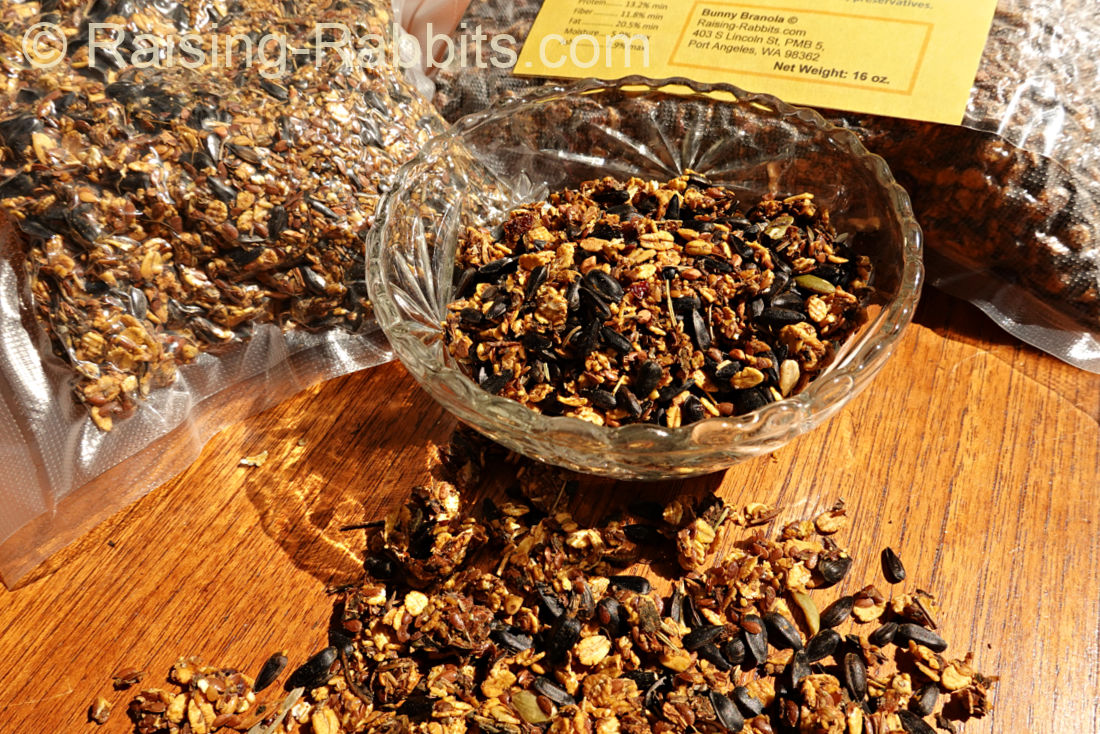
The Ultimate
Rabbit Nutritional Supplement and Treat!
4 delicious flavors! Sample packs available!
Yes! I want more info!
Yes, Buy Bunny Branola Now!
Look What's NEW!!
Our very own classy
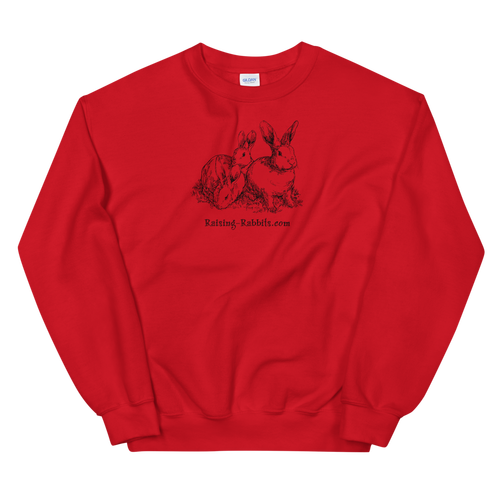
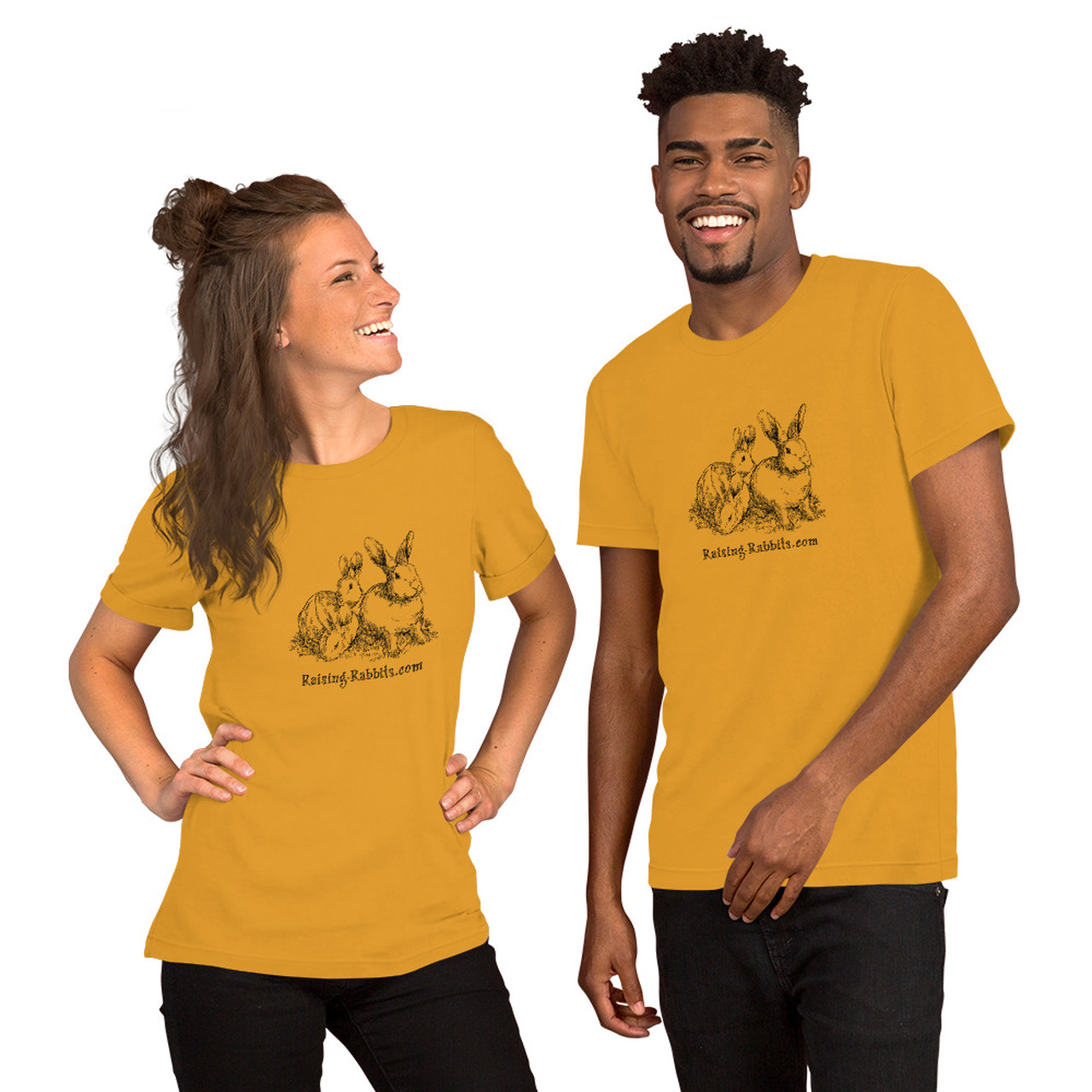
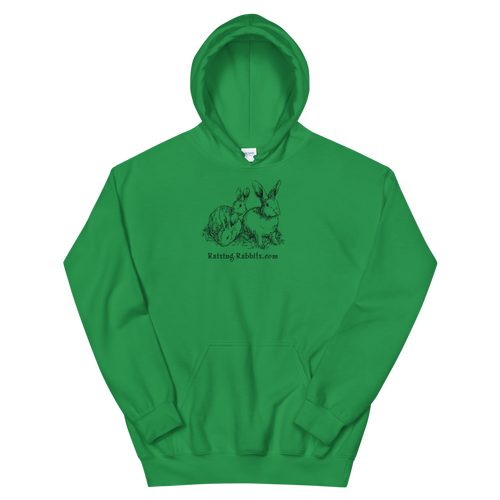
Raising Rabbits Sweatshirts, T-shirts, and Hoodies!
 |
 |
 |
.
We're now offering classy, unisex
Raising Rabbits
sweatshirts and hoodies,
Available in a great assortment of colors!
(We have unisex T-shirts too.)
Check out the Bunny Bazaar for our gorgeous
garments!
Order your own today!
They make great gifts too!!
Featured Rabbitries:
Click the Rabbitry Name Links:
Canada, Quebec
MapleRidge Stables Rabbitry
Himalayan Rabbits
Arizona
Hostile Hare
Chinchillas, Cages
Illinois
Open Doors Rabbitry
Lionheads, New Zealands
Kentucky
Goshen Bunnies
Holland Lop and Mini Plush Lop
New Jersey
Go Bunny Treats
All Natural Rabbit Treats
Mini Plush Lop Bunnies
All Natural Rabbit Treats
Belle's Bunny Boutique
Holland Lops & Mini Lion Lops
North Carolina
What The Fluffle Rabbitry
New Zealands, Champagnes
Breadbox Rabbitry
Netherland Dwarfs
The Farm at Fort Mill
Holland Lops
(Right across the South Carolina
border at Charlotte)
Pennsylvania
Happily Ever After
Mini Plush Lops, Holland Lops,
Netherland Dwarf, Lionhead,
Mini Plush Lop, & Mini Rex
Bunnies by Emma and Ellie
Holland Lop, Mini Lop,
Mini Plush Lop,
Mini Rex/Holland Lop Mix
Rhode Island
Shepherds Purse Rabbitry
Holland Lops
South Carolina
Jubilee Farms
Holland Lops
Washington
Cotton Candie Tails
Lionheads, Vienna-Marked
Subscribe to Rabbit Rhythms,
our e-newsletter !
Get rabbit news, husbandry and health tips mostly every month. It's easy - we only need your email address, then hit the 'subscribe' button. Enjoy!
Recent Articles


-
Mama Rabbit Preparing Her Babies Crib
Apr 25, 24 02:55 PM
 I caught my doe busy in her crib making occupation one day. She didn't care for my camera, and certainly seemed to feel uneasy in her mind that I should
 -
Raw Rabbit: Order raw frozen rabbit for pets
Mar 25, 24 07:45 PM
 Raw rabbit. Convenient online ordering of raw frozen rabbit as whole prey, partially processed, or ground, for feeding pets species-appropriate meals
 -
Farm at Fort Mill
Mar 01, 24 03:22 PM
 Farm at Fort Mill has moved. It is now Jubilee Farms Holland Lops, part of Edgemoor Equestrian, in Edgemoor SC. They offer riding lessons and host events.

Raising-Rabbits: Home of
The Rabbit Raising Problem Solver
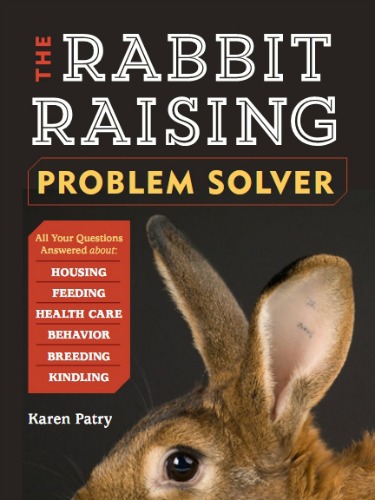
$22.62 - includes
- 10% off your autographed copy of Rabbit Raising Problem Solver
- All packaging, handling, and Media Mail postage costs (WA residents are subject to sales tax)
- Applies to US addresses - (sadly, Media Mail is not offered for international shipping, not even for really awesome books)
- (International shipping is available, of course, but it's out of our control how much they charge for shipping. Send us your country, city, and area code to obtain a shipping quote.)
* Affiliate Links*
As an affiliate of several companies, including Amazon.com, we earn from qualifying purchases. Your purchases from these affiliates come at no extra cost to you.

New! Comments
Have your say about what you just read! Leave me a comment in the box below.