E Locus Rabbit Colors
E
locus rabbit colors. Here is rabbit coat color genetics information pertaining to the 2
‘E’ locus rabbit color genes carried by domestic rabbits, including the sneaky
Es steel gene.
The 2 genes at the 'E' locus manage the quality and the quantity of the black pigment in a rabbit's coat. 'E' stands for extension (or non-extension) of the black pigment on the fur shaft.
There are 4 genetic options at the 'E' locus, presented here in their order of dominance:
'Es'
Es is said to be dominant, but as we
will see, that dominance is incomplete. It is nevertheless definitely
overpowering. It over-produces black pigment on the hair shaft, invading and
taking over the normal pattern of color.
A correct 'steel' coloration requires
a single Es and an E (EsE). Despite
incomplete dominance, we list Es first, as it overpowers the
other 'E-locus' rabbit color genes.
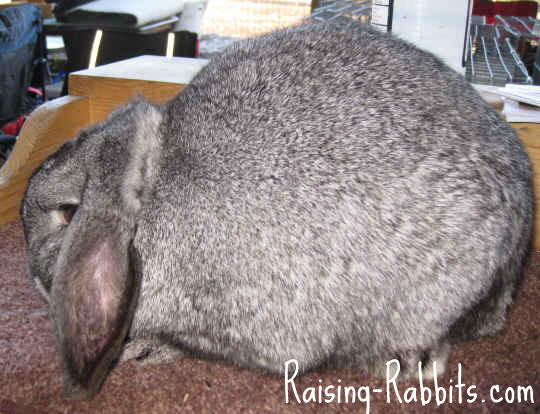 Es gene: White-tipped steel
To identify a steel rabbit, look for the rabbit's undercolor extending all the way up the hair shaft, wiping out the ring, and on an agouti, no white belly.
The steel gene can be a bugger, because it seems to be able to hide itself amongst the other ‘e’ genes. More on Steel Rabbit Genetics here...
'E'
E is the original dominant gene at the E locus, and codes for correct presentation of black pigment.
Most rabbits carry 'EE.'
'ej'
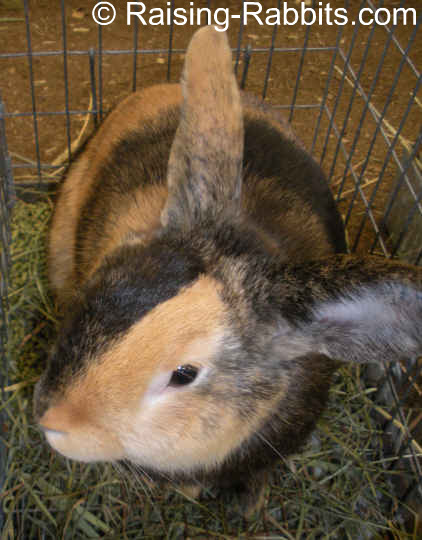 'ej' gene: Harlequin coloration
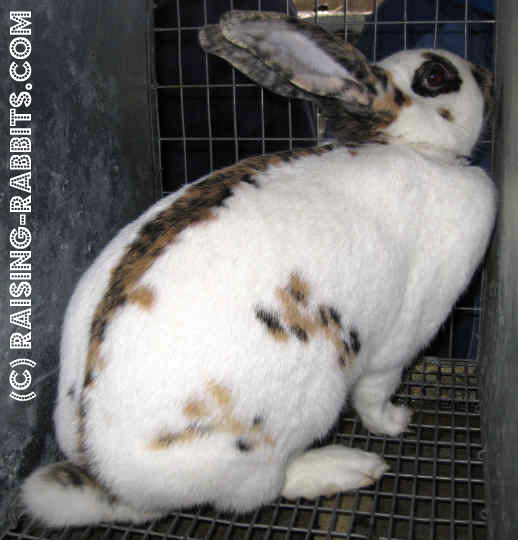 Rhinelander Rabbit
ej is dominant to 'e' but recessive to 'E.'
ej produces the brindled pattern of harlequins and magpies - some areas of over-produced black, and some areas of under-produced black pigmentation. Pictured above left is a well-marked harlequin rabbit.
If you add the dominant 'En' broken gene to the mix (En has its own 'En' locus and is not a part of the 'E' locus), the harlequin becomes a broken tri-colored rabbit, such as the Rhinelander (above right)
Without the 'En' broken gene, this Rhinelander would look very much like the Harlequin rabbit.
'e'
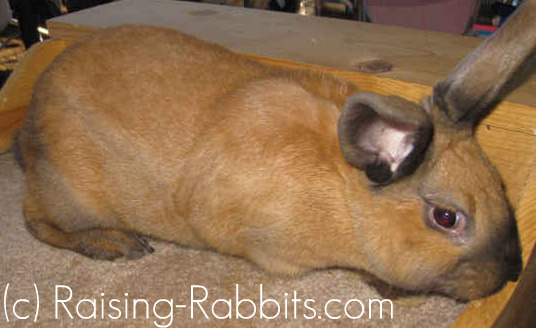
e is recessive - No extension of black pigment at all. Think oranges, reds, and fawns. When its effect is imperfect possibly due to modifiers, you'll get a remaining bit of 'smut' or 'soot' on the rabbit.
This Cinnamon rabbit is a self black rabbit with 2 copies of
the ee non-extension gene, which wiped out nearly all of the
black pigment. In the case of this rabbit, modifiers allow a touch of remaining
black on the corners of the rabbit - ears, nose, and around the tail and feet.
'E' Genotypes
- Steels = EsE (EsEs, a double-steel, is too dark for true steel coloration - see below)
- Normally colored rabbits = EE, Eej, or Ee
- Harlequins = ejej or eje
- Red/orange/fawn = ee
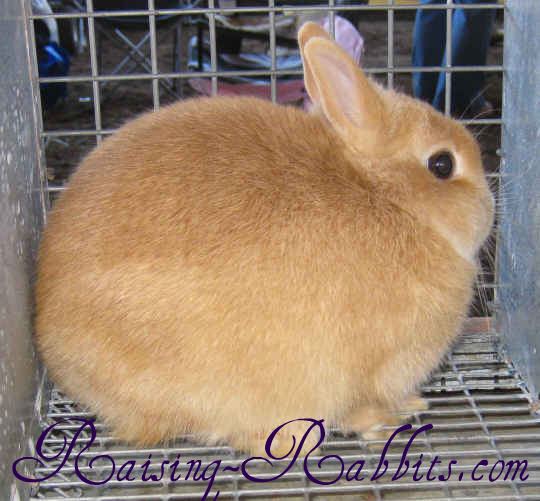
Pictured at right is an orange Netherland Dwarf, an agouti rabbit with the black pigment nearly entirely eliminated. Without its 'ee' genes, this rabbit would be a chestnut (or possibly a chocolate) agouti.
Controversy with E Locus Rabbit Colors
I've heard tell of an Ed gene that is reported to be even stronger than the Es gene. The jury is still out, as far as we know, relative to whether or not this is true.
We rather doubt it. We think that the 'Ed' is really a double set of 'Es' genes -- 'EsEs' -- which would greatly strengthen the steel effects. Remember, the true 'steel' rabbit comes with just one steel gene and a normal 'E' gene (EsE). If you double the Es and add in some darkening modifiers, it's easy to see why some would figure there must be a gene stronger than the steel 'Es.'
Is there a geneticist out there that can verify the existence of an 'Ed' gene? Or confirm our doubts? If so, please comment below, or contact us.
We've pictured several E locus rabbit colors, but other colors can result from actions of the E locus also, once you factor in the A, B, C, and D genes. For example, the action of the B locus might reduce the intensity of the black pigment, so the rabbit becomes a chocolate-based animal. The action of the E locus affects the black pigment, which in this rabbit looks chocolate in color. You'd end up with chocolate steels, or chocolate harlequins, etc.
Hopefully it will now be easier to recognize the actions of the E locus rabbit color genes.
More on Steel Rabbit Genetics here
Go from E Locus Rabbit Colors to Rabbit Coat Color Genetics
Double-Value Guarantee
Our policy is to always OVER-deliver
on value,
which is why your purchase is fully covered by our
Double-Value
Guarantee.
Go ahead - take any of our e-books for a test drive. Peruse our detailed informational and educational e-books. Examine our plans for building rabbit cages, runs, or metal or PVC hutch frames. Check out the Rabbit Husbandry info e-books.
If you aren't completely satisfied that your e-book purchase is worth at least double, triple or even quadruple the price you paid, just drop us a note within 45 days, and we'll refund you the entire cost. That's our Double-Value Guarantee.
Note: When you purchase your
e-books, they will be in PDF format, so you can download them to any device that
supports PDF format. We advise making a back-up copy to a drive or cloud
account. If the books are lost, you can also purchase another copy from Raising-Rabbits.
* Affiliate Links*
As an affiliate of several companies, including Amazon.com, we earn from qualifying purchases. Your purchases from these affiliates come at no extra cost to you.
Bunny Bazaar!
Online Shopping Mall by Raising-Rabbits!
One-Stop Shop for Rabbit Swag for both Buns and Humans
Bunny Branola!
The Ultimate
Rabbit Nutritional Supplement and Treat!
4 delicious flavors! Sample packs available!
Yes! I want more info!
Yes, Buy Bunny Branola Now!
Look What's NEW!!
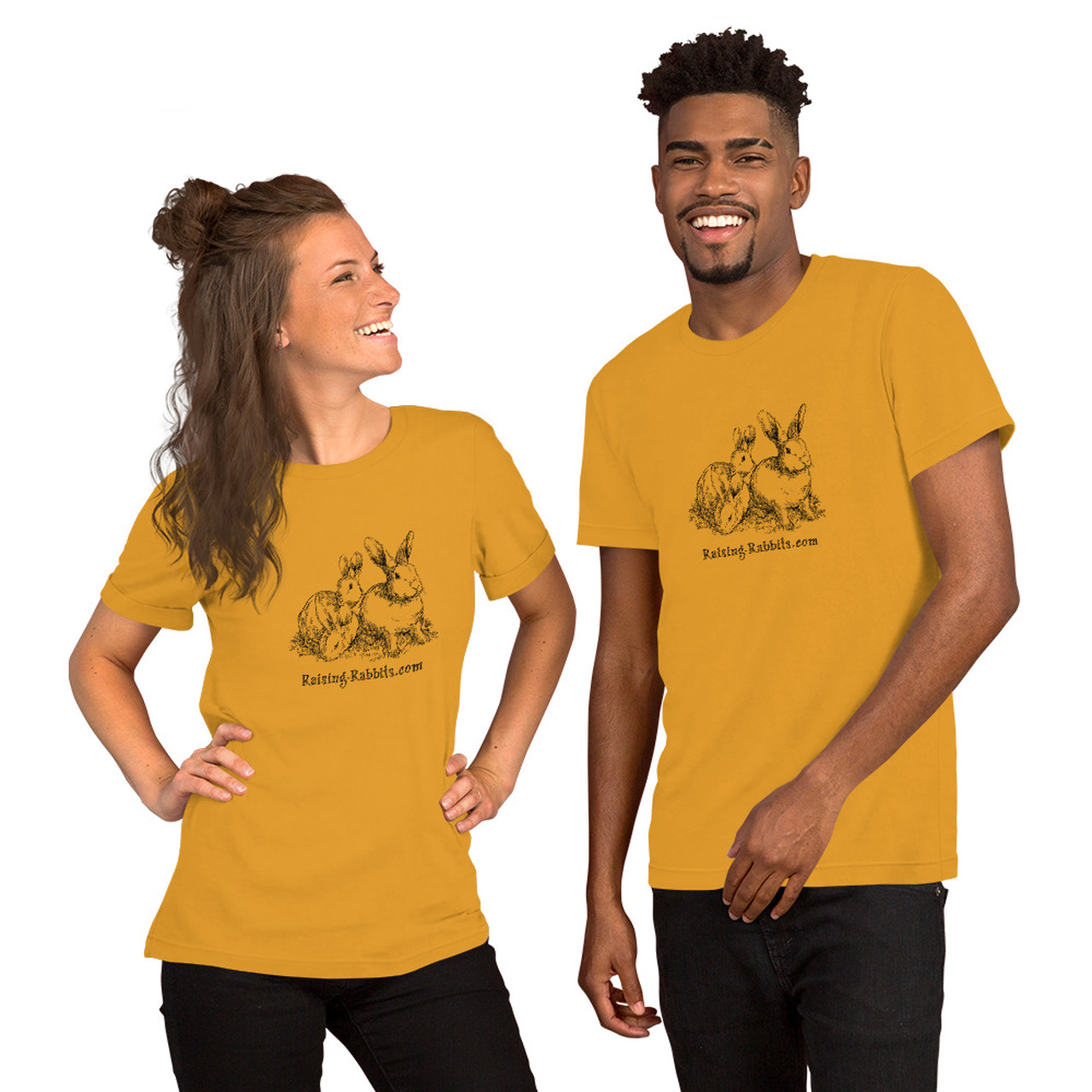
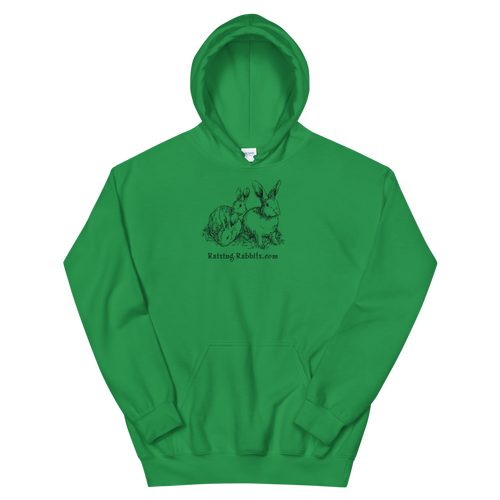
Our very own classy
Raising Rabbits Sweatshirts, T-shirts, and Hoodies!
 |
 |
 |
.
We're now offering classy, unisex
Raising Rabbits
sweatshirts and hoodies,
Available in a great assortment of colors!
(We have unisex T-shirts too.)
Check out the Bunny Bazaar for our gorgeous
garments!
Order your own today!
They make great gifts too!!
Featured Rabbitries:
Click the Rabbitry Name Links:
Canada, Quebec
MapleRidge Stables Rabbitry
Himalayan Rabbits
Arizona
Hostile Hare
Chinchillas, Cages
Illinois
Open Doors Rabbitry
Lionheads, New Zealands
Kentucky
Goshen Bunnies
Holland Lop and Mini Plush Lop
New Jersey
Go Bunny Treats
All Natural Rabbit Treats
Mini Plush Lop Bunnies
All Natural Rabbit Treats
Belle's Bunny Boutique
Holland Lops & Mini Lion Lops
North Carolina
What The Fluffle Rabbitry
New Zealands, Champagnes
Breadbox Rabbitry
Netherland Dwarfs
The Farm at Fort Mill
Holland Lops
(Right across the South Carolina
border at Charlotte)
Pennsylvania
Happily Ever After
Mini Plush Lops, Holland Lops,
Netherland Dwarf, Lionhead,
Mini Plush Lop, & Mini Rex
Bunnies by Emma and Ellie
Holland Lop, Mini Lop,
Mini Plush Lop,
Mini Rex/Holland Lop Mix
Rhode Island
Shepherds Purse Rabbitry
Holland Lops
South Carolina
Jubilee Farms
Holland Lops
Washington
Cotton Candie Tails
Lionheads, Vienna-Marked
Subscribe to Rabbit Rhythms,
our e-newsletter !
Get rabbit news, husbandry and health tips mostly every month. It's easy - we only need your email address, then hit the 'subscribe' button. Enjoy!
Recent Articles


-
Raw Rabbit: Order raw frozen rabbit for pets
Mar 25, 24 07:45 PM
 Raw rabbit. Convenient online ordering of raw frozen rabbit as whole prey, partially processed, or ground, for feeding pets species-appropriate meals
 -
Farm at Fort Mill
Mar 01, 24 03:22 PM
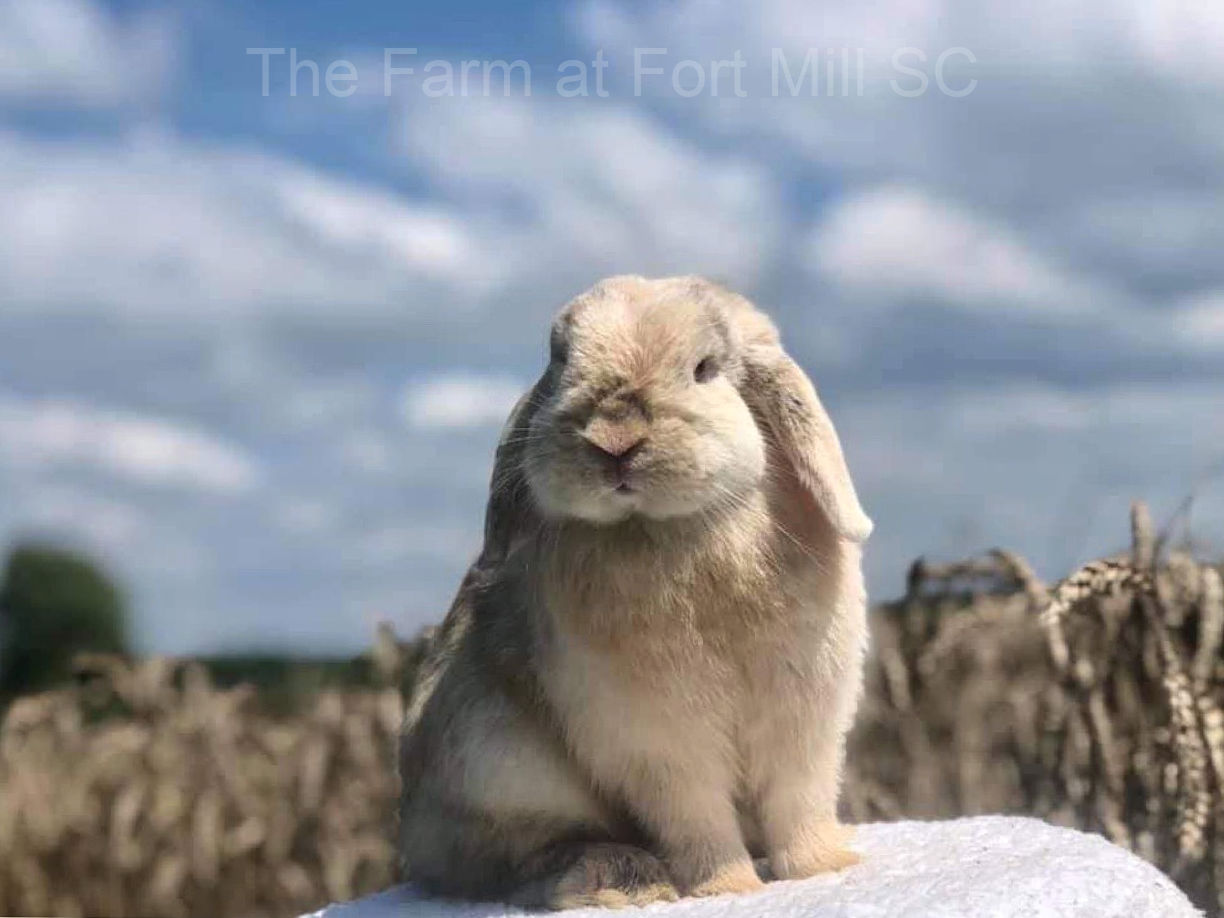 Farm at Fort Mill has moved. It is now Jubilee Farms Holland Lops, part of Edgemoor Equestrian, in Edgemoor SC. They offer riding lessons and host events.
 -
Jubilee Farms Holland Lops - Rabbitry in Edgemoor, SC
Feb 26, 24 04:01 PM
Jubilee Farms Holland Lops includes a Rabbitry in Edgemoor, SC. Jubilee Farms also has horses and riding lessons, and hosts events and learning camps.
Raising-Rabbits: Home of
The Rabbit Raising Problem Solver
$22.62 - includes
- 10% off your autographed copy of Rabbit Raising Problem Solver
- All packaging, handling, and Media Mail postage costs (WA residents are subject to sales tax)
- Applies to US addresses - (sadly, Media Mail is not offered for international shipping, not even for really awesome books)
- (International shipping is available, of course, but it's out of our control how much they charge for shipping. Send us your country, city, and area code to obtain a shipping quote.)
* Affiliate Links*
As an affiliate of several companies, including Amazon.com, we earn from qualifying purchases. Your purchases from these affiliates come at no extra cost to you.

New! Comments
Have your say about what you just read! Leave me a comment in the box below.